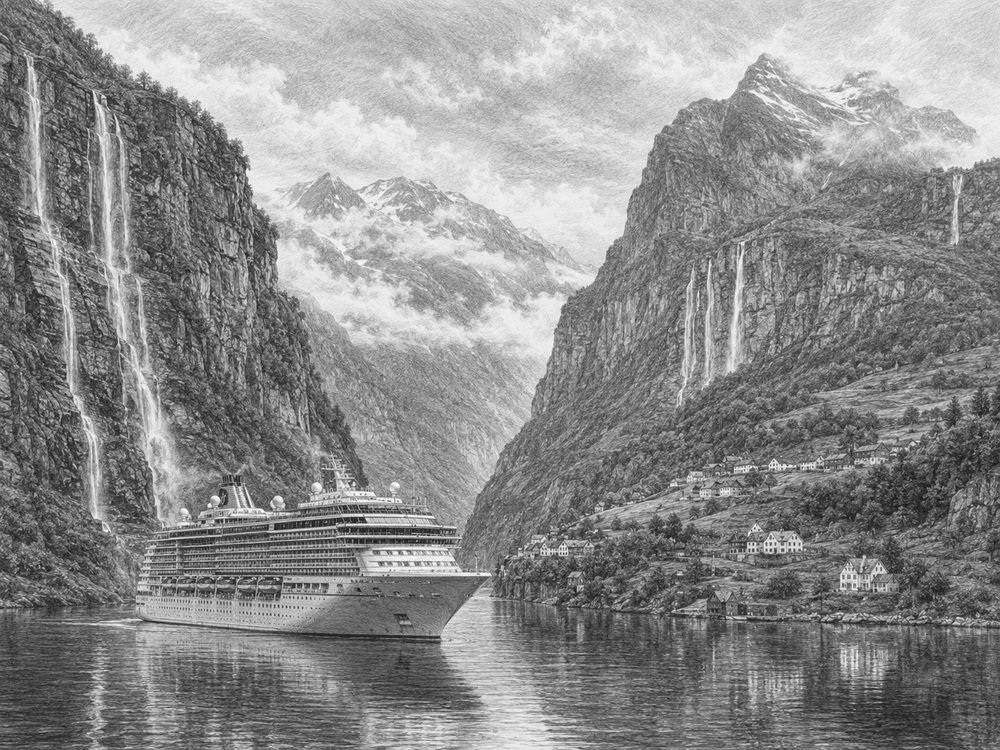
What does a Norwegian Fjords cruise from Southampton actually look like on Liberty of the Seas? You sail round-trip from England into some of the most dramatic coastline in Europe, calling at Stavanger, Haugesund, Olden and Skjolden, with at least one day given over to scenic fjord cruising where the ship threads between sheer cliffs and cascading waterfalls. It is a cool, wet, long-daylight kind of trip that rewards good layers and a plan for each port, and it feels very different from a warm-weather beach sailing. This guide walks through the itinerary port by port, the scenery day, and the practical details that make or break the week.
Everything in this article and far more, deck by deck, in The Ultimate Guide to Sailing on Liberty of the Seas.
Get the book →Why the Norwegian Fjords work so well from Southampton
Liberty of the Seas is a Freedom-Class Royal Caribbean ship, a direct sister to Freedom of the Seas and Independence of the Seas, freshly brought up to date by a Royal Amplified refit. Her headline Northern Europe season is based right in Southampton, England, which means no long-haul flight to reach the fjords. You board in England, sail across the North Sea overnight, and wake up among Norwegian mountains. The typical fjords voyage is seven nights, with some shorter and longer options, running spring through early autumn.
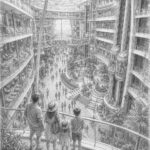
The ship carries the classic Royal Caribbean features the line made famous — the four-deck Royal Promenade, a full theater, Studio B ice rink, the FlowRider, a rock-climbing wall — plus the amplified additions like The Perfect Storm waterslides and Tidal Wave, the first boomerang slide at sea. On a fjords sailing you will spend more time than you expect on deck simply watching the coastline, so the balance between big-ship entertainment and quiet scenery-watching matters. For a fuller picture of what she offers day to day, the Liberty of the Seas cruise guide covers the ship in detail.
One important caveat up front: ports vary by sailing. The four Norwegian calls below are the ones Liberty’s itineraries emphasize, but classic fjord names like Bergen, Geiranger and Flåm appear on some regional routes, and the exact scenic-cruising stretch shifts between voyages. Always confirm your specific itinerary and any tender arrangements in the Royal Caribbean app before you sail.
Embarkation in Southampton: arrive a day early
Southampton is a proper cruise city with deep maritime and Titanic heritage, and it is the reason this itinerary is so accessible for anyone in or near the UK. The single best piece of advice for the embarkation port is to arrive a day early. It takes the stress out of getting to the ship, it protects you against travel delays, and it opens up the surrounding area rather than making you rush straight to the terminal.
With an extra day, Southampton is a springboard for day trips to London, Winchester, Stonehenge and the New Forest, all within easy reach. Even if you only have a few hours, the city’s maritime history is worth a look before you sail. Because the ship leaves on time and the North Sea crossing to Norway takes the first night and part of the following day, starting the week rested rather than frazzled makes a real difference to how the fjord ports land.
Stavanger: Pulpit Rock and the Lysefjord
Stavanger is usually the first Norwegian call, and it is an easy one because the ship typically berths within walking distance of the compact old town. Gamle Stavanger, the historic quarter, is a cluster of white timber houses on cobbled lanes — pleasant to wander on foot with no transport needed, which makes it a low-stress introduction to Norway.
The headline attraction here is the Pulpit Rock, or Preikestolen, the flat cliff plateau that towers over the Lysefjord. Reaching the top is a serious hike — a steep several-hour round trip on rocky trail — so it suits confident walkers with proper footwear and time to spare, and it is weather-dependent. If a full mountain hike is not your idea of a port day, a Lysefjord sightseeing boat gives you the cliffs and waterfalls from the water instead, looking up at the Pulpit Rock rather than standing on it. Both routes can be booked as ship excursions or arranged independently from the harbor.
Haugesund: the Viking heartland, Åkrafjord and Langfoss
Haugesund sits in what is often called Norway’s Viking heartland, and the town itself is a quieter, more workaday Norwegian port than Stavanger. The draw is really the surrounding landscape. Excursions head out to the Åkrafjord, a narrow steep-sided fjord, and to the Langfoss waterfall — one of Norway’s tallest, a long ribbon of water sliding down the mountainside that is often ranked among the country’s most beautiful falls.
Because the best of Haugesund is out of town, this is a port where a coach-and-boat excursion earns its cost more than in a walkable town like Stavanger. If you prefer to stay local, the town center and its Viking history sites are pleasant enough for a relaxed half-day. Consider what you want from the day before you commit — the Åkrafjord and Langfoss trips are the standout memory-makers here.
Olden: glaciers, Nordfjord and turquoise lakes
Olden is many people’s favorite call, and for good reason: it sits at the end of the Nordfjord in glacier country. The classic excursion runs up to the Briksdal glacier, an arm of a larger icefield, reached through a valley of waterfalls and past glacial lakes whose meltwater gives them an unreal turquoise-milky color. The final approach to the ice is on foot or by open-cart “troll car,” depending on the tour.
This is high-mountain scenery at its most concentrated — glaciers, Nordfjord water, and lakes that photograph like nothing else on the itinerary. Weather changes fast at altitude, so the layers and waterproofs you packed for the whole trip really matter on the Olden day. Even from the deck as the ship comes in and out of the Nordfjord, the approach to Olden is one of the scenic highlights of the week, so be up early with a camera.
Skjolden and the Sognefjord: Norway’s deepest, longest fjord
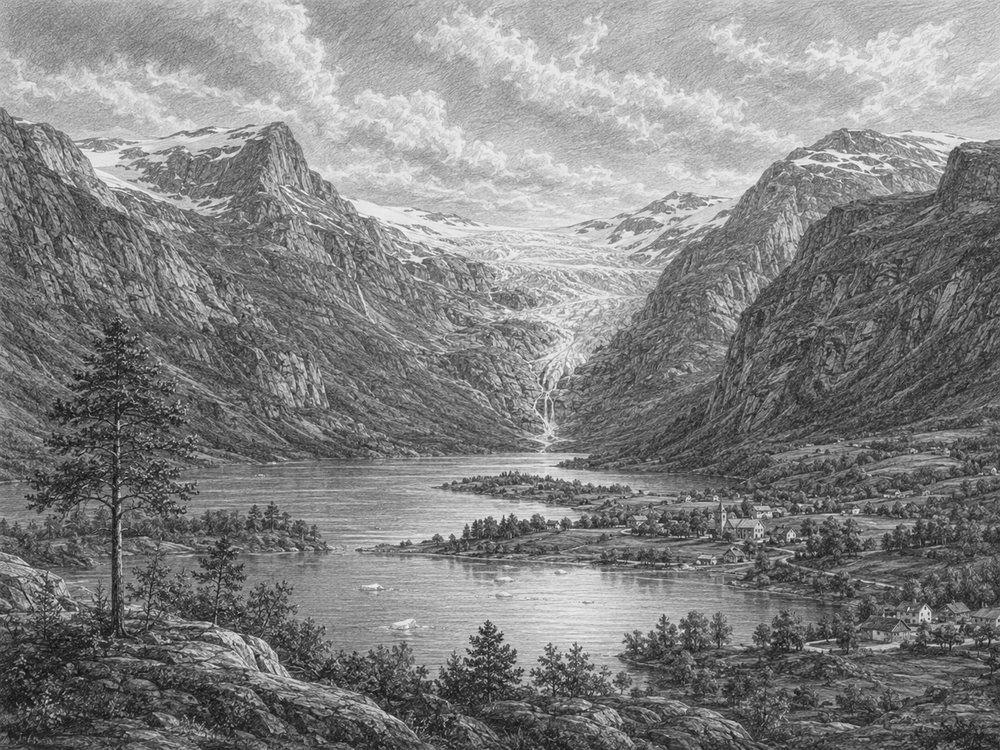
Skjolden lies at the very innermost end of the Sognefjord — Norway’s deepest and longest fjord — which means the sail in and out is a spectacular scenic event in its own right, hours of narrowing water walled by mountains. The village itself is tiny, a gateway rather than a destination, so the day is about the surrounding wilderness.
From here you are on the doorstep of the Jotunheimen, Norway’s high mountain range and national park, home to the country’s tallest peaks. Excursions run into that wilderness for mountain roads, viewpoints and alpine scenery. Skjolden is a smaller port, so tendering is a real possibility on some sailings — the ship anchors and ferries guests ashore by small boat rather than tying up at a pier. Tendering adds time and can be affected by weather, and it is worth knowing in advance if mobility is a concern. Check your specific voyage in the app to see whether Skjolden is a docked or tendered call.
The scenic fjord-cruising day: what to watch and where
Beyond the port calls, most fjords itineraries include a stretch of pure scenic cruising, where the ship slows and glides through a fjord with no stop at all. This is often the single best few hours of the week: waterfalls pouring off cliffs, tiny villages clinging to the shoreline, and mountains rising straight out of the water on both sides. Nobody gets off; the deck is the attraction.
Best viewing spots on board
- A forward-facing open deck for the full head-on approach as the fjord narrows — get there early, it fills up fast.
- The upper open decks for the wide panorama on both sides of the ship.
- Your own balcony if you booked one, for scenery in a dressing gown with a hot drink; on a fjords cruise a balcony earns its keep far more than it would on a warm-weather sailing.
- The adults-only Solarium for glass-sheltered viewing when the wind and rain pick up.
Because the ship turns, both sides of the vessel get their moment, so you do not need a particular cabin side. If you want to weigh the balcony question properly, the guide to the best cabins on Liberty of the Seas breaks down which categories are worth it for this kind of sailing.
Bring binoculars and a proper camera, not just a phone — the scale of the cliffs and the distance to the waterfalls reward a bit of zoom. Dress warmly, because standing still on an open deck in a fjord breeze is colder than the temperature suggests. And keep an eye on the daily schedule in the app, since the scenic-cruising window is announced on board and is the one part of the day you do not want to sleep through.
Packing for cool, wet, long-daylight weather
This is not a beach-cruise packing list. Northern Europe in the sailing season means a cool summer with mild temperatures, changeable and often wet weather, and very long daylight hours. The single most useful thing you can pack is a genuinely waterproof shell, followed by warm layers you can add and remove as the day shifts between sun and rain.
- A waterproof, breathable jacket with a hood — non-negotiable for the hikes and deck-watching.
- Layers: base layers, a fleece or midlayer, and something warm for the top of a glacier or a fjord deck.
- Sturdy, broken-in walking shoes or light boots for trails like the Pulpit Rock and Briksdal approaches.
- An eye mask for sleeping, because the long daylight can keep the cabin bright late into the evening — a balcony cabin especially.
- Binoculars, a camera, and a dry bag or waterproof cover for it.
The long daylight is a genuine bonus: excursions and evening deck time both benefit, and the fjords stay lit far later than you would expect. Just be ready for weather to swing within a single port day, which is exactly why layers beat any single heavy coat.
Money, costs and Norwegian kroner
Norway uses the Norwegian krone, and it is worth being clear-eyed: Norway is among the most expensive destinations in the world. Food, drinks and excursions all cost more than most visitors expect, so budget accordingly rather than being caught out ashore. Scandinavia is also largely cashless, so a contactless card is usually all you need for a coffee or a snack, though a little local cash can occasionally help in a remote spot.
On the Southampton embarkation day you are dealing in British pounds, and if your particular voyage includes any Northern Europe ports on the way, currencies can shift again. Onboard, none of this matters day to day: your SeaPass card runs a cashless account, daily gratuities are added automatically, and Wi-Fi is a paid plan. English is very widely spoken throughout Norway, so language is rarely a barrier. For more on managing the onboard account and getting value out of the week, see these Royal Caribbean Liberty of the Seas tips.
Ship excursions vs going independent
Every marquee experience here — Pulpit Rock, Åkrafjord and Langfoss, the Briksdal glacier, the Jotunheimen — can be done as a ship shore excursion or arranged independently, and the right choice varies by port.
| Approach | Best for | Trade-off |
|---|---|---|
| Ship excursion | Far-flung sights (Langfoss, Briksdal, Jotunheimen), tight timing, first-time cruisers | Costs more; larger groups; fixed pace |
| Independent | Walkable towns like Stavanger, confident travelers, flexible pace | You manage timing; the ship will not wait if you are late back |
| Tendered ports | Either — but factor in tender time | Ship excursions usually get priority tender access |
The single most important rule for going independent: the ship sails on time, and if you are on your own arrangements it will not wait for you. On excursions where the sight is far from the pier — the Åkrafjord and Langfoss out of Haugesund, or the Briksdal glacier from Olden — a ship tour buys you a guaranteed return and takes the transport logistics off your plate. In a compact, walkable port like Stavanger, independent exploring on foot is easy and cheaper. Tours in the fjords sell out early, so if there is a specific experience you have your heart set on, book it well ahead in the app.
Sea days, the North Sea crossing and what to do on board
A round-trip from Southampton includes open-water stretches, including the North Sea crossing at each end of the week, so there is at least a sea day or two with no port. This is where Liberty’s amplified features earn their place. Tidal Wave and The Perfect Storm slides, the FlowRider, the rock-climbing wall, Studio B ice shows, the theater production shows and the Royal Promenade all give you plenty to do when the weather closes in — which, on this itinerary, it sometimes will.
The North Sea can be a little livelier than the sheltered fjord water, so if anyone in your party is prone to motion, a midship cabin on the mid-decks gives the steadiest ride. The amplified dining lineup — Izumi Teppanyaki, El Loco Fresh, the Lime and Coconut pool bar and a new Starbucks alongside the core venues — means sea days never feel short of options. If you want the full rundown of onboard life, what to expect on Liberty of the Seas goes deeper on the venues and daily rhythm.
One thing worth noting about the onboard feel: a strong British and European guest base gives the Southampton fjords sailings a slightly different atmosphere from a US-based cruise, alongside the family-friendly Freedom-Class energy. It is a subtle difference, but it shapes everything from the accents around the pool to the pace of the evenings.
A note on the wider Northern Europe season
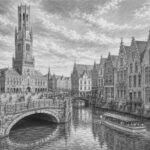
The fjords are Liberty’s headline Northern Europe draw, but her Southampton season also includes non-fjord itineraries that call at ports like Bruges, via Zeebrugge, in Belgium and Copenhagen in Denmark, and some Canary Islands sailings. If your dates are flexible, it is worth comparing a pure fjords route against a mixed Northern Europe one, since they deliver quite different weeks — glaciers and cliffs versus medieval old towns and city sightseeing. The Liberty of the Seas Northern Europe ports guide covers those city calls in detail if you are weighing the options.
Whichever route you choose, the same practical truths apply: passports are required, the itinerary spans different currencies and entry rules, the weather rewards layers, and the app is the single source of truth for your day. Ports genuinely do vary by sailing, so treat every port name in this guide as a strong likelihood rather than a guarantee, and confirm the specifics for your voyage before you pack.
Get the complete Liberty of the Seas playbook
If you want every port, cabin choice and excursion decision worked out before you sail, “The Ultimate Guide to Sailing on Liberty of the Seas” lays it all out. It is part of the Ultimate Ship Guides series by Leo Sotropa, with clear action steps in every chapter so you know exactly what to do next.
Frequently asked questions
Which ports does the Norwegian Fjords cruise from Southampton visit?
Liberty of the Seas’ fjords itineraries emphasize Stavanger, Haugesund, Olden and Skjolden, plus at least one day of scenic fjord cruising with no stop. Some regional routes add classic calls like Bergen, Geiranger or Flåm. Ports vary by sailing, so always confirm your exact itinerary in the Royal Caribbean app.
How long is the cruise?
The typical Norwegian Fjords voyage is seven nights round-trip from Southampton, though some shorter and longer options run across the spring-through-early-autumn Northern Europe season. Check current sailings for exact dates and lengths.
What should I pack for a fjords cruise?
Pack for cool, changeable, often wet weather: a genuinely waterproof jacket, warm layers rather than one heavy coat, and sturdy walking shoes for trails like the Pulpit Rock and Briksdal glacier. Add binoculars, a camera, and an eye mask for the very long daylight hours. This is not a beach-cruise packing list.
Do I need Norwegian kroner, and is Norway expensive?
Norway uses the Norwegian krone and is among the most expensive destinations in the world, so budget accordingly for food, drinks and excursions. Scandinavia is largely cashless, so a contactless card usually covers everything, though a little local cash can help in remote spots. English is very widely spoken.
Should I book ship excursions or explore independently?
For far-flung sights like Langfoss, the Briksdal glacier and the Jotunheimen, a ship excursion handles transport and guarantees you get back before sailing. In a compact, walkable port like Stavanger, independent exploring on foot is easy and cheaper. Remember the ship will not wait for independent travelers, and popular tours sell out early.
Are any of the fjord ports tendered?
Smaller ports like Skjolden can be tendered on some sailings, meaning the ship anchors and ferries guests ashore by small boat rather than docking at a pier. Tendering adds time and can be affected by weather. Confirm whether your specific voyage docks or tenders in the Royal Caribbean app.
Is a balcony cabin worth it for the fjords?
More than on a warm-weather cruise. A balcony lets you watch waterfalls and cliffs from your own room during scenic cruising and the fjord approaches, sheltered and with a hot drink. A midship balcony on the mid-decks also gives the steadiest ride for the open-water stretches like the North Sea crossing.
Ready for the whole ship in one place? It is all in The Ultimate Guide to Sailing on Liberty of the Seas.
Get the book →
Meet Leo: The Heartbeat Behind ‘A Country A Month’
Journeying through the pages of A Country A Month, you might often feel the rhythm of a storyteller’s heartbeat, pulsating through each line, each image, and each adventure shared. That heartbeat belongs to none other than our remarkable website editor, Leo.
With a lens in one hand and a pen in the other, Leo seamlessly marries his passions for photography and writing. His eye captures moments that words can barely describe, yet his eloquence brings those images to life, transcending borders and connecting us all through shared stories. An avid traveler, every country he’s visited has added another chapter to his expansive tale, and through our platform, he generously shares these chapters with us.