Is Liberty of the Seas the right Royal Caribbean ship for you? In short: she is a big, family-friendly Freedom-Class ship that has just been through a top-to-bottom Royal Amplified refit, and her headline season sends her somewhere most people do not expect a ship this playful to go — out of Southampton, England, up to the Norwegian Fjords and around Northern Europe. That combination is the whole story. You get the FlowRider, a boomerang waterslide, an ice rink and a four-deck indoor promenade, wrapped around an itinerary of waterfalls, glaciers and medieval European cities rather than palm trees. This guide walks through who she suits, where she sails, what the refit added, and how a northern cruise on her actually feels different from a Caribbean one.
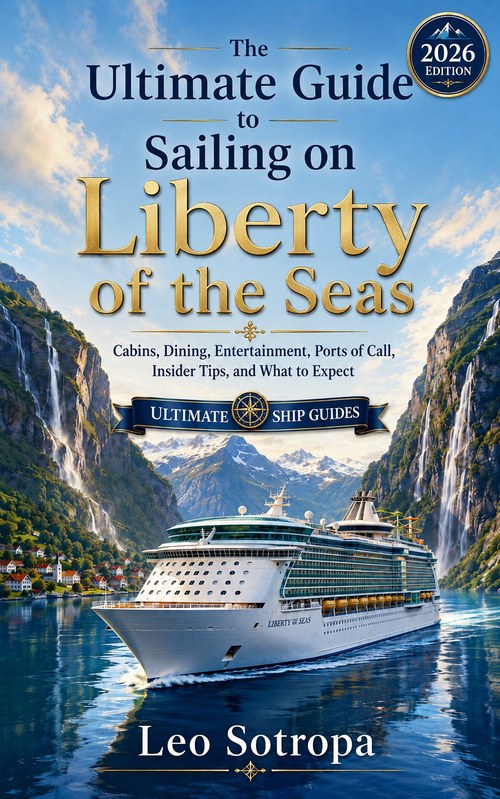
Everything in this article and far more, deck by deck, in The Ultimate Guide to Sailing on Liberty of the Seas.
Get the book →What kind of ship Liberty of the Seas is
Liberty of the Seas is one of Royal Caribbean’s Freedom-Class ships, a direct sister to Freedom of the Seas and Independence of the Seas. When the Freedom Class arrived, these were the largest cruise ships in the world, and they introduced features that became Royal Caribbean signatures — most famously the FlowRider surf simulator, which the Freedom Class first brought to sea. Liberty carries all of that heritage, but a recent Royal Amplified refit has brought her thoroughly up to date, adding new waterslides, new restaurants and refreshed spaces throughout.
The numbers give you a sense of scale. She measures around 155,000-plus gross tons across roughly 15 guest decks, and carries about 4,375 guests at double occupancy — up to nearly 4,960 when every berth is full. That puts her firmly in the large-ship category: big enough to hold a genuine variety of things to do, but a class down from the truly enormous Oasis and Icon ships. For a lot of travellers that is the sweet spot. There is plenty on board to fill a rainy day at sea, yet the ship is still walkable and easy to learn within a day or two.
Who Liberty of the Seas suits
She is a strong fit for families and multi-generational groups. The mix of a surf simulator, waterslides, a rock-climbing wall, an ice rink, mini-golf, a sports court and Adventure Ocean kids’ programming means children and teenagers rarely run out of options, while adults can retreat to the adults-only Solarium, the Vitality Spa or a quiet bar on the Royal Promenade. Couples who like an active, sociable ship with lots of choice will enjoy her too. If your ideal holiday is a small, hushed, all-veranda ship where nothing much happens, this is not that — Liberty is busy, lively and built for people who want plenty going on.
There is one more factor worth naming early. Because her main season sails from Southampton, the guest base skews strongly British and European. That gives the onboard atmosphere a slightly different feel from a US-based Caribbean cruise — a subject we come back to below, because it shapes the tone of the whole trip.
Where Liberty of the Seas sails
Liberty’s headline deployment is Northern Europe, based in Southampton, England, sailing to the Norwegian Fjords. Most voyages are round-trip seven-night sailings, with some shorter and longer options, running from spring through early autumn. She also offers some Canary Islands sailings in the wider northern season. In another part of the year she repositions to Galveston, Texas, for Western Caribbean cruises, so the single most important thing to check when you book is which season and home port your specific voyage falls in. Always confirm your itinerary and ports in the Royal Caribbean app before you plan anything ashore.
The Norwegian Fjords
The fjord itineraries are the reason most people choose this ship over her sisters. Liberty’s Norwegian sailings emphasise Stavanger, Haugesund, Olden and Skjolden, with the scenic cruising through the fjords themselves as the centrepiece — waterfalls tumbling off sheer cliffs, glaciers hanging above the water, and small painted villages sliding past your balcony. Stavanger gives you a charming old town plus the famous Pulpit Rock and Lysefjord. Haugesund sits in Norway’s Viking heartland near the Åkrafjord and the tall Langfoss waterfall. Olden opens onto the Briksdal and Nordfjord glaciers and impossibly turquoise glacial lakes. Skjolden, at the head of the Sognefjord, reaches into Norway’s deepest and longest fjord, ringed by the Jotunheimen mountains.
Classic names like Bergen, Geiranger and Flåm turn up on some regional fjord itineraries, but Liberty’s own sailings lean toward the four ports above, so read your specific schedule rather than assuming. On a scenic-cruising day, the best seat in the house is an open deck or a forward-facing spot — bring a warm layer and stay out there, because the landscape is the entire point.
Northern Europe beyond the fjords
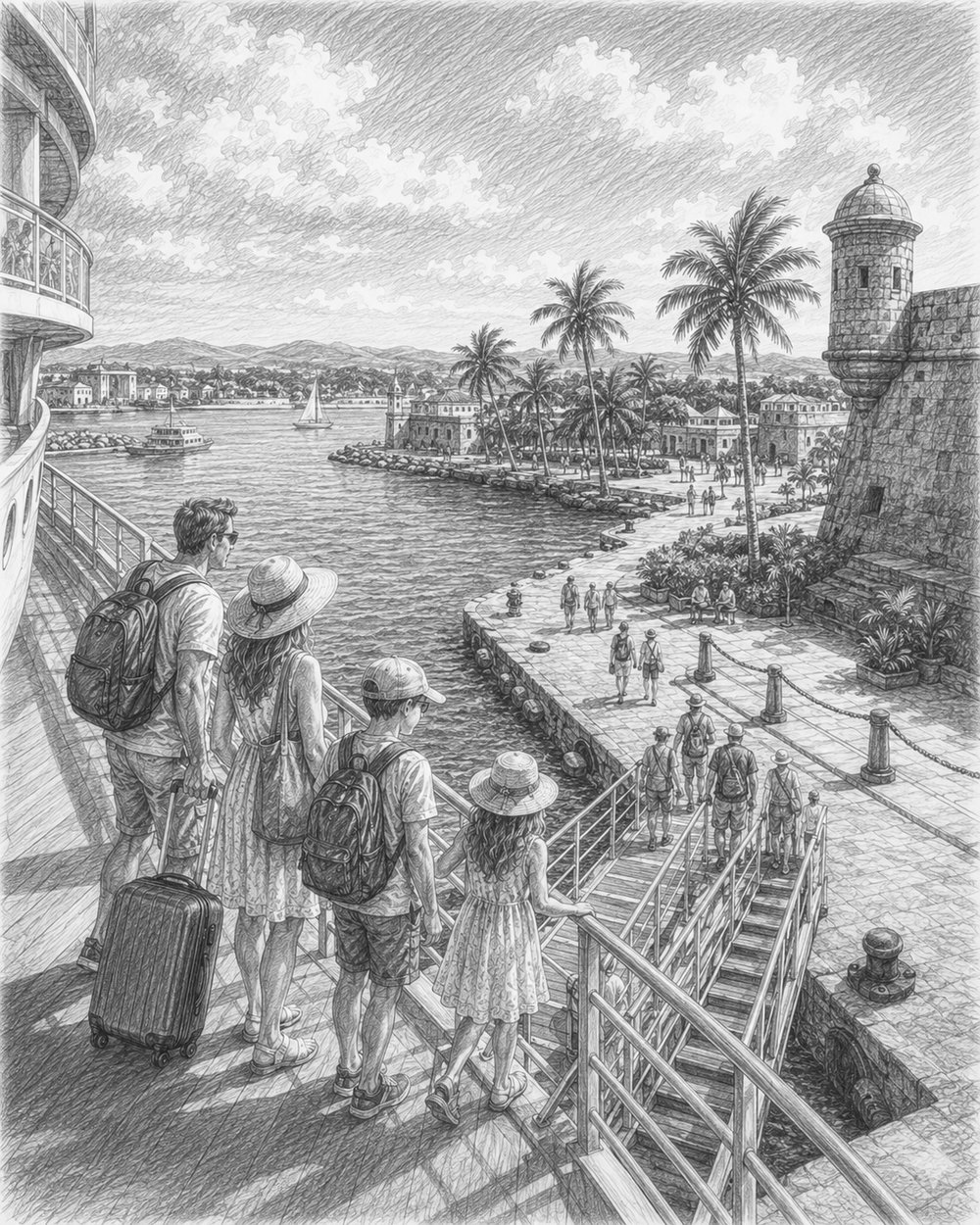
Some of her Northern Europe itineraries take a different character, calling at cities rather than fjords. Bruges, reached via the port of Zeebrugge in Belgium, delivers a medieval old town of canals, the Markt square and its belfry, and some of the best chocolate and beer in Europe — just remember the port is a transfer from the city, so plan how you will get in. Copenhagen brings Nyhavn’s coloured waterfront, the Little Mermaid, Tivoli Gardens, royal palaces and Danish design and food. Ports vary from sailing to sailing, which is exactly why the app is your friend. For a deeper look at these city calls, see the companion piece on the Liberty of the Seas Northern Europe ports, and for the fjord side there is a dedicated Norwegian Fjords guide.
What the Royal Amplified refit added
The Royal Amplified programme is where Liberty pulls ahead of an un-refreshed older ship, and it is worth understanding what actually changed, because it reshapes the pool deck and the dining line-up.
Tidal Wave and The Perfect Storm slides
The headline addition is The Perfect Storm waterslide complex, and within it Tidal Wave — the first-ever boomerang slide at sea. Instead of a straightforward spiral to the bottom, Tidal Wave sends riders down a steep drop and then propels them up a near-vertical wall before gravity brings them back. It came alongside a reimagined pool deck, so the whole top-of-ship area feels newer and more purposeful than it did before. It is a genuine draw for families with older kids and teens, and it gets its own detailed write-up in the guide to the Tidal Wave slide and the Amplified upgrades.
The Lime and Coconut and the pool deck
The refit also brought The Lime and Coconut, a Caribbean-themed pool bar spread across levels, with new poolside casitas for shaded lounging. It anchors the reimagined pool deck and gives the outdoor space a livelier social centre — worth knowing even on a northern sailing, where you will use these areas on warmer sea days and the sheltered spots when the weather turns. There is also a Royal Escape Room adventure, The Observatorium, for a rainy-afternoon activity that suits groups.
New dining and refreshed cabins
On the food side, the amplification added Izumi Teppanyaki for Japanese hibachi and sushi, El Loco Fresh for tacos and casual Mexican, and a new-to-ship Starbucks for your morning coffee run. The refit also refreshed staterooms, added new cabins, and expanded Casino Royale. Taken together, these upgrades mean Liberty offers a broader and more current set of choices than her age alone would suggest.
Signature Freedom-Class features
Alongside the new arrivals, Liberty keeps the Freedom-Class features that made the class famous. These are the spaces you will return to again and again across a week on board.
- The FlowRider — the surf-and-bodyboard simulator the Freedom Class introduced to cruising. Free to try, endlessly watchable even if you never step on.
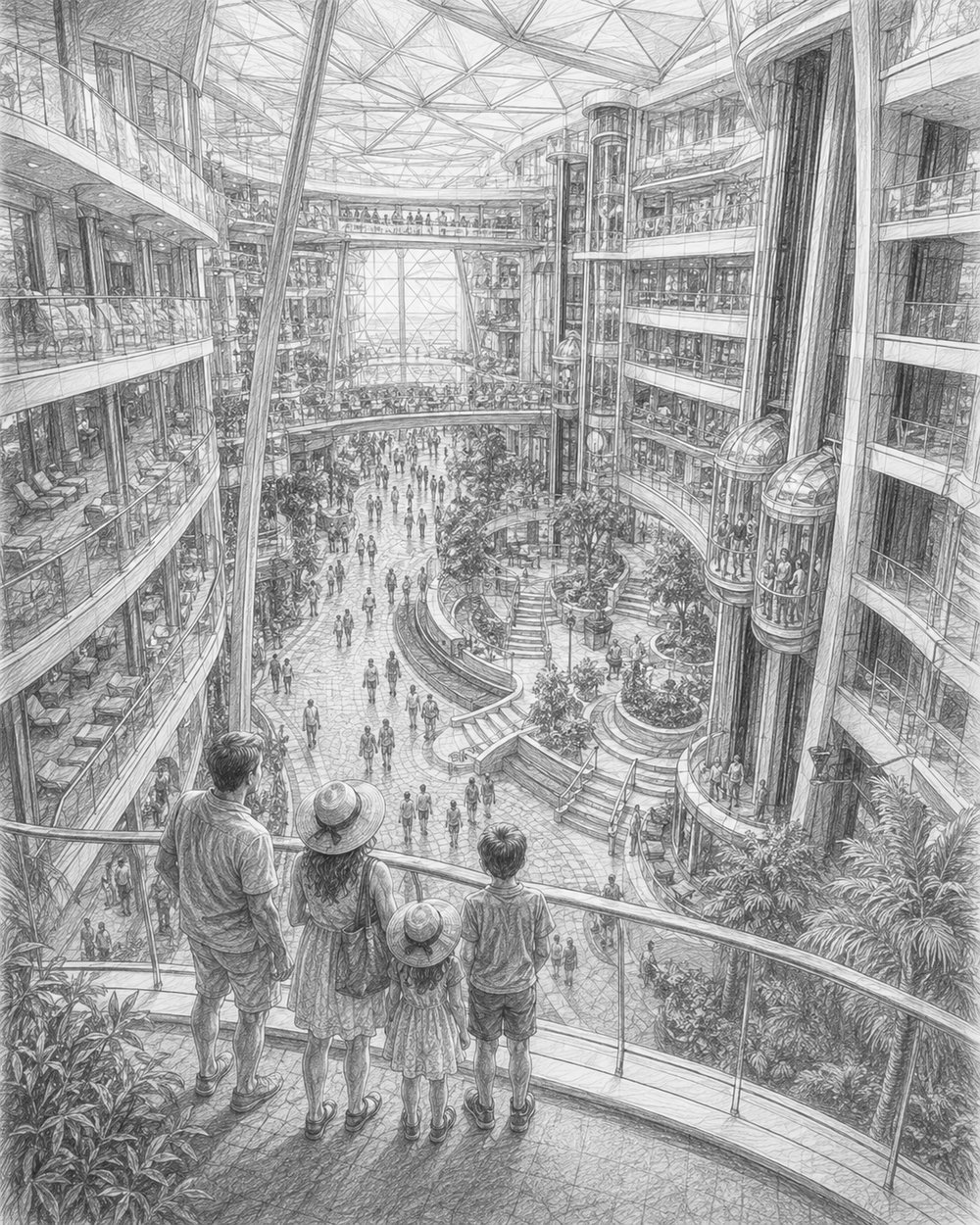
- The Royal Promenade — a four-deck indoor boulevard of shops, bars and cafés running through the middle of the ship, and the social heart of the whole vessel.
- Studio B — a real ice-skating rink hosting ice shows and open skating sessions.
- The rock-climbing wall, pools, a sports court, and mini-golf — the active-holiday backbone of the ship.
- A full theatre for production shows, plus live music around the ship.
The Royal Promenade deserves a special mention on a northern cruise. Because the weather outside is changeable and often wet, this covered indoor street becomes the ship’s living room — somewhere to wander, grab a coffee at Café Promenade, catch a passing parade or event, and stay comfortable while the North Sea does its thing outside. It is one of the reasons a big indoor-rich ship works so well on this itinerary. For a fuller room-by-room tour of the ship, the piece on what to expect on Liberty of the Seas goes deeper than there is space for here.
Dining on board
Dining spans the range you would expect on a large Royal Caribbean ship, split between what is included in your fare and what costs extra. The included side covers the Main Dining Room across its dinner seatings, the Windjammer Marketplace buffet for casual breakfasts and lunches, Sorrento’s for pizza, Café Promenade for grab-and-go snacks and coffee, and El Loco Fresh for tacos. The Solarium and various bars round out the casual options.
The specialty restaurants carry a cover charge but add real variety: Chops Grille for steak, Giovanni’s for Italian (or its current equivalent), Izumi Teppanyaki for a cook-at-your-table hibachi show and sushi, and Playmakers sports bar for pub food and a game. On a week-long sailing, booking one or two specialty dinners for the sea days is an easy way to break up the rhythm — reserve early in the app, because the best nights fill up. Prices are best confirmed live in the app rather than assumed, since they vary.
Cabins: a quick snapshot
Liberty offers the full Royal Caribbean cabin ladder: Interior rooms (including clever Promenade-view interiors that look down onto the Royal Promenade), Ocean View staterooms, Balcony cabins, and suites up to the top categories. The right choice depends a lot on where she is sailing.
| Cabin type | Best for |
|---|---|
| Interior / Promenade-view Interior | Best value; the Promenade-view is a fun twist for people-watching |
| Ocean View | Natural light and a sea view without balcony cost |
| Midship Balcony (mid-decks) | Best all-round — light, space and the steadiest ride |
| Suites | More room and perks for those who want them |
On a fjord sailing, a balcony earns its keep in a way it would not on a warm-weather cruise, because so much of the scenery arrives while you are gliding through the fjords — you can watch waterfalls and cliffs from your own room with a coffee in hand. If you do book a balcony, a midship one on the mid-decks gives you the best light, the most space and the steadiest motion, which genuinely helps across open stretches like the North Sea. Rooms worth avoiding, once you check the deck plan, include those directly under the pool deck or Windjammer (early-morning noise), rooms over the Promenade venues or near the nightlife, forward high-deck rooms if anyone is prone to motion, and lower-deck balconies with lifeboat-obstructed views. The full breakdown lives in the guide to the best cabins on Liberty of the Seas.
How a northern cruise feels different from the Caribbean
This is the part that catches first-timers by surprise, so it is worth setting expectations clearly. Liberty carries the same energetic Freedom-Class personality wherever she sails, but the destination changes the tone of the whole holiday. A Caribbean cruise is about beaches, warmth and the pool deck. A Northern Europe cruise is about landscape, cities and the view from the rail — the ship is your comfortable, playful base between remarkable places, rather than the beach in itself.
Weather and what to pack
Expect a cool northern-European summer with very long daylight hours, changeable and often wet weather, and mild rather than hot temperatures. This is not a beach-cruise packing list. Bring layers and a proper waterproof shell so a shower ashore does not end your day, and pack binoculars and a camera for the scenery — you will use both. The long daylight is a genuine bonus, giving you more usable hours in port and, on the right night, remarkably late light over the water.
Money, currencies and costs
Your itinerary crosses several currencies: British pounds in Southampton, euros in Belgium, Danish kroner in Copenhagen and Norwegian kroner in Norway. The good news is that Scandinavia is largely cashless, so a contactless card usually covers you, though a little local cash can smooth small purchases. The less good news is that Norway and Scandinavia rank among the most expensive destinations in the world, so budget generously for food, drinks and excursions ashore. On board, your SeaPass card runs a cashless account, daily gratuities are added automatically, and Wi-Fi is a paid plan.
Passports, borders and language
Passports are required. The itinerary spans the UK, the Schengen Area (Belgium and Denmark) and Norway, which sits inside Schengen but outside the EU, so check the current entry rules for your nationality before you sail. English is very widely spoken across all these ports, which makes independent exploring straightforward. For a broader set of practical pointers on getting the most from the ship and her ports, the collection of Royal Caribbean Liberty of the Seas tips is a useful companion to this overview.
The onboard atmosphere
Because the Southampton sailings draw a strong British and European guest base, the mood on board is a touch different from a US-based cruise — the accents, the humour and the pace all shift slightly, layered over the same family-friendly Freedom-Class buzz. Most people find it a friendly, easy blend. It is simply worth going in knowing that the crowd, like the scenery, tilts European.
Making the most of your week
A few habits pay off on this itinerary. Book your shore excursions and any signature tours — Pulpit Rock hikes, glacier trips, Bruges transfers — early, because the best ones sell out well before sailing. Arrive in Southampton a day ahead if you can, both to remove travel stress and to enjoy the city’s maritime and Titanic heritage or a day trip out to London, Winchester, Stonehenge or the New Forest. Reserve specialty dining and shows in the app as soon as booking opens. And plan your sea days deliberately: the scenic-cruising mornings are for the open deck, while the FlowRider, the slides, the ice rink and the spa are perfect for the stretches of open water in between.
Do that, and Liberty of the Seas delivers something genuinely unusual — the entertainment and energy of a big amplified Royal Caribbean ship, pointed at the waterfalls and cliffs of Norway and the old cities of Northern Europe rather than the usual sun-and-sand run. For many travellers that pairing is exactly what makes her worth choosing.
Plan your ports of call
Make the most of every day ashore with our in-depth port guides for the stops on this ship’s itineraries:
Get the complete Liberty of the Seas playbook
If this overview was useful, “The Ultimate Guide to Sailing on Liberty of the Seas” takes you deck by deck, port by port and cabin by cabin with clear action steps in every chapter. It is part of the Ultimate Ship Guides series by Leo Sotropa, written to turn a good cruise into a brilliantly planned one.
Frequently asked questions
Where does Liberty of the Seas sail?
Her headline season is Northern Europe, based in Southampton, England, with round-trip sailings to the Norwegian Fjords and some Northern Europe city itineraries, plus some Canary Islands sailings. In another season she repositions to Galveston, Texas, for Western Caribbean cruises. Always confirm your specific voyage and home port in the Royal Caribbean app.
What did the Royal Amplified refit add?
The refit brought The Perfect Storm waterslides — including Tidal Wave, the first boomerang slide at sea — a reimagined pool deck, The Lime and Coconut pool bar with poolside casitas, and The Observatorium escape room. New dining includes Izumi Teppanyaki, El Loco Fresh and a Starbucks, alongside refreshed staterooms, new cabins and an expanded Casino Royale.
Is Liberty of the Seas good for families?
Yes. The FlowRider surf simulator, waterslides, rock-climbing wall, ice-skating rink, mini-golf, sports court and Adventure Ocean kids’ programming give children and teenagers plenty to do, while adults have the Solarium, the Vitality Spa and quieter bars. It is one of the more family-friendly ways to see Northern Europe.
What is the weather like on a Norwegian Fjords cruise?
Expect a cool northern-European summer with very long daylight hours, mild temperatures and changeable, often wet weather. Pack layers and a waterproof shell rather than beachwear, and bring binoculars and a camera for the scenery. The ship’s covered Royal Promenade is a comfortable base when the weather turns.
Which cabin should I book?
For value, an Interior or Promenade-view Interior is hard to beat. For the fjords, a balcony earns its keep because so much scenery passes your room, and a midship balcony on the mid-decks gives the best light, space and steadiest ride. Check the deck plan to avoid rooms under the pool deck or buffet, over nightlife, or with lifeboat-obstructed views.
What currencies and money do I need?
The itinerary crosses British pounds, euros, Danish kroner and Norwegian kroner. Scandinavia is largely cashless, so a contactless card usually suffices, though a little local cash helps. Budget generously — Norway and Scandinavia are among the most expensive destinations in the world for food, drinks and excursions.
Do I need a passport for this cruise?
Yes. The itinerary spans the UK, the Schengen Area (Belgium and Denmark) and Norway, which is in Schengen but not the EU, so a passport is required and you should check the current entry rules for your nationality. English is very widely spoken across all the ports, which makes independent exploring easy.
Ready for the whole ship in one place? It is all in The Ultimate Guide to Sailing on Liberty of the Seas.
Get the book →
Meet Leo: The Heartbeat Behind ‘A Country A Month’
Journeying through the pages of A Country A Month, you might often feel the rhythm of a storyteller’s heartbeat, pulsating through each line, each image, and each adventure shared. That heartbeat belongs to none other than our remarkable website editor, Leo.
With a lens in one hand and a pen in the other, Leo seamlessly marries his passions for photography and writing. His eye captures moments that words can barely describe, yet his eloquence brings those images to life, transcending borders and connecting us all through shared stories. An avid traveler, every country he’s visited has added another chapter to his expansive tale, and through our platform, he generously shares these chapters with us.