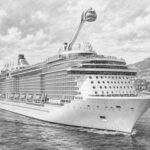
What should you expect on Ovation of the Seas in Alaska? Expect a mid-size Royal Caribbean megaship built around glass and indoor space, so you stay warm and dry while the scenery does the work. She is a Quantum-Class ship carrying roughly 4,180 guests at double occupancy, and she was designed for exactly the kind of cool, changeable weather Alaska serves up. You will trade the open-deck, palm-tree feel of a Caribbean cruise for glass-walled lounges, a covered pool, and observation venues that let you watch glaciers and fjords from inside. Here is an honest, practical picture of what your days will actually look like, what is included, what costs extra, and what tends to surprise first-time Alaska cruisers.

Everything in this article and far more, deck by deck, in The Ultimate Guide to Sailing on Ovation of the Seas.
Get the book →The mid-size Quantum feel
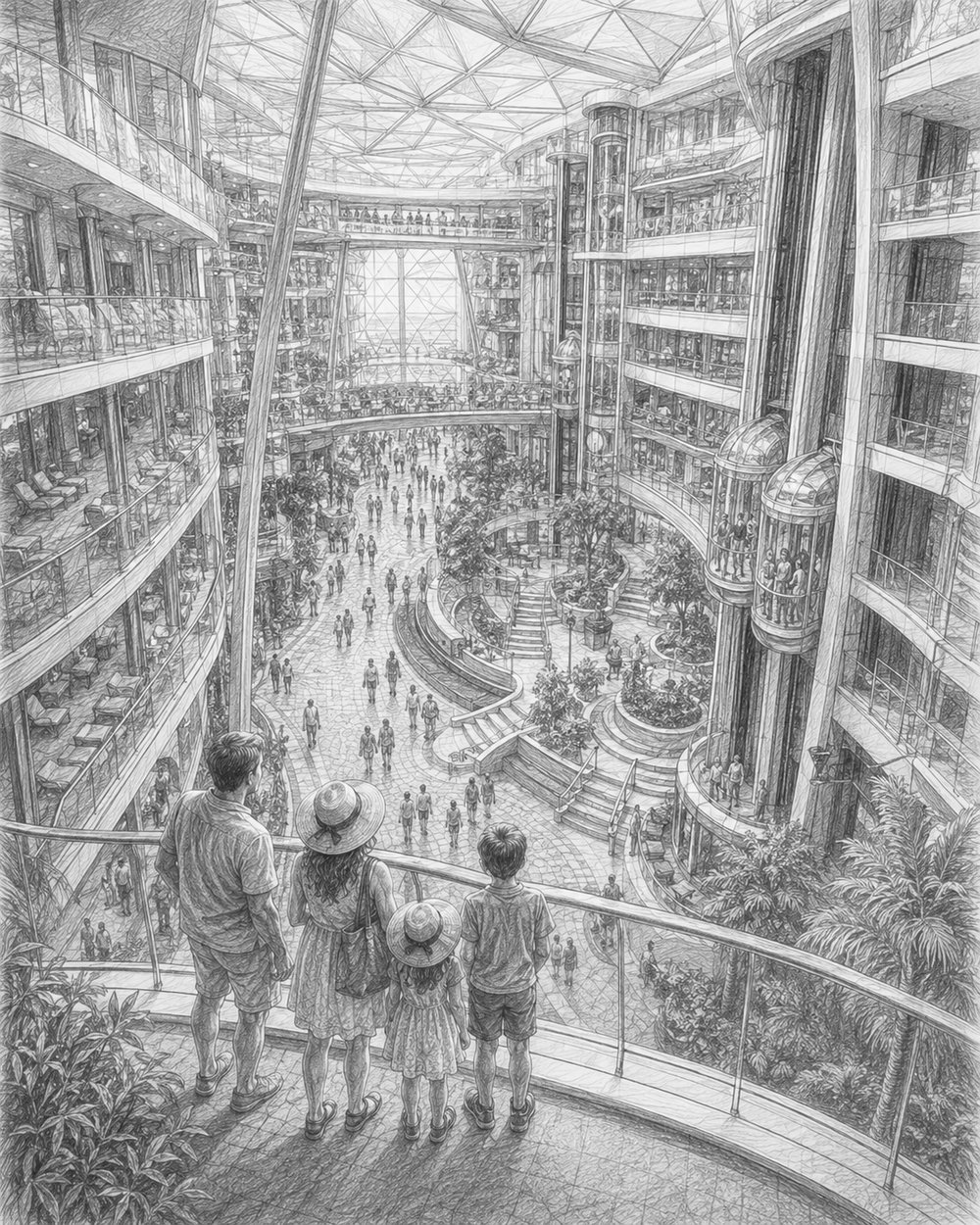
Ovation of the Seas sits in a useful middle ground. At around 168,000 gross tons across roughly 16 guest decks, she is large enough to carry a genuine spread of restaurants, bars, and activities, but she does not feel as sprawling as the giant Oasis-Class ships. You can learn her layout in a day or two. Most of the action funnels along the Royal Esplanade, an indoor promenade that acts as the ship’s main street, so you rarely feel lost.
The Quantum design also shows its age well because she has been freshly amplified, meaning updated venues and refreshed spaces. What you notice most, though, is how the ship is oriented inward. Where a warm-weather cruise ship pours its energy onto open sun decks, Ovation keeps a large share of her best real estate under glass. That is a deliberate choice for her signature Alaska program, and once you sail her in the north you understand why. On a gray, drizzly afternoon in the Inside Passage, the ability to sit somewhere bright and heated while watching the coastline slide past is worth more than any lido deck.
Capacity is worth setting expectations around too. Double occupancy is roughly 4,180 guests, but when every extra berth is filled she can carry close to 4,900. That difference is mostly families during school holidays, and it changes how busy the pool, the buffet, and the kids’ areas feel. If you have a choice of sailing dates, a voyage outside peak family weeks will feel noticeably calmer. For a fuller orientation to the ship’s decks and flow, the Ovation of the Seas cruise guide is a good companion to this article.
Indoor-forward design: the glass roof that changes everything
The single most important thing to understand about this ship in Alaska is the glass. Ovation carries a glass-roofed indoor pool and a separate glass-domed, adults-only Solarium. Both are climate controlled, both stay open when the weather turns, and both are where a lot of guests end up spending their scenic days.
Picture a typical Alaska afternoon: low cloud, a cool wind, an intermittent rain that never quite commits to stopping. On many ships that means retreating to your cabin. On Ovation it means moving to the indoor pool deck, where you can swim or soak in a hot tub with daylight streaming through the roof and mountains visible through the walls. The Solarium is the quieter, adults-only version of the same idea, with loungers arranged for relaxing rather than splashing. It becomes a favorite reading and coffee spot precisely because it is calm and warm while the outdoors is neither.
This indoor-forward layout extends beyond the pools. The Two70 lounge has a two-story wall of glass that fills the room with light by day, and the Esplanade keeps you connected to shops, cafes, and bars without ever stepping outside. You will still want to go out on the open decks for glacier viewing and fresh sea air, but you are never forced to choose between comfort and the view.
Crowds and a typical day
Alaska itineraries have a natural rhythm that shapes how crowded the ship feels. Ovation’s Alaska sailings are open-jaw, one-way voyages between Vancouver, Canada and Seward, the port for Anchorage, running either northbound or southbound. A typical week alternates scenic sea and glacier days with port days in towns like Juneau, Skagway, Sitka, Icy Strait Point, and Ketchikan.
That alternation matters for planning. On port days, most guests go ashore, so the ship empties out and the pools, venues, and dining rooms feel roomy. On scenic days, especially the glacier-cruising day at Hubbard Glacier or Dawes Glacier in Endicott Arm, everyone is aboard at once and the best viewing spots fill up fast. The smart move is to flip the usual logic: use scenic days for outdoor viewing and shared spaces early, and save your indoor pool, spa, and specialty-dining downtime for when the ship is quiet.
A representative day might look like this. You wake to a scenic morning, grab coffee and a pastry at Cafe Promenade, and head to an open deck or the North Star as the ship approaches the ice. Late morning you warm up in the Solarium. Lunch is a quick plate at the Windjammer buffet or a slice at Sorrento’s. The afternoon is for an activity, a nap, or a bar with a view. Dinner is either your set table in the Main Dining Room or a specialty booking, and the evening brings a show. On a port day the shape changes entirely: you are off the ship for hours, then back aboard for a hot shower and a relaxed dinner while the crowds are thin.
To keep the busy moments from catching you out, reserve time-sensitive things ahead. The North Star, the specialty restaurants, and any shows that take bookings are the ones that sell through first on a full sailing.
The signature thrills
Quantum-Class ships are known for a cluster of activities you will not find on older vessels, and several of them are unusually well suited to Alaska. This is where Ovation earns her reputation, so it is worth knowing what each one actually is before you sail.
North Star over the fjords
The North Star is the headline experience. It is a jewel-shaped glass observation capsule mounted on a long mechanical arm that lifts you about 300 feet above the sea, swinging out over the water for a 360-degree view. In the Caribbean it is a fun novelty. In Alaska it is genuinely special: rising above the deck to look down on a glacier face, or out across a fjord ringed by mountains, is a perspective you cannot get any other way. Because it is popular and capacity is limited, reserve it early, and if you can, aim for a slot on the glacier-cruising day or as you sail a dramatic stretch of coast. Dedicated tips for making the most of it are in the guide to the Ovation of the Seas Alaska North Star experience.
RipCord by iFly and FlowRider
RipCord by iFly is a skydiving simulator, a vertical wind tunnel that lets you experience the feeling of freefall in a controlled chamber with an instructor. FlowRider is a surf simulator, a fast sheet of water where you try to stay upright on a board. Both are the kind of activity that shrugs off bad weather, which is exactly why they suit Alaska. When it is raining, a session in the wind tunnel is a much better use of an hour than staring at a gray horizon.
SeaPlex and Two70
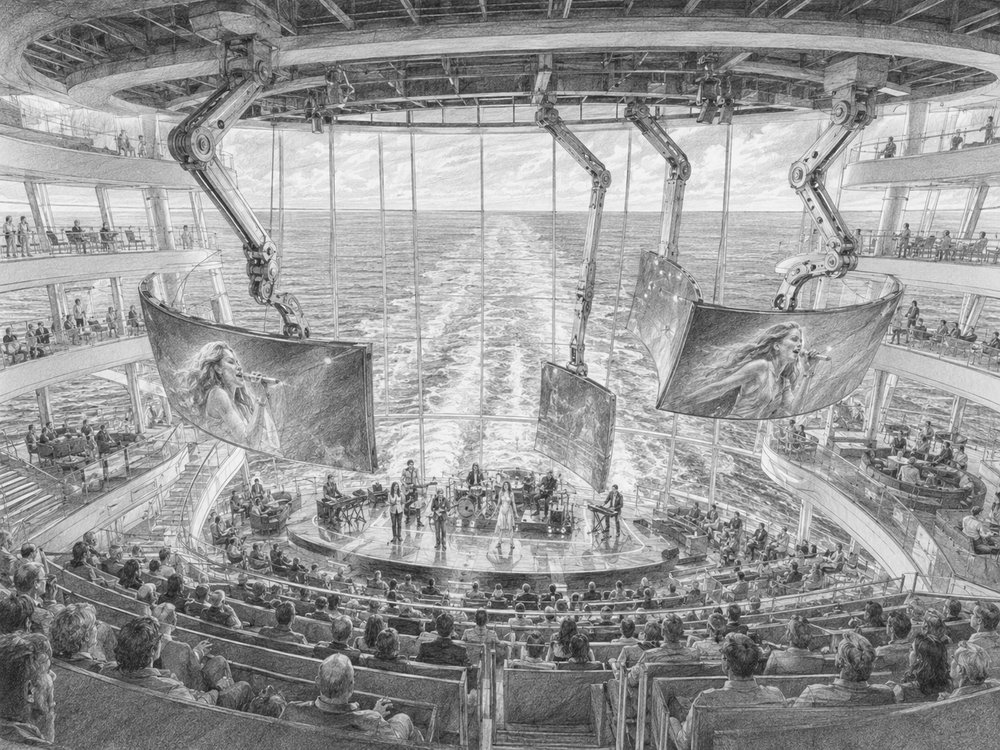
SeaPlex is billed as the largest indoor active space at sea, and it packs a lot into one hall: bumper cars, roller skating, basketball, and an arcade. For families with restless kids on a cool day, it is invaluable, because it turns bad weather into a non-issue. Two70 is a different kind of space, a multi-story venue with that huge glass wall by day and, by night, immersive shows using Vistarama projection and the moving Roboscreens. It is one of the more genuinely impressive theatrical spaces at sea, and worth catching at least one evening show there.
Around these headliners you also get a rock-climbing wall, the Bionic Bar with its robot bartenders, the Music Hall for live music, and the Vitality Spa. None of it depends on sunshine, which is the whole point.
Dining: included versus specialty
You can eat very well on Ovation without spending a dollar beyond your fare, and you can also choose to trade up. Knowing the split ahead of time helps you budget and book.
The included venues cover the essentials. The Main Dining Room is your sit-down, multi-course dinner with a rotating menu and table service. The Windjammer is the sprawling buffet, best for casual breakfasts and quick lunches. Cafe Promenade handles coffee, snacks, and light bites through the day, and Sorrento’s does pizza. Between them you have breakfast, lunch, dinner, and late-night covered at no extra charge.
The specialty restaurants cost extra and are booked separately. Wonderland leans into imaginative, playful dishes and a theatrical presentation. Jamie’s Italian is rustic Italian cooking. Chops Grille is the steakhouse. Izumi covers Japanese and sushi. Chef’s Table is an intimate, multi-course wine-paired dinner, and Johnny Rockets is a classic burger-and-shake diner. You do not need any of them to eat well, but many guests book one or two as a treat, often for a special evening or simply for a change of pace. Alaska is a cruise where a warm, unhurried specialty dinner after a long day ashore feels especially earned.
| Included dining | Specialty (extra charge) |
|---|---|
| Main Dining Room | Wonderland |
| Windjammer buffet | Jamie’s Italian |
| Cafe Promenade | Chops Grille |
| Sorrento’s pizza | Izumi, Chef’s Table, Johnny Rockets |
One practical note: specialty restaurants tend to fill their prime slots on busy sailings, so if there is a place you have your heart set on, book it early in the app rather than hoping to walk in.
Bars and entertainment
Evenings on Ovation are busy without being frantic. The Bionic Bar is a talking point in itself, with robotic arms mixing your drink from a tablet order, and it is a fun stop even if you only watch. The Music Hall hosts live bands and a range of themed nights, and it tends to be where the energy gathers later in the evening. Quieter drinking spots are scattered along the Esplanade and in the lounges, several of them with glass walls that make an early-evening cocktail feel like part of the scenery on a long northern day.
For shows, Two70 is the standout with its projection-and-Roboscreen productions, and the main theater carries other staged entertainment across the week. Because Alaska days can run long with light late into the evening, the pace feels relaxed; you can catch a show and still step out to see the coast. Keep an eye on the daily schedule, since a few of the bigger productions take reservations. More ideas for structuring your evenings are in these Royal Caribbean Ovation of the Seas tips.
The app runs your day
The Royal Caribbean app is not optional if you want a smooth week. It holds the daily schedule, your dining reservations, show bookings, and the deck plans, and it is where you reserve time-sensitive activities like the North Star. Download it and set up your account before you sail, because the ports and scenic days move around by voyage and the app is where the current, confirmed version lives. Treat it as your single source of truth for times, and check it each evening for the next day.
A few housekeeping facts fit here. Your SeaPass card is your cashless account for everything aboard and your key to the cabin. Daily gratuities are added automatically to your account. Wi-Fi is a paid plan, so if you need to stay connected, buy it early; if you do not, an Alaska cruise is a fine place to unplug, since you will often be out of range along the coast anyway. Because the app carries the live schedule, always confirm your specific ports and times there rather than relying on any printed itinerary.
What surprises first-time Alaska cruisers
Even seasoned Caribbean cruisers are caught off guard by a few things on their first Alaska sailing. None of them are problems if you plan for them.
The weather is the itinerary
Alaska is cool and often wet, and conditions change through the day. This is not a sun cruise, and treating it like one leads to disappointment. The upside is that the ship is built for it, and the weather is part of what makes the scenery so dramatic: mist on the mountains, low cloud parting over a glacier, rain giving way to a clear evening. Accept the weather as the experience rather than fighting it.
Dressing in layers
The right approach is layers: a base layer, a warm mid layer, and a waterproof, windpro/outer shell, plus a hat and gloves for deck viewing and the North Star. You will peel layers off inside the warm, glass-covered venues and pull them back on when you step out to watch a glacier. A packable rain jacket earns its place in your bag every single day. Comfortable, waterproof footwear matters more than any dressy outfit, because port days involve walking, sometimes on wet ground.
Wildlife viewing takes patience
Whales, sea otters, eagles, and bears are out there, but they appear on their own schedule, not yours. Bring binoculars, keep them handy on deck and on your balcony, and get in the habit of scanning the water and shoreline. This is one of the strongest arguments for booking a real balcony rather than an interior on this particular cruise: quiet, private wildlife watching from your own room, coffee in hand, is one of the best parts of an Alaska voyage. Announcements sometimes flag major sightings, but the good moments often belong to whoever happened to be looking.
Two more surprises worth naming: because the sailings are one-way between Vancouver and Seward, you fly into one city and out of the other, so plan your flights accordingly rather than assuming a round trip. And excursions in these ports, from whale watching in Juneau to the White Pass railway in Skagway, sell out early, so book the ones you care about well ahead. If this is your very first cruise on the ship, the walk-through for a first-time cruise on Ovation of the Seas covers the embarkation-day basics in more detail.
Get the complete Ovation of the Seas playbook

If you want every venue, cabin choice, port, and booking decision mapped out before you sail, “The Ultimate Guide to Sailing on Ovation of the Seas” walks you through it step by step. It is part of the Ultimate Ship Guides series by Leo Sotropa, with clear action steps in every chapter so you always know what to do next.
Frequently asked questions
Is Ovation of the Seas a good ship for Alaska?
Yes, and it is her signature program. Her Quantum-Class design puts a large share of her best spaces under glass, including a glass-roofed indoor pool and a glass-domed Solarium, which keeps you warm and dry when Alaska turns cold or rainy. Combined with the North Star observation capsule for glacier and fjord viewing, she is one of the better-suited large ships for the region.
How big is the ship and how many guests does she carry?
She is around 168,000 gross tons with roughly 16 guest decks, carrying about 4,180 guests at double occupancy and up to close to 4,900 when every berth is filled. That makes her a mid-size megaship, large enough for plenty of dining and activities but easier to learn than the largest Oasis-Class ships.
What is included in the fare versus what costs extra?
Included dining covers the Main Dining Room, the Windjammer buffet, Cafe Promenade, and Sorrento’s pizza. Specialty restaurants like Wonderland, Jamie’s Italian, Chops Grille, Izumi, Chef’s Table, and Johnny Rockets cost extra. Daily gratuities are added to your account and Wi-Fi is a paid plan. Prices change, so confirm the current details in the Royal Caribbean app.
Do I need to reserve the North Star and other activities?
For the North Star, yes, reserve it early, because capacity is limited and it is very popular in Alaska. Specialty restaurants and some of the larger shows also take bookings and fill their prime slots on busy sailings. Use the Royal Caribbean app to reserve time-sensitive activities as soon as booking opens for your voyage.
Should I book a balcony cabin for an Alaska cruise?
A real balcony is more worthwhile in Alaska than on most cruises, because it gives you private glacier and wildlife viewing from your own room. If budget is tight, the Virtual Balcony interior with its floor-to-ceiling real-time ocean screen is the best value alternative. For the details, see the guide to the best cabins on Ovation of the Seas.
What should I pack for weather on this cruise?
Dress in layers: a base layer, a warm mid layer, and a waterproof, windproof outer shell, plus a hat and gloves for deck viewing and the North Star. Add comfortable waterproof footwear for walking in port and binoculars for wildlife. A packable rain jacket is useful every day, since conditions change quickly and rain is common.
How do the itineraries work, since they are one-way?
Alaska sailings are open-jaw, running one-way between Vancouver, Canada and Seward, the port for Anchorage, either northbound or southbound. Ports typically include Juneau, Skagway, Sitka, Icy Strait Point, and Ketchikan, plus a scenic glacier-cruising day. Because it is one-way, plan flights into one city and out of the other, and confirm your exact ports in the app since itineraries vary by sailing.
Ready for the whole ship in one place? It is all in The Ultimate Guide to Sailing on Ovation of the Seas.
Get the book →
Meet Leo: The Heartbeat Behind ‘A Country A Month’
Journeying through the pages of A Country A Month, you might often feel the rhythm of a storyteller’s heartbeat, pulsating through each line, each image, and each adventure shared. That heartbeat belongs to none other than our remarkable website editor, Leo.
With a lens in one hand and a pen in the other, Leo seamlessly marries his passions for photography and writing. His eye captures moments that words can barely describe, yet his eloquence brings those images to life, transcending borders and connecting us all through shared stories. An avid traveler, every country he’s visited has added another chapter to his expansive tale, and through our platform, he generously shares these chapters with us.