If this is your first time cruising and you are looking at Quantum of the Seas, here is the short answer: you are picking a genuinely easy ship to learn on. She sails round-trip from Los Angeles to Baja and the Mexican Riviera, she has more indoor entertainment than most ships afloat, and almost everything you need to know can be handled from a single phone app. The trick to a smooth first cruise is not luck. It is a handful of decisions made before you leave home, plus knowing what actually happens on embarkation day so nothing catches you off guard. This guide walks a first-timer through the whole thing, from booking to your first evening aboard, using only what is real about this specific ship.
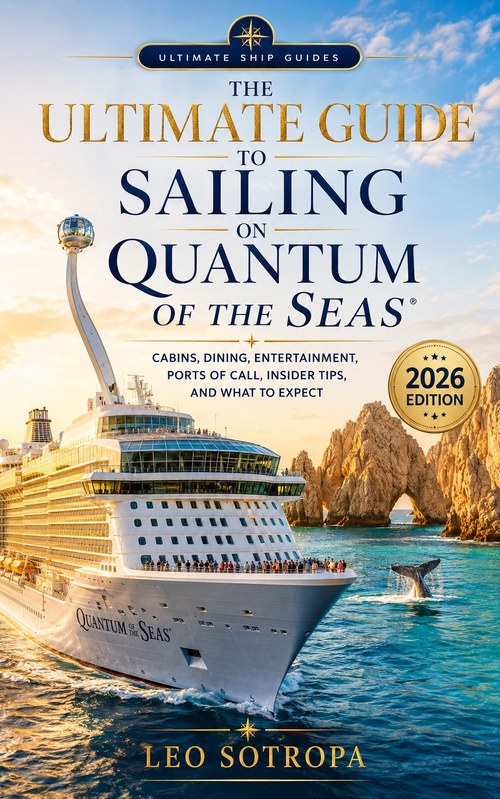
Everything in this article and far more, deck by deck, in The Ultimate Guide to Sailing on Quantum of the Seas.
Get the book →Why Quantum of the Seas is a good first ship
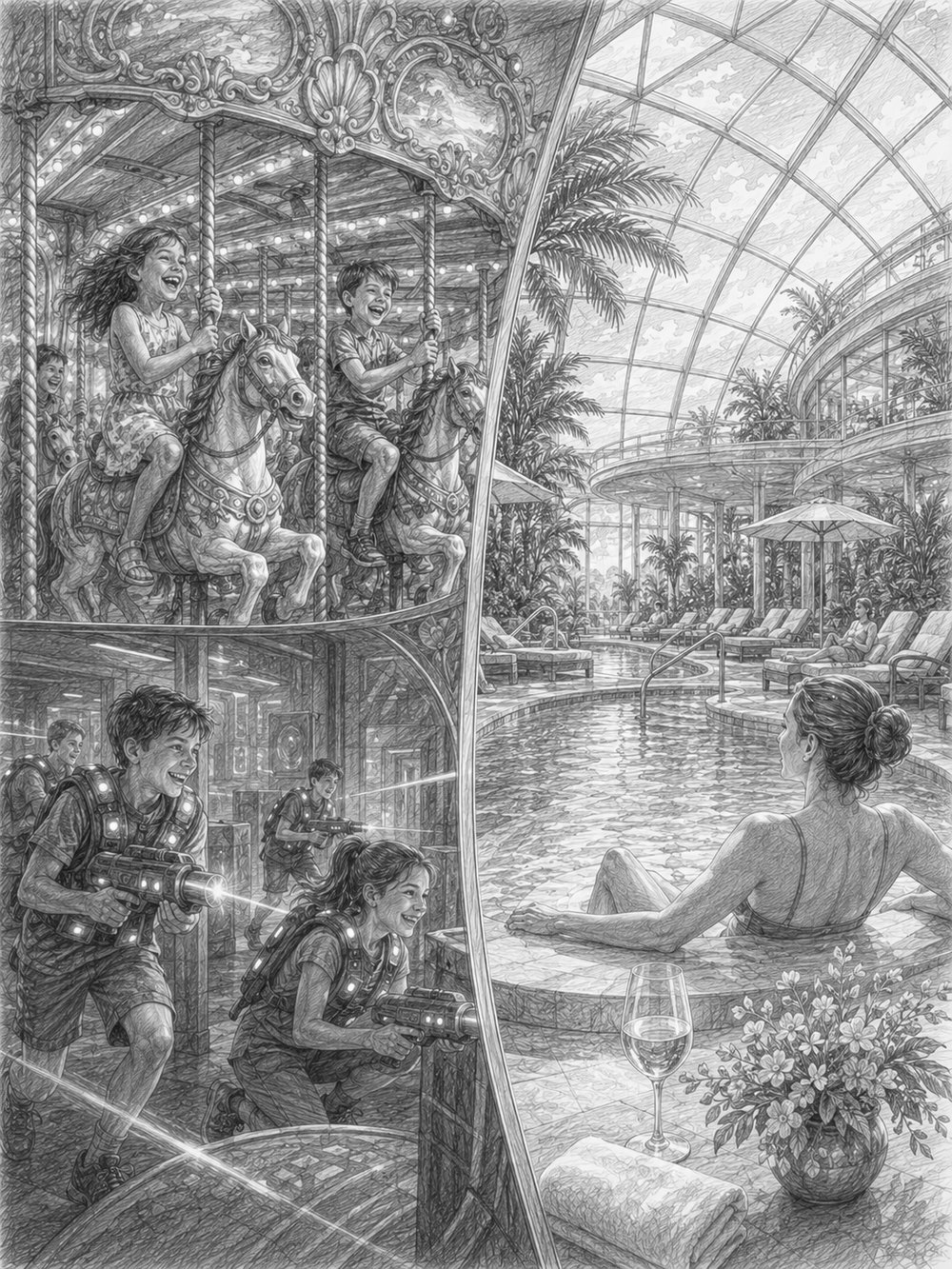
Quantum of the Seas is the original Quantum-Class ship, the one that introduced the North Star observation capsule, the RipCord by iFly skydiving simulator, SeaPlex, the Two70 venue, and the Bionic Bar to Royal Caribbean. That matters for a first-timer for one practical reason: this ship was designed around indoor, weather-proof entertainment. On the open Pacific stretches between Los Angeles and Mexico, you can have a gray, breezy sea day and still fill it easily with bumper cars, a surf simulator, an arcade, roller skating, and a show, all under a roof. You are never stuck staring at a pool you cannot use.
She is a big ship, around 168,000 gross tons with roughly 16 guest decks and about 4,180 guests at double occupancy (closer to 4,900 when full). That sounds enormous, but the layout is intuitive. Learn the indoor Royal Esplanade promenade and the main pool deck, find the Windjammer buffet and your Main Dining Room, and you have the spine of the ship memorized by the end of day one. For a broader orientation, our complete Quantum of the Seas cruise guide lays out the whole ship deck by deck.
Booking basics: short Baja or longer Mexican Riviera?
Your first real decision is length and route, and the two options feel quite different. Quantum sails round-trip from Los Angeles, with the cruise terminal in San Pedro. The itineraries currently range from 3-night Ensenada getaways up through 5-, 6-, and 7-night Baja and Mexican Riviera cruises. Ports and lengths vary by sailing, so always confirm your exact itinerary in the Royal Caribbean app before you get attached to a particular stop.
A short Baja sailing typically stays close: Cabo San Lucas, often with an overnight call, plus Ensenada, and sometimes Santa Catalina Island (Avalon) just off the California coast. It is a lot of ship time and a couple of easy stops, which is honestly ideal for a first cruise. You get to focus on learning the ship instead of racing off to a new port every morning. The longer Mexican Riviera voyages add Mazatlán and Puerto Vallarta, giving you more Mexico and more variety, but also more early mornings and more planning.
- Choose a short Baja sailing if: you want a low-pressure introduction, more time to enjoy North Star and SeaPlex, and a lower total cost.
- Choose a longer Mexican Riviera sailing if: you want to actually explore Mexico, do not mind earlier port mornings, and want more sea days to spread things out.
If you are torn, we compare the two routes in more detail in our looks at the Baja Mexico itineraries and the fuller Mexican Riviera sailings.
Picking your first cabin
Cabin choice is where first-timers overthink or underthink. The categories run from the value Virtual Balcony interior, which has a floor-to-ceiling real-time screen showing the ocean outside, up through Ocean View, Balcony rooms that are all outward-facing, Studio cabins built for solo travelers, and suites topping out at the two-deck Royal Loft Suite. For a first cruise on a short getaway, a Virtual Balcony interior is the best value going: you get natural-feeling light and a view without paying balcony prices.
If your budget stretches and you are at all worried about motion, the best all-round pick is a midship Balcony on the mid-decks. That location gives you space, real light, and the steadiest ride, which genuinely helps on the open Pacific between LA and Mexico. Whatever you book, check the deck plan and avoid a few traps: rooms directly under the pool deck or SeaPlex can be noisy, rooms near Two70 or the Music Hall catch nightlife sound, forward high-deck rooms feel motion the most, and some lower-deck balconies have lifeboat-obstructed views. Our guide to the best cabins on Quantum of the Seas goes deck by deck if you want to get this exactly right.
Getting there: flying into LAX and reaching San Pedro
The single most useful thing a first-timer can do is fly in a day early. The ship leaves from the cruise terminal in San Pedro, and Los Angeles traffic is heavy and unpredictable. If you fly in the morning of your cruise and a flight delays or the freeway locks up, you risk missing the ship, and the ship does not wait. Flying in the day before turns embarkation from a stressful sprint into a relaxed morning.
Most first-timers fly into LAX, then take a rideshare, taxi, or pre-booked shuttle down to San Pedro, which is a reasonably short drive south when traffic cooperates. Spend the night before at a hotel near the port or somewhere along the route, and you will arrive at the terminal calm and early. If you have the extra time, the San Pedro area itself has things worth a look: the Battleship USS Iowa is docked nearby, the Cabrillo Marine Aquarium is close, and you are within easy reach of downtown LA, Hollywood, and Long Beach if you want to build a day or two around the cruise.
What to pack for a Baja and Mexican Riviera cruise
Packing for this route is straightforward because the climate is warm and the ship handles the rest. Think casual daytime clothes, swimwear, and a light layer, because ship interiors and Pacific evenings can get cool even when the ports are hot.
- Comfortable walking shoes for the ship and for port days at Cabo, Ensenada, and Catalina, where you will be on your feet.
- Swimwear and a cover-up for the pools, the Solarium, and Medano Beach in Cabo.
- A light jacket or sweater for cool evenings on deck and heavily air-conditioned indoor venues.
- One or two nicer outfits for the Main Dining Room and specialty restaurants; you do not need formalwear to have a good time.
- Reef-safe sunscreen, sunglasses, and a hat for tender-port beach days.
- Any motion-sickness remedies you might want, plus your own medications, since the open-water stretches can move the ship.
- A small day bag for tender trips ashore, with your SeaPass card, some cash, and your phone.
Pack a carry-on with essentials for embarkation day. Your checked bags get delivered to your cabin door over the course of the afternoon, sometimes into the early evening, so keep your swimsuit, medications, and anything you cannot do without in the bag you carry aboard yourself.
Embarkation day, step by step
Embarkation is the part that intimidates first-timers most, and it is genuinely the easiest part once you know the sequence. Here is how the day actually flows in San Pedro.
- Check in online first. Before you travel, use the Royal Caribbean app to complete check-in, upload your photo, add your documents, and pick an arrival time slot. Doing this at home saves you real time at the terminal.
- Arrive around your slot. Get to the San Pedro terminal near your assigned window. Earlier is not always better; the terminal manages flow by time slot.
- Drop your checked bags. Porters take your tagged luggage curbside, and it travels separately to your cabin. Tip them a couple of dollars per bag.
- Security and check-in. You pass through a security screening like an airport, then check in with your documents. You will get or activate your SeaPass card, which becomes your room key and onboard account.
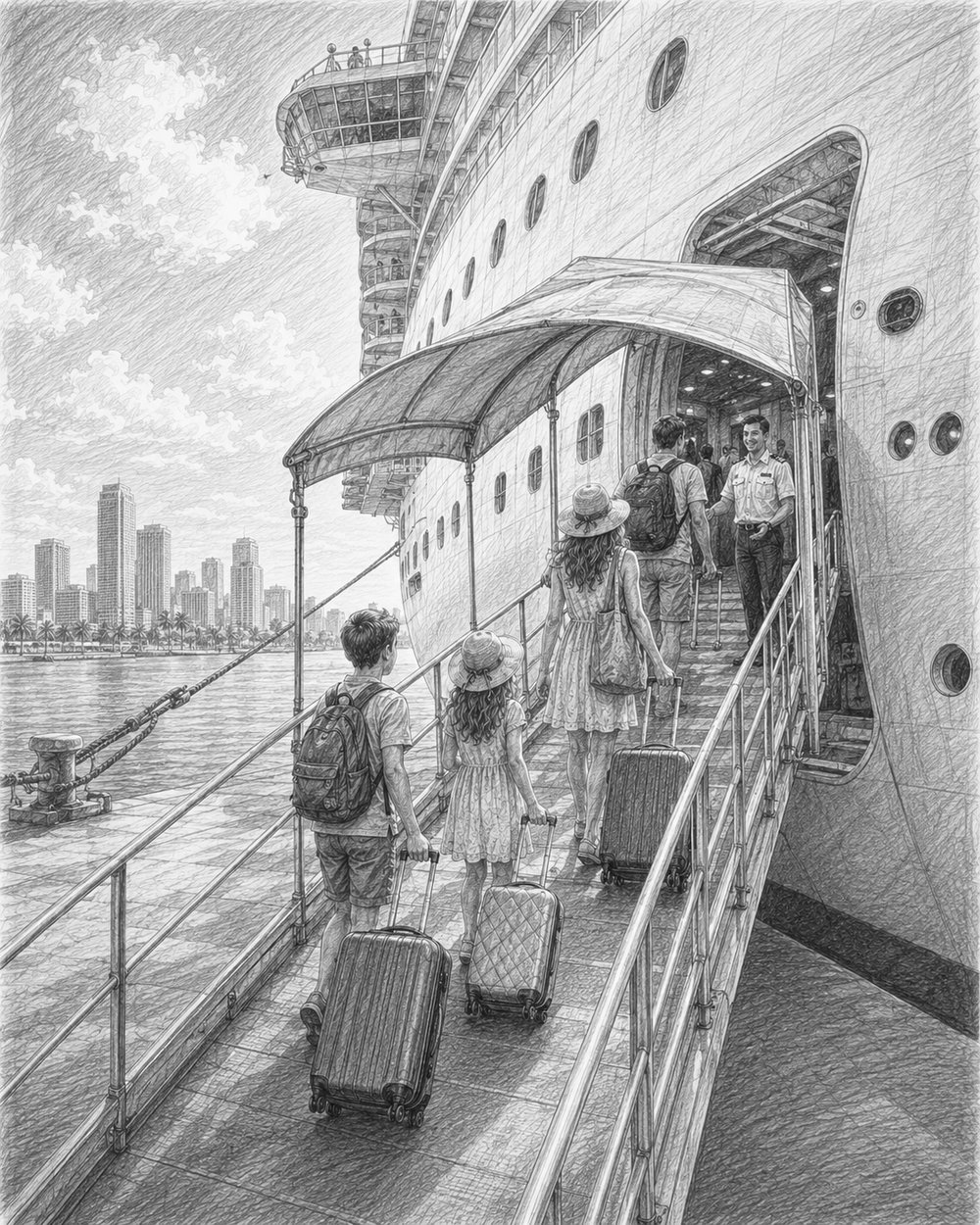
- Walk aboard. You cross the gangway, get your photo taken, and step onto the Royal Esplanade. That is it, you are cruising.
The whole process, done with online check-in finished ahead of time, often takes well under an hour. Bring your passport, your booking details, and a little patience for the security line, and you are through.
Your first hours aboard
Here is a first-timer secret: your cabin usually is not ready the moment you board. That is fine, because the first couple of hours are the best time to explore an almost-empty ship and get your bearings. Do not just stand around waiting for your room.
- Grab lunch. Head to the Windjammer buffet or the Royal Esplanade for a first meal while most guests are still checking in.
- Walk the ship. Find your Main Dining Room, the pool deck, SeaPlex, Two70, and the Solarium so you know where things are.
- Book your priorities. Open the app and lock in North Star, RipCord, and any specialty dining before the good times fill (more on this below).
- Find your muster station. Complete the quick safety drill, which on modern Royal Caribbean ships you start in the app and finish by visiting your assigned station in person. It only takes a few minutes.
- Settle in. Once cabins open, drop your carry-on, meet your stateroom attendant, and unpack the essentials.
By the time your checked bags arrive and the ship pulls away from San Pedro, you will already feel like you know your way around. For a fuller picture of what daily life aboard looks like, see our overview of what to expect on Quantum of the Seas.
Book North Star, RipCord, and dining early
The signature experiences on this ship are popular, and the ones you care about most are the ones that book out first. Do not assume you can just walk up on the last sea day.
North Star
North Star is the jewel-shaped glass capsule on a mechanical arm that lifts you about 300 feet above the sea for 360-degree views. It is one of the most-requested things on the ship, and it is often complimentary on sea days, which makes those slots go fast. Reserve it early, ideally in your first hours aboard, and aim for a clear-weather sea day so the view pays off.
RipCord by iFly and FlowRider
RipCord by iFly is a vertical wind tunnel that lets you experience the sensation of skydiving, and FlowRider is the surf simulator on the back of the ship. Both have limited session capacity, so book your RipCord flight through the app early. These are great first-day activities because they are fun to watch even before your turn.
Specialty dining
Your fare already includes plenty of food: the Main Dining Room, the Windjammer buffet, Café Promenade, and Sorrento’s pizza. You never have to spend a dollar more to eat well. But if you want to try the specialty restaurants, the first night is often quieter and easier to book. The extra-charge options include Wonderland with its imaginative dishes, Jamie’s Italian, Chops Grille, Izumi, the Chef’s Table, and Johnny Rockets. Reserve any must-try venues in the app before they fill on peak nights.
The app and your SeaPass card
Two things run your whole cruise: the Royal Caribbean app and your SeaPass card. Download the app before you sail, because it is how you check in, view the daily schedule, book activities and dining, find venues, and confirm your exact itinerary and port times. On a ship this size, the app is not optional; it is your map and your planner.
The SeaPass card is your cashless account for the whole voyage. It is your room key, your ID for getting on and off the ship, and the way you pay for everything aboard, so you rarely handle cash except for tips ashore and tender-port purchases. Daily gratuities are automatically added to your account, and Wi-Fi is a paid plan you buy separately if you want to stay connected. Budget for those two line items up front so nothing surprises you on the final statement. More money-saving specifics live in our Royal Caribbean Quantum of the Seas tips.
Budgeting and gratuities
The cruise fare covers a lot: your cabin, main dining and buffet meals, most entertainment, and the core activities. The costs that catch first-timers are the extras, and they are all avoidable or plannable.
| Included in your fare | Costs extra |
|---|---|
| Main Dining Room, Windjammer, Café Promenade, Sorrento’s | Specialty restaurants (Chops, Jamie’s, Izumi, Wonderland) |
| North Star (often), SeaPlex, FlowRider, shows | Wi-Fi plan, some premium activities |
| Pools, Solarium, rock wall, most entertainment | Daily gratuities (auto-added), spa, drinks packages |
| Adventure Ocean kids programming | Shore excursions, port purchases, casino |
Daily gratuities are added automatically to your SeaPass account, so factor them into your budget from the start rather than treating them as a surprise at the end. Beyond that, decide before you sail whether you want a drinks package, a Wi-Fi plan, and any specialty dinners, and you will have a realistic total in your head. Keeping prices in mind is smart, but remember exact figures change, so confirm everything in the app.
Tender ports: Cabo and Catalina basics
Some of your stops are tender ports, which means the ship anchors offshore and small boats ferry you to land. On this itinerary, Cabo San Lucas and Santa Catalina Island (Avalon) are tender ports, while Ensenada is a dock where you walk right off. Tendering is nothing to fear, but it changes how your morning works.
- Start early. Tender operations take time. If you have an excursion or just want a full day ashore, get in the tender line early rather than waiting until late morning.
- Bring a small day bag with your SeaPass card, some cash, sunscreen, and your phone. You need the SeaPass to get on and off the tender.
- Watch the last-tender time. The ship posts a final return time in the app. Be back with margin to spare, because a tender port is exactly where people cut it too close.
In Cabo, often an overnight call, you can see El Arco at Land’s End, relax at Medano Beach, visit Lover’s Beach by water taxi, or go sport fishing or whale watching in season. On Catalina, Avalon gives you the historic Casino building, glass-bottom boats, snorkeling at Lover’s Cove, golf carts, and a botanic garden. In Ensenada, since you dock, you can more freely reach La Bufadora blowhole, the wineries of the Valle de Guadalupe, and the town’s taco and street-food scene. Longer Mexican Riviera sailings add Mazatlán, with its historic Centro, malecón boardwalk, and El Faro lighthouse, and Puerto Vallarta, with its Malecón and Playa Los Muertos.
Seasickness: what actually helps
The stretch between Los Angeles and Mexico is open Pacific, and the ship can move on it. Most people feel nothing on a vessel this size, but if you are prone to motion, a few real steps make a difference. Book a midship cabin on the mid-decks, where movement is least, and avoid forward high-deck rooms, which feel it most. Bring whatever remedy you trust, whether that is wristbands, over-the-counter tablets, or a prescription, and start it before you feel unwell rather than after. On the ship, fresh air and a fixed point on the horizon help, and the many indoor venues near the ship’s center give you stable places to relax if a swell picks up. A steady cabin and a little preparation are usually all it takes.
Common first-timer mistakes to avoid
- Flying in the same day. LA traffic and flight delays make this the single biggest risk to your cruise. Come in a day early.
- Skipping the app. Without it you cannot easily book North Star, RipCord, or dining, and you will miss the daily schedule and port times.
- Waiting to book signature activities. North Star and RipCord fill up. Reserve in your first hours aboard.
- Packing everything in checked bags. Your luggage arrives at your cabin over the afternoon. Carry your essentials aboard.
- Forgetting gratuities are automatic. Budget for daily gratuities and a Wi-Fi plan so the final bill holds no surprises.
- Cutting tender times close. Start early at Cabo and Catalina, and be back before the last tender.
- Standing around waiting for your cabin. Explore, eat, and book activities in those first hours instead.
Get these right and your first cruise runs smoothly. Quantum of the Seas is a forgiving ship to learn on, with enough indoor variety that even a rough sea day is a good day, and a route that eases you into cruising without overwhelming you with ports.
Get the complete Quantum of the Seas playbook
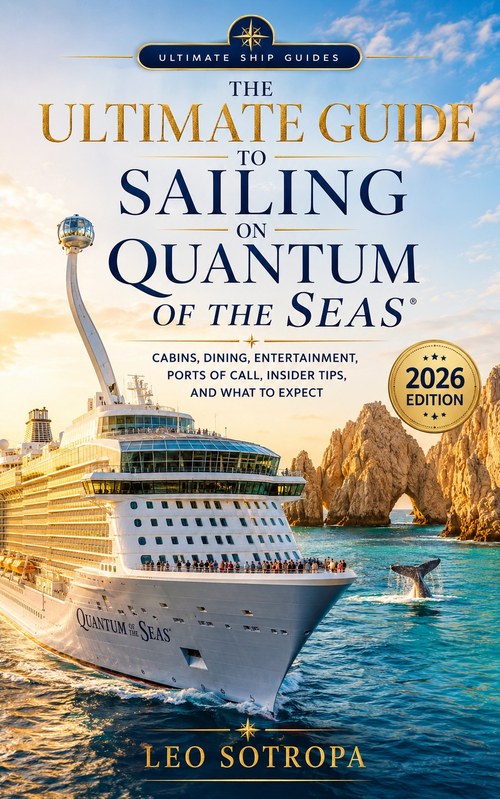
Ready to plan every detail with confidence? “The Ultimate Guide to Sailing on Quantum of the Seas” walks you through booking, cabins, dining, and every signature venue with clear action steps in every chapter. It is part of the Ultimate Ship Guides series by Leo Sotropa, written to turn a nervous first-timer into a confident cruiser.
Frequently asked questions
Is Quantum of the Seas good for first-time cruisers?
Yes. She is the original Quantum-Class ship, built around indoor, weather-proof entertainment like SeaPlex, Two70, and the North Star, so even a gray sea day stays fun. The layout is intuitive, the app handles most logistics, and the Baja and Mexican Riviera routes from Los Angeles are an easy introduction to cruising.
Where does Quantum of the Seas sail from?
She sails round-trip from Los Angeles, with the cruise terminal in San Pedro, on Baja and Mexican Riviera itineraries. Most first-timers fly into LAX and travel south to San Pedro. Because LA traffic is heavy, fly in a day early. Always confirm your exact ports and times in the Royal Caribbean app.
Should I book a short Baja cruise or a longer Mexican Riviera one?
For a relaxed first cruise, a short Baja sailing is ideal: it usually visits Cabo San Lucas, Ensenada, and sometimes Catalina, with plenty of ship time to learn the vessel. Longer Mexican Riviera voyages add Mazatlán and Puerto Vallarta, giving you more ports but earlier mornings. Itineraries range from 3 to 7 nights.
Do I need to book North Star and RipCord in advance?
Book them as early as you can, ideally in your first hours aboard using the app. North Star, the glass capsule that lifts you about 300 feet above the sea, is often complimentary on sea days and fills quickly. RipCord by iFly, the skydiving simulator, has limited session capacity too.
What are tender ports, and which stops use them?
At a tender port the ship anchors offshore and small boats ferry you ashore. On this itinerary, Cabo San Lucas and Santa Catalina Island (Avalon) are tender ports, while Ensenada is a dock you walk off. Start early, bring your SeaPass card and a day bag, and watch the last-tender return time posted in the app.
How do payments and gratuities work on board?
Your SeaPass card is your cashless account, room key, and ID for getting on and off the ship. Daily gratuities are added automatically, and Wi-Fi is a separate paid plan. Included dining covers the Main Dining Room, Windjammer, Café Promenade, and Sorrento’s; specialty restaurants cost extra. Confirm current prices in the app.
What should I do about seasickness on the Pacific?
Most guests feel little on a ship this size, but the open water between LA and Mexico can move. Book a midship cabin on the mid-decks for the steadiest ride, avoid forward high-deck rooms, and bring your preferred remedy, starting it before you feel unwell. Fresh air, the horizon, and the ship’s central indoor venues all help.
Ready for the whole ship in one place? It is all in The Ultimate Guide to Sailing on Quantum of the Seas.
Get the book →
Meet Leo: The Heartbeat Behind ‘A Country A Month’
Journeying through the pages of A Country A Month, you might often feel the rhythm of a storyteller’s heartbeat, pulsating through each line, each image, and each adventure shared. That heartbeat belongs to none other than our remarkable website editor, Leo.
With a lens in one hand and a pen in the other, Leo seamlessly marries his passions for photography and writing. His eye captures moments that words can barely describe, yet his eloquence brings those images to life, transcending borders and connecting us all through shared stories. An avid traveler, every country he’s visited has added another chapter to his expansive tale, and through our platform, he generously shares these chapters with us.