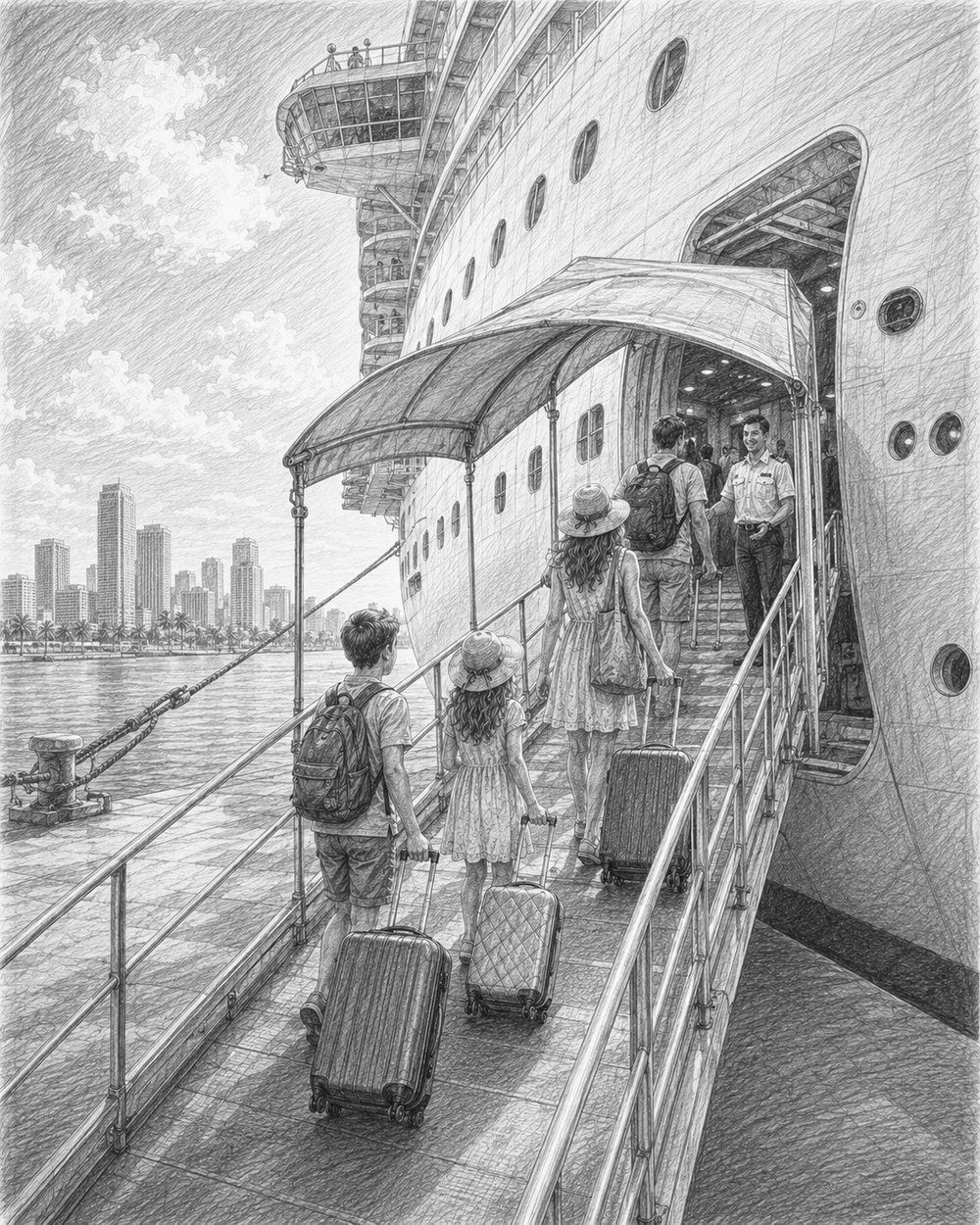
Is a short 3-to-5-night cruise from Miami a good first cruise? It is one of the best first cruises you can take, and Freedom of the Seas is built for it. A short Caribbean cruise first timer guide comes down to a few honest truths: a shorter trip is cheaper, lower-pressure, and long enough to fall in love with cruising without committing a full week before you know you like it. Freedom of the Seas sails round-trip from Miami on 3-, 4-, and 5-night getaways to the Bahamas, with the star stop being Perfect Day at CocoCay, Royal Caribbean’s private island. This guide walks you through everything a first-timer actually needs to know, from booking and packing to embarkation day and the small mistakes that trip people up.
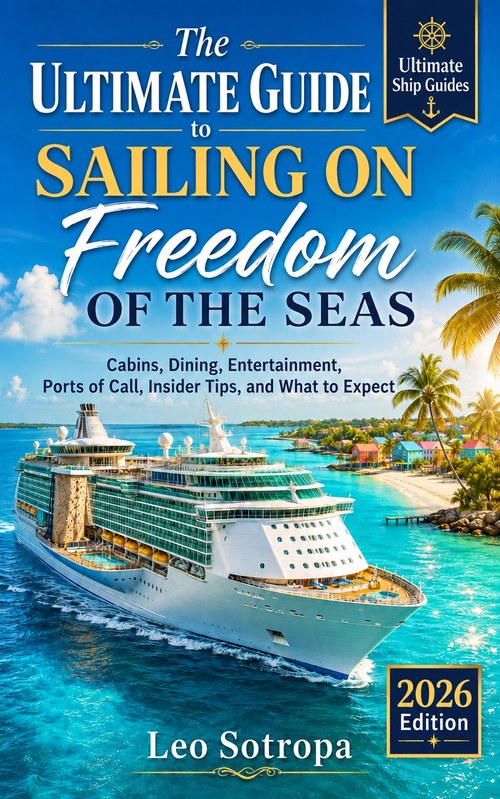
Everything in this article and far more, deck by deck, in The Ultimate Guide to Sailing on Freedom of the Seas.
Get the book →Why a short cruise makes a great first cruise
A short getaway lowers every kind of risk. The fare is smaller, so if you discover cruising is not for you, you have not sunk a week’s vacation budget into finding out. You take fewer days off work. And a 3-to-5-night trip is genuinely enough to experience the whole rhythm of a cruise: the excitement of embarkation, a sea day, an island stop, the dining rooms, the shows, and the strange, pleasant feeling of a hotel that moves while you sleep.
Freedom of the Seas suits first-timers particularly well. She is a large ship, around 155,000 gross tons with roughly 15 guest decks and about 3,900 guests at double occupancy, so she carries the big-ship attractions people picture when they imagine a modern cruise. But she is a step smaller and more approachable than the Oasis-class and Icon-class giants, which means fewer overwhelming crowds and a layout you can learn in a day. She is also the ship that introduced the FlowRider surf simulator to cruising, and she has been amplified with newer features over the years, so there is plenty aboard without the scale feeling intimidating.
If you want the wider picture of what she offers beyond a first sailing, the complete Freedom of the Seas cruise guide is a good companion to this one.
Booking basics for your first Freedom cruise
The two biggest booking decisions are the length of the sailing and the cabin. For a first cruise, a 3- or 4-night trip is the classic choice: long enough to relax into it, short enough to be an easy yes. A 5-night sailing gives you an extra port or sea day and only a little more cost. Ports and lengths vary by sailing, so always confirm the exact itinerary and stops in the Royal Caribbean app before you commit.
Choosing a cabin without overthinking it
On a short cruise the cabin math is different from a week-long voyage, because you spend so little waking time in the room. Freedom offers Interior cabins (including some Promenade-view interiors that overlook the Royal Promenade), Ocean View, Balcony, and suites up to the Owner’s and Presidential Suites. Many first-timers do just fine in an Interior for a 3- or 4-night trip, and it is the best value on a short getaway. If you want the upgrade that first-timers most often appreciate, a midship Balcony on the mid-decks gives you natural light, a bit more space, and the steadiest ride.
A few cabins are worth avoiding as a beginner: rooms directly under the pool deck or the Windjammer buffet can catch early-morning noise, forward high-deck rooms move the most in any swell, and some lower-deck balconies have views partly blocked by lifeboats. Check the deck plan before you pick. If cabin choice is stressing you out, the breakdown in the guide to the best cabins on Freedom of the Seas covers every category in detail.
Packing for 3 to 5 nights
Short cruises are forgiving to pack for because you are only away a few days, but a warm-weather Bahamas trip has a few specifics. The mistake first-timers make is overpacking formalwear and underpacking the small practical items.
- Swimwear (bring two suits so one can dry) and a cover-up for pool decks and CocoCay.
- Casual daytime clothes plus one or two nicer outfits for the Main Dining Room and any specialty restaurant.
- Comfortable walking shoes for ports and water shoes if you plan to be in and out of the water.
- Reef-safe sunscreen, a hat, and sunglasses; the Bahamian sun is stronger than it feels on a breezy deck.
- Any medication in your carry-on, including motion-sickness remedies, plus a small day bag for embarkation.
- A lightweight layer or light rain jacket; interior spaces are air-conditioned and afternoon showers pass through.
Keep essentials for the first few hours in a carry-on: your travel documents, medication, swimwear, and a change of clothes. Checked bags are delivered to your cabin door through the afternoon, sometimes not until dinnertime, so you do not want your swimsuit trapped in a suitcase while the pool deck is open and waiting.
Flying into Miami and arriving a day early
The single most valuable piece of advice for any first-timer flying to their cruise is this: arrive in Miami the day before, not the morning of. Flight delays are the most common way people miss a ship, and a cruise will not wait for a late arrival. PortMiami sits right downtown, so an early arrival is easy and enjoyable.
An extra day also lets you actually see Miami. South Beach and Ocean Drive are the classic stroll, Little Havana along Calle Ocho is full of Cuban food and music, and Wynwood Walls is a whole neighborhood of outdoor murals. If you have more time on either end of your trip, the Everglades are within reach for an airboat tour. Even a single evening before embarkation turns the trip from a rushed dash to the port into a real city-plus-cruise vacation.
For more on the departure city and the wider itinerary, see the guide to Freedom of the Seas sailing the Bahamas from Miami.
Embarkation day, step by step
Embarkation is the part first-timers worry about most, and it is genuinely the smoothest it has ever been. Here is how the day flows.
- Check in online first. In the days before you sail, the Royal Caribbean app has you complete check-in, add a photo, upload documents, and pick an arrival time slot. Do this as early as it opens; earlier slots tend to go first.
- Arrive at your chosen time. Turning up at your assigned window keeps the terminal from bottlenecking. Too early and you may wait; on time and it moves quickly.
- Drop your checked bags. Porters at the curb take your tagged suitcases, which then travel separately to your cabin. Tip them a couple of dollars per bag; it is customary.
- Security and check-in. A quick screening like an airport, then a check-in desk or a mostly digital process confirms your booking and issues or activates your SeaPass card.
- Walk aboard. Your embarkation photo, and then you are on the ship, usually onto the Royal Promenade.

Your first hours aboard
Cabins are usually not ready the moment you board, so the first hours are for exploring. Rather than standing around, use the time well. Head up to the Windjammer buffet or another open eatery for lunch, then walk the ship so you can find your way later.
Learn the ship’s geography early. The Royal Promenade runs down the middle of the ship with shops, cafés, and bars, and it is the easiest landmark to orient by; from there you learn which way is forward and which is aft. Note where your dining room, the pool deck, and the nearest elevators are. On a short cruise this ten-minute investment pays off immediately, because you have fewer days to waste feeling lost.
When your cabin opens, drop your carry-on, find your cabin steward’s name, and locate the muster station listed on your SeaPass or in the app. The safety drill is mandatory and quick; the modern version has you watch a briefing in the app and check in at your assigned station, rather than gathering everyone at once. Get it done and your vacation officially begins. For a fuller sense of the onboard experience, the overview of what to expect on Freedom of the Seas fills in the details.
Book CocoCay experiences and dining early
This is the most important sentence in this guide for a short cruise: the best experiences sell out, so book them before you sail. On a 3-to-5-night trip you do not have spare days to reschedule, so planning ahead is the difference between a great trip and a frustrating one.
Perfect Day at CocoCay
CocoCay is the highlight of most Freedom itineraries, and a lot of it is included. Chill Island and the other beaches, the Oasis Lagoon freshwater pool, Splashaway Bay for families, the Skipper’s Grill and other complimentary eateries, and the walk-around island all come with your cruise. You could have a wonderful day without spending a dollar more.
The extras are what sell out. The Thrill Waterpark, home to Daredevil’s Peak, the tallest waterslide in North America, the zip line, the Up, Up and Away helium balloon, the Coco Beach Club with its overwater cabanas, and the private cabanas are all reserved separately and go early. If any of these are on your must-do list, book them in the app as soon as reservations open. A deeper look at the island is in the guide to Perfect Day at CocoCay on Freedom of the Seas.
Dining reservations
Your fare already includes a lot of food: the Main Dining Room, the Windjammer buffet, Café Promenade, Sorrento’s pizza, and, on amplified sailings, options like El Loco Fresh. You never have to pay extra to eat well. But if you want a specialty night at Chops Grille, an Italian dinner at Giovanni’s Table, Izumi, or a burger at Johnny Rockets, reserve early, especially for the first evening, which is a popular specialty-dining slot. Playmakers Sports Bar rounds out the extras. On a short cruise, one well-chosen specialty dinner can be a nice treat without blowing the budget.
The app and your SeaPass card
Two things run your cruise: the Royal Caribbean app and your SeaPass card. Download the app before you leave home and log into your sailing. It handles check-in, shows the daily schedule and menus, lets you book shore excursions and CocoCay experiences, and often serves as a deck map and chat tool for your travel party. It is the single tool that makes a first cruise feel manageable.
The SeaPass card is your room key, your ID for getting on and off the ship in port, and your cashless onboard account. There is no cash changing hands on the ship; you tap the card and settle up at the end. Wi-Fi is a separate paid plan, so if you want to stay connected, buy an internet package. Many first-timers enjoy going mostly offline for a few days, which a short cruise makes easy.
Budgeting and gratuities
The cruise fare covers your cabin, most dining, the shows, and the pools and many onboard attractions, which is what makes cruising such good value. But the total you pay is more than the fare, and first-timers are often surprised by the extras rather than the base price.
| Usually included | Usually extra |
|---|---|
| Cabin and all meals in the Main Dining Room, Windjammer, and complimentary venues | Specialty restaurants like Chops Grille and Giovanni’s Table |
| Shows, pools, FlowRider, rock wall, and most onboard attractions | Alcoholic drinks, specialty coffee, and soda unless on a package |
| Most CocoCay beaches, the Oasis Lagoon pool, and complimentary island eateries | CocoCay extras: Thrill Waterpark, zip line, cabanas, Coco Beach Club |
| Kids’ Adventure Ocean program and the day’s activities | Wi-Fi plan, spa treatments, casino, and shore excursions |
Daily gratuities are automatically added to your SeaPass account for each guest, each day. This is standard and covers your cabin steward, dining staff, and other crew; budget for it as a fixed part of the cost rather than a surprise. Drinks and specialty dining add an additional service charge on top. Prices are best confirmed in the app close to your sailing, since they change; for more ways to keep costs sensible, the collection of Royal Caribbean tips for Freedom of the Seas is worth a read.
Seasickness basics for nervous first-timers
Worried about feeling seasick? Most people on a large modern ship in the Bahamas feel very little. Freedom is a big, stable vessel, and the short Bahamas routes stay in relatively sheltered waters compared with an open-ocean crossing. Still, if you are prone to motion sickness, a few simple habits help.
- Book a midship cabin on a mid-deck; it moves the least. Forward, high, and aft cabins feel motion more.
- Bring your preferred remedy from home, whether that is over-the-counter tablets, ginger, or acupressure bands, and start it before you feel unwell rather than after.
- If you feel queasy, go to an open deck and look at the horizon; fresh air and a fixed point settle most people quickly.
- Eat lightly and stay hydrated; an empty or overloaded stomach both make it worse.
- The ship’s medical center and guest services can help if you need it, so you are never stuck.
Making the most of limited days
On a short cruise every day counts, so a loose plan beats winging it. You do not need an hour-by-hour schedule, just a sense of the one or two things that matter most to you each day.
Decide in advance what your priorities are. If it is the FlowRider surf simulator, the rock-climbing wall, or the mini-golf, hit them early on the first sea day before lines build. If it is CocoCay, know whether you are a beach-day person or a Thrill Waterpark person and book accordingly. In Nassau, the Queen’s Staircase, Fort Fincastle, the straw market, Junkanoo Beach, and the Atlantis resort and aquarium on nearby Paradise Island are all popular, and the best tours sell out, so book ahead. Check the app’s daily schedule each evening for the next day’s shows, parades on the Royal Promenade, and the outdoor movie screen, and circle what you do not want to miss.
Balance is the goal. A short cruise can tempt you to cram everything in, but leaving room for an unplanned afternoon by the Oasis Lagoon pool or a slow dinner is what makes it feel like a vacation rather than a checklist.
Common first-timer mistakes to avoid
- Flying in the morning of the cruise. Arrive in Miami the day before to protect against flight delays.
- Packing your swimsuit in a checked bag. Keep first-day essentials in a carry-on; checked luggage arrives late.
- Waiting until you are aboard to book CocoCay extras and specialty dining. The best ones sell out before sailing.
- Ignoring the app. It runs check-in, schedules, dining, and excursions; not using it makes everything harder.
- Forgetting gratuities in the budget. Daily automatic gratuities and drink service charges add up; plan for them.
- Overscheduling. On a 3-to-5-night trip, leave breathing room; you cannot do everything and should not try.
- Skipping travel documents in your carry-on. Keep your ID and any required documents on you, not in a suitcase you cannot reach.
Get the complete Freedom of the Seas playbook
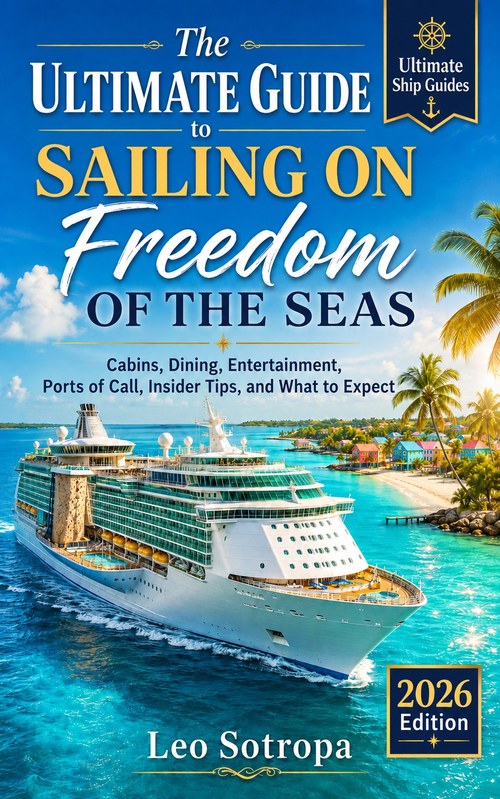
For a first cruise done right, “The Ultimate Guide to Sailing on Freedom of the Seas” walks you through booking, embarkation, CocoCay, dining, and budgeting in plain language. It is part of the Ultimate Ship Guides series by Leo Sotropa, with clear action steps in every chapter so you always know exactly what to do next.
Frequently asked questions
Is a 3-to-5-night cruise long enough for a first cruise?
Yes. A short cruise gives you the full experience of embarkation, a sea day, an island stop, dining, and shows, while costing less and using fewer vacation days. It is an ideal low-risk way to find out whether cruising is for you, and Freedom of the Seas specializes in exactly these short getaways from Miami.
Which cabin should a first-timer book on Freedom of the Seas?
For a short trip, an Interior or a Promenade-view Interior is the best value, and many first-timers are perfectly happy in one. If you want a step up, a midship Balcony on the mid-decks offers natural light, more space, and the steadiest ride. Avoid cabins directly under the pool deck or Windjammer and forward high-deck rooms if you are sensitive to motion.
Do I need to arrive in Miami the day before?
It is strongly recommended. Flight delays are the most common reason people miss their ship, and the cruise will not wait. Arriving a day early protects your trip and lets you enjoy Miami, from South Beach and Little Havana to Wynwood Walls. PortMiami is downtown, so getting to the terminal the next morning is easy.
What is included at Perfect Day at CocoCay?
Included with your cruise are Chill Island and the other beaches, the Oasis Lagoon freshwater pool, Splashaway Bay for families, complimentary eateries like the Skipper’s Grill, and the walk-around island. Extras that cost more and often sell out include the Thrill Waterpark, the zip line, the Up, Up and Away balloon, private cabanas, and the Coco Beach Club, all bookable in the app.
How do gratuities and onboard payments work?
Your SeaPass card is a cashless account for everything on board and doubles as your room key and port ID. Daily gratuities are automatically added to that account for each guest, covering your cabin steward, dining staff, and other crew. Drinks and specialty dining carry an added service charge. Budget for gratuities as a fixed cost, and confirm current amounts in the app.
Will I get seasick on Freedom of the Seas?
Most people feel very little. Freedom is a large, stable ship, and the short Bahamas routes stay in relatively sheltered waters. If you are prone to motion sickness, book a midship mid-deck cabin, bring your preferred remedy and start it early, and step out to an open deck to watch the horizon if you feel queasy. The ship’s medical center can help if needed.
What should I book before I sail?
Complete online check-in in the Royal Caribbean app and choose an early arrival slot. Then book anything that sells out: CocoCay extras like the Thrill Waterpark and cabanas, any specialty dinners at Chops Grille or Giovanni’s Table, and popular shore excursions in Nassau. On a short cruise there is no time to reschedule, so planning ahead is what makes the trip run smoothly.
Ready for the whole ship in one place? It is all in The Ultimate Guide to Sailing on Freedom of the Seas.
Get the book →
Meet Leo: The Heartbeat Behind ‘A Country A Month’
Journeying through the pages of A Country A Month, you might often feel the rhythm of a storyteller’s heartbeat, pulsating through each line, each image, and each adventure shared. That heartbeat belongs to none other than our remarkable website editor, Leo.
With a lens in one hand and a pen in the other, Leo seamlessly marries his passions for photography and writing. His eye captures moments that words can barely describe, yet his eloquence brings those images to life, transcending borders and connecting us all through shared stories. An avid traveler, every country he’s visited has added another chapter to his expansive tale, and through our platform, he generously shares these chapters with us.