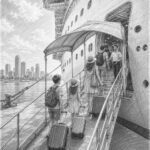
What can you expect on Independence of the Seas? A fast, loud, joyfully packed short getaway on the Royal Caribbean ship that started the whole amplification program — the first vessel the line ever amplified — which means she carries thrill features her Freedom-Class sisters do not have. In a couple of days at sea you can bounce inside a VR headset on the Sky Pad, race a friend down the dueling Perfect Storm slides, surf a standing wave on the FlowRider, chase teenagers around a glow-in-the-dark laser-tag arena, and still make a proper sit-down dinner. This walk-through covers the onboard experience deck by deck, what feels worth your time, and the first-day moves that make the whole trip run smoother.
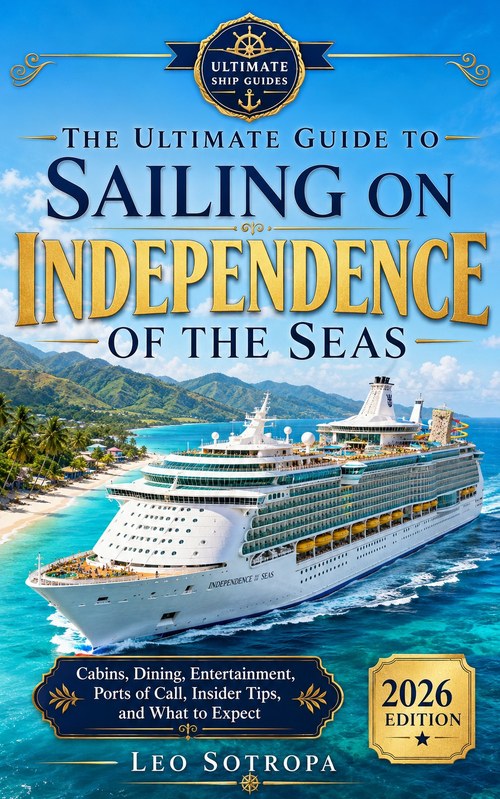
Everything in this article and far more, deck by deck, in The Ultimate Guide to Sailing on Independence of the Seas.
Get the book →The short-getaway feel: fun over downtime
Independence of the Seas sails short, warm-weather trips from Florida — 3-, 4- and 5-night runs out of both Fort Lauderdale and Miami to the Bahamas and Caribbean, year-round. That short-cruise character shapes everything about the experience. There is less idle time than on a week-long sailing, a huge share of first-time and family cruisers aboard, and a general sense that everyone is trying to squeeze the maximum out of two or three days. It is lively rather than languid. If you picture a cruise as slow deck-chair afternoons, this is a different animal: the pace is quick, the pool deck is busy, and the good stuff books up.
She is a big ship for a short trip — around 155,000-plus gross tons, roughly 15 guest decks, and about 4,375 guests at double occupancy (closer to 4,635 when every berth is full). That scale is the point. It gives you a four-deck indoor boulevard, a real ice rink, a surf simulator and a waterpark for kids all on the same hull, so a two-night sailing never feels thin on things to do. The trade-off is that you have to plan. Pacing matters here more than on a longer cruise, because you simply cannot drift and still see it all.
She is the third Freedom-Class ship, a sister to Freedom and Liberty of the Seas, but being the one the line chose to amplify first gives her a personality her siblings lack. Where they lean on the shared Freedom-Class template, Independence layers a whole set of family-thrilling attractions on top. So even if you have sailed a Freedom-Class ship before, this one has surprises. And if you never have, know going in that the experience is built around motion and doing rather than sitting still — this is a ship that wants you climbing, bouncing, racing and skating, not just sunbathing.
The amplified thrills she has and her sisters don’t
This is what sets Independence apart from Freedom and Liberty of the Seas. When Royal Caribbean chose a ship to launch its amplification program, she was first in line, and the upgrades she received are the reason families single her out.
The Sky Pad
The Sky Pad is the signature. It is a virtual-reality bungee-trampoline: you clip into a harness, pull on a VR headset, and bounce while the headset drops you into a game. You are jumping for real and playing inside a virtual world at the same time. It is the kind of thing you cannot do on her sisters, and it draws a line the moment the ship opens for the day. If the Sky Pad is high on your list, treat it as a book-early activity — slots are limited and they go fast on a short sailing.
Battle for Planet Z laser tag
Battle for Planet Z is a glow-in-the-dark laser-tag arena, and it is a reliable hit with families and teens. It gives older kids somewhere to burn energy that isn’t the pool, and it works just as well for adults who want to gang up on their own children. Sessions run in blocks, so check the app for times. On a short cruise with a lot of families aboard, it becomes one of the busier bookings, and it is a genuinely good rainy-hour or after-dinner option when everyone is tired of the sun but not ready to stop.
The Perfect Storm slides
The Perfect Storm is a pair of racer waterslides — Cyclone and Typhoon — built to duel. You and a friend or sibling drop side by side and race to the bottom, which is more fun than a single flume and generates a lot of shouting. On a hot sea day the line builds, so an early lap before the deck fills is the smart play.
Splashaway Bay and the Observatorium
Splashaway Bay is the colorful kids’ aqua park — the shallow, splash-everywhere zone for younger children that lets parents relax nearby. For rainy-afternoon or evening entertainment there is the Observatorium, a Royal Escape Room puzzle adventure that gives a group something to solve together indoors. Between those two, plus a redesigned pool deck, the amplified changes are aimed squarely at families, which is exactly who fills this ship. If you want the full breakdown of what amplification added, the Sky Pad and amplified features guide goes deeper.
Freedom-Class classics that carry over
The amplified additions sit on top of the Freedom-Class bones, and those bones are excellent. This is the class of ship that first brought several of Royal Caribbean’s now-famous features to sea.
The FlowRider
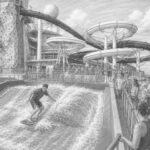
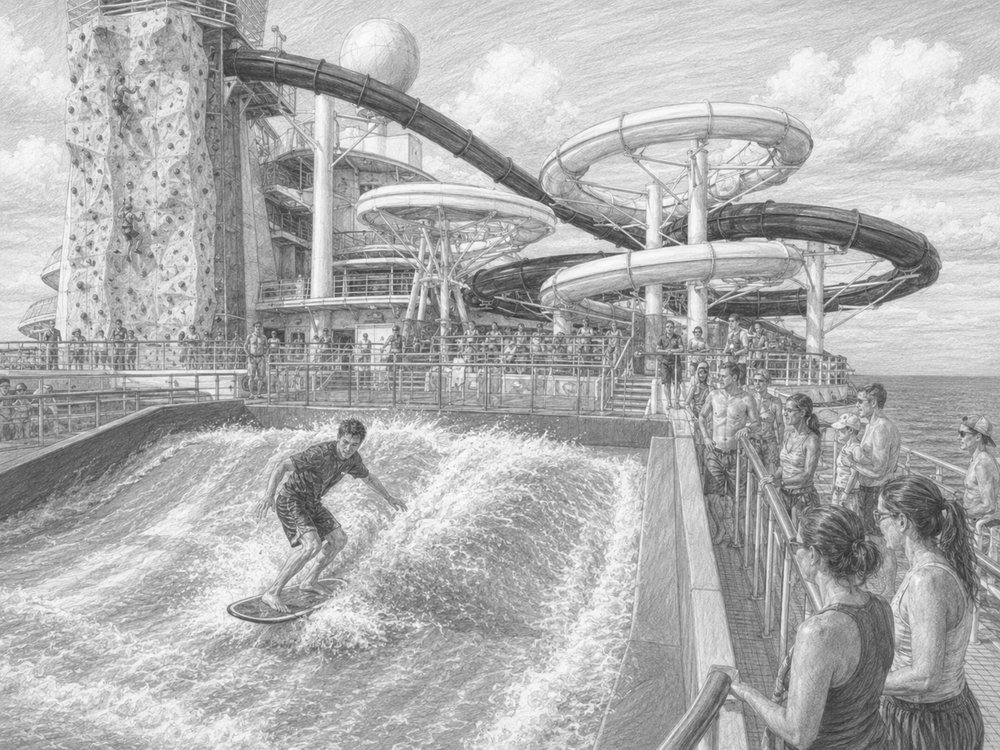
The FlowRider is the surf-and-bodyboard simulator, a standing wave you ride at the back of the ship. The Freedom Class first brought it to sea, and it remains one of the best free spectator sports aboard even if you never step on. Beginners start lying down on a bodyboard; the brave graduate to standing flowboarding and the inevitable wipeout. It is worth trying at least once, and worth watching for an hour with a drink. Lessons and open sessions both appear on the schedule, so check the app for the beginner slots if you actually want to ride rather than just spectate.
The four-deck Royal Promenade
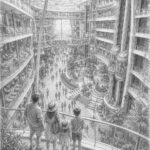
The Royal Promenade is the ship’s indoor social boulevard, running four decks tall through the middle of the vessel. It is where you end up between everything else — shops, bars, cafés, parades and the general flow of ship life all happen along it. Café Promenade and Sorrento’s pizza both open onto it, so it doubles as the ship’s casual snack corridor. Some interior cabins even have windows overlooking this space, which is a fun quirk if you like watching the action.
Studio B, the rock wall and the rest
Studio B is a genuine ice-skating rink — the same ice hosts professional ice shows in the evening and open skating sessions for guests during the day. Seeing a full ice production at sea is one of those things that makes people grin. Around the ship you also get the rock-climbing wall, the pools, a sports court, mini-golf and a full theater for the main production shows. None of it costs extra, and all of it competes for the same short window of time, which is why the app and a little planning go a long way.
Where to eat: the dining walk-through
Dining on Independence splits into what’s included and what costs a little more. On a short getaway you don’t have many dinners to spend, so it helps to know the lay of the land before you board.
The included venues
The Main Dining Room is your multi-course sit-down dinner, included in your fare, with a rotating menu across the sailing. The Windjammer Marketplace is the sprawling buffet — the default for a fast breakfast or a graze lunch, and the place everyone floods after boarding, so it pays to arrive off-peak. Sorrento’s serves pizza on the Promenade for a late-night slice, Café Promenade covers grab-and-go snacks and coffee, and there is more included food around than a first-timer expects. You never have to spend a cent beyond your fare to eat well.
The specialty restaurants
For an upcharge you can trade up. Chops Grille is the steakhouse and the classic special-occasion dinner. Giovanni’s brings Italian; Izumi handles sushi and Japanese; and Playmakers is the sports bar with wings, burgers, and screens showing the game. On a two- or three-night sailing, most people pick one specialty meal — often Chops for the first night — and leave the rest to the included venues. Specialty tables and any dining package are worth reserving before you sail, because the good slots on a short cruise fill early.
| Venue | Style | Cost |
|---|---|---|
| Main Dining Room | Multi-course sit-down | Included |
| Windjammer Marketplace | Buffet | Included |
| Sorrento’s | Pizza on the Promenade | Included |
| Café Promenade | Snacks and coffee | Included |
| Chops Grille | Steakhouse | Extra |
| Giovanni’s | Italian | Extra |
| Izumi | Sushi and Japanese | Extra |
| Playmakers | Sports bar and grill | Extra |
Prices are always relative and change, so confirm current menus, packages and costs in the Royal Caribbean app once your sailing is loaded.
The Solarium and quieter corners
With this many families aboard, adults need an escape hatch, and the Solarium is it — the adults-only retreat with its own pool area and a calmer atmosphere well away from the Splashaway Bay chaos. It is the single best place to find quiet on a busy sea day. The Vitality Spa handles treatments and the thermal side of relaxing, and the Schooner Bar is the reliable evening spot for a drink and often live piano. Adventure Ocean, meanwhile, is the supervised kids’ club, which is what makes that Solarium hour actually possible for parents.
Which cabin fits a short getaway
Where you sleep matters less on a two- or three-night trip than on a week away, because you spend so little time in the room. Independence offers Interior cabins (including Promenade-view interiors that look down onto the Royal Promenade), Ocean View, Balcony, and suites up to the top categories. On a short sailing, an Interior or a Promenade-view Interior is the value play — plenty of first-timers do fine in one, and the money saved buys a specialty dinner or a CocoCay add-on. If you want the best all-round experience, a midship Balcony on the mid-decks gives you light, a bit more space and the steadiest ride.
A few rooms are worth avoiding, and the deck plan will tell you which. Cabins directly under the pool deck or the Windjammer can catch early-morning noise; rooms over the Promenade venues or near the nightlife can stay lively late; forward high-deck rooms feel motion the most, which matters if anyone in your party is sensitive to it; and some lower-deck balconies have views blocked by the lifeboats. For a full room-by-room comparison, the best cabins guide lays out the trade-offs.
Beyond the ship: the ports on a short run
The onboard experience is only half the trip. From Fort Lauderdale, short Bahamas getaways typically pair Nassau with Perfect Day at CocoCay, Royal Caribbean’s private island. From Miami, short Western Caribbean sailings reach Falmouth in Jamaica alongside Nassau, and Eastern Caribbean sailings visit Labadee in Haiti; some itineraries also fold in Cozumel or Key West. Shorter cruises simply stop at fewer ports, so ports and lengths vary — always confirm your exact itinerary in the app.
Each port has its own character worth knowing before you step off. Nassau puts Atlantis and Paradise Island, the old forts, the Queen’s Staircase and the straw market within easy reach. Falmouth in Jamaica is the jumping-off point for Dunn’s River Falls, river tubing, and a day of reggae, rum and Georgian streets. Key West, when it appears, is Duval Street, the Southernmost Point, Hemingway’s house and the famous sunset, while Cozumel on a Western Caribbean run is about world-class snorkeling and diving, Maya ruins and beach clubs. Your embarkation city is a day out in itself too — Fort Lauderdale has its beaches, canals and Las Olas Boulevard, and Miami has South Beach, Little Havana, the Art Deco district and Wynwood, both worth an extra night if your schedule allows. Shore tours sell out, so book the ones you care about early and confirm everything in the app.
Perfect Day at CocoCay is built around a free side and a paid side. Included are Chill Island and its beaches, the Oasis Lagoon freshwater pool, and a Splashaway Bay for the kids. For an upcharge — and these sell out — you get the Thrill Waterpark, home to Daredevil’s Peak, the tallest waterslide in North America, plus the zip line, the helium balloon, and the Coco Beach Club with its overwater cabanas. Labadee, Royal Caribbean’s private peninsula in Haiti, is the other showpiece day: beaches, the Dragon’s Breath zip line (one of the longest over water), an alpine coaster, snorkeling and a Haitian craft market, all running on your SeaPass card. For a full day-by-day on that stop, see the Labadee guide.
Your first day: the moves that matter
Because the sailing is short, the first day is disproportionately important. Get it right and the whole cruise flows. Get it wrong and you spend the trip catching up.
- Book the marquee activities before you sail. The Sky Pad, the Perfect Storm slides, specialty dining and any CocoCay Thrill Waterpark or Labadee add-on all sell out — reserve them in the app the moment they open, not at the gangway.
- Download the Royal Caribbean app and set it up before you leave home. It runs your day: deck plans, show times, dining reservations, laser-tag and Sky Pad slots, and your account.
- Skip the boarding-day Windjammer stampede. Everyone heads to the buffet after embarkation; go find a quieter included spot and let the crowd thin.
- Do one water attraction early. Ride the Perfect Storm or try the FlowRider before the pool deck fills on the first sea day, while the lines are short.
- Book a specialty dinner for the first night if you want one. Tables on a short cruise fill fast, and it takes the pressure off the busy Main Dining Room on turnaround day.
- Plan a Solarium or spa hour if you’re traveling with kids and using Adventure Ocean — it is the trade that keeps everyone happy.
The SeaPass card is your cashless account and room key for the whole trip; daily gratuities are added automatically, Wi-Fi is a paid plan, and US dollars work onboard and across the ports. Pack light, breathable clothing, sun protection and swimwear — these are warm, humid, sunny sailings with the odd tropical shower. If this is your first cruise, the first-timer’s guide and the full Independence of the Seas cruise guide walk through the details step by step.
Get the complete Independence of the Seas playbook
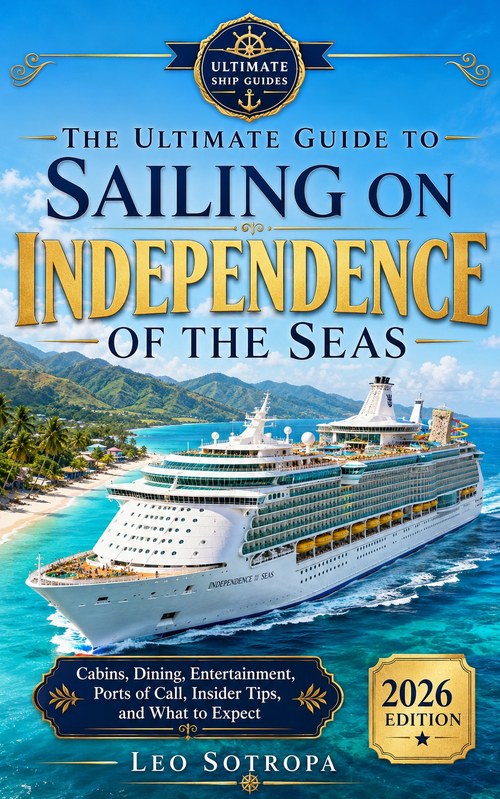
Want every venue, deck and shore day mapped before you board? “The Ultimate Guide to Sailing on Independence of the Seas” is part of the Ultimate Ship Guides series by Leo Sotropa, with clear action steps in every chapter so you can plan a short getaway that misses nothing.
Frequently asked questions
What makes Independence of the Seas different from her sisters?
She was the first ship Royal Caribbean amplified, which gave her features Freedom and Liberty of the Seas do not have: the Sky Pad VR bungee-trampoline, Battle for Planet Z laser tag, the Perfect Storm dueling slides, Splashaway Bay, the Observatorium escape room and a redesigned pool deck. Underneath she still has all the Freedom-Class classics.
Which activities should I book before I sail?
The Sky Pad, the Perfect Storm slides, specialty dining, and any add-ons for Perfect Day at CocoCay’s Thrill Waterpark or Labadee tend to sell out on a short cruise. Reserve them in the Royal Caribbean app as soon as they open rather than waiting until you are aboard.
Where does Independence of the Seas sail?
She runs short 3-, 4- and 5-night warm-weather getaways from Florida year-round, using both Fort Lauderdale and Miami, to the Bahamas and Caribbean — typically Nassau, Perfect Day at CocoCay, Falmouth in Jamaica, and Labadee in Haiti, with some sailings adding Cozumel or Key West. Confirm your exact home port and ports in the app.
Is there anywhere to escape the crowds?
Yes. The adults-only Solarium has its own pool area and a calmer feel, well away from the family water zones. The Vitality Spa and the Schooner Bar are other quieter corners, and Adventure Ocean’s supervised kids’ club is what frees parents up to use them.
Do I have to pay extra to eat well?
No. The Main Dining Room, the Windjammer buffet, Sorrento’s pizza and Café Promenade are all included in your fare. Chops Grille, Giovanni’s, Izumi and Playmakers carry an upcharge, so most people on a short sailing pick just one specialty meal and eat the rest at the included venues. Confirm current prices in the app.
Is Independence of the Seas good for a first cruise?
Very. She carries a huge share of first-time and family cruisers, the trips are short and affordable, and there is enough onboard to keep every age busy. The main thing to know is that the pace is quick, so a little planning before you board goes a long way.
What documents do I need for these sailings?
These are closed-loop cruises from a US port, so US citizens can often sail with a passport or, in many cases, a birth certificate plus government photo ID — though a passport is strongly recommended and required for some travelers. Check current CBP rules, and non-US citizens should verify their own requirements.
Ready for the whole ship in one place? It is all in The Ultimate Guide to Sailing on Independence of the Seas.
Get the book →
Meet Leo: The Heartbeat Behind ‘A Country A Month’
Journeying through the pages of A Country A Month, you might often feel the rhythm of a storyteller’s heartbeat, pulsating through each line, each image, and each adventure shared. That heartbeat belongs to none other than our remarkable website editor, Leo.
With a lens in one hand and a pen in the other, Leo seamlessly marries his passions for photography and writing. His eye captures moments that words can barely describe, yet his eloquence brings those images to life, transcending borders and connecting us all through shared stories. An avid traveler, every country he’s visited has added another chapter to his expansive tale, and through our platform, he generously shares these chapters with us.