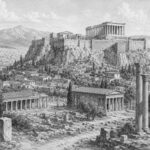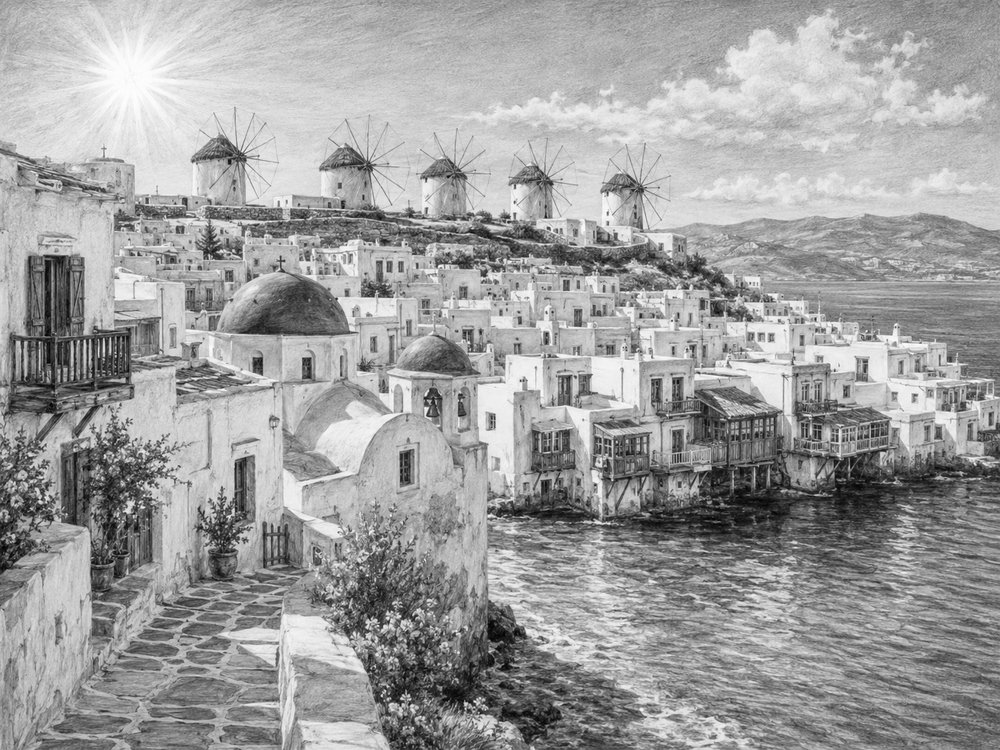
Which Greek ports matter most on a Sun Princess sailing, and how do you actually make the day work when the crowds are thick and the sun is fierce? For most people the answer comes down to three names: Santorini, Mykonos and Athens. Get those Santorini Mykonos Athens cruise ports right and the rest of the itinerary looks after itself. The short version is this: Santorini is a tender call where the tender and the ride up the cliff eat into your time, so treat it as a logistics puzzle first and a photo opportunity second. Mykonos is a walkable, relaxed island where the town itself is the attraction. Athens is a big city an hour from the pier that rewards an early start and a plan for the Acropolis. Below is a port-by-port guide to doing each one well from Sun Princess, plus quick notes on Corfu and Kotor, which round out the region.
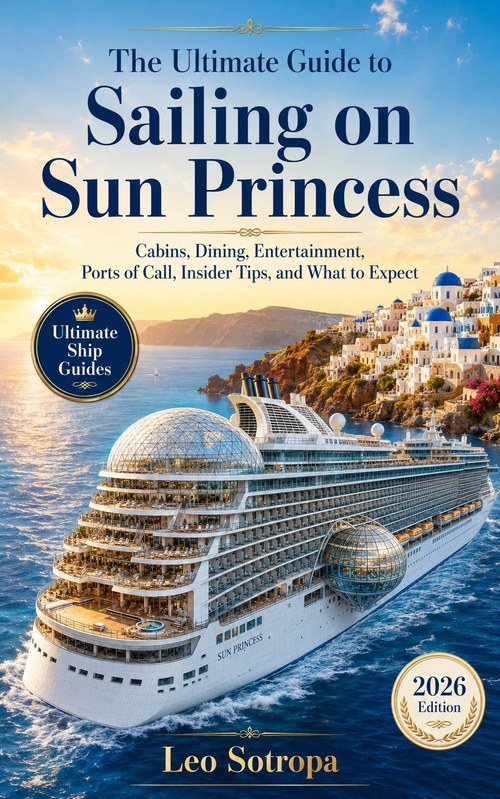
Everything in this article and far more, deck by deck, in The Ultimate Guide to Sailing on Sun Princess.
Get the book →Sun Princess is Princess Cruises’ newest flagship and the first of the all-new SPHERE Class, and her marquee season is the Mediterranean and Greek Isles based out of Rome (Civitavecchia), Athens (Piraeus) and Barcelona, so these three ports sit near the heart of most itineraries. Exact calls vary by sailing, so confirm your ports, times and any tender arrangements in the Princess app before you plan a single thing.
Santorini: the tender port that needs a plan
Santorini is the most beautiful and the most demanding port on the run, and the two facts are connected. The island’s famous towns, Fira and Oia, sit on top of a volcanic cliff, and the ship anchors in the flooded caldera far below. There is no pier for a ship this size, so Santorini is a tender port. You come ashore by tender at the old port at the base of the cliff, and then you have to get up roughly 900 vertical feet to town. That single reality shapes the entire day, so plan for it rather than being surprised by it.
There are three ways up from the old port. The cable car is the fast, popular option, a short ride from sea level to Fira in a few minutes; because everyone wants it, the line is long at the bottom in the late morning and at the top in the late afternoon when the whole ship heads back down. The switchback stair path is several hundred steps up the cliff, a genuine climb in the heat that you share with the donkeys, so it is slippery, though fit walkers do it. Riding a donkey up is best avoided on animal-welfare grounds and is slow anyway. For most guests the cable car is the sensible choice, with the understanding that timing is everything.
Here is the practical rhythm that works. Get to the tender early. Tender tickets or priority tendering are often organized through the ship, and guests on ship-arranged tours generally get off first, which is one real argument for booking at least your Santorini excursion through Princess even if you go independent elsewhere. Once ashore, take the cable car up promptly, do your sightseeing, and then start heading back down earlier than you think you need to, because the descent bottleneck in the last couple of hours before all-aboard is the single most common way people cut it dangerously close. Give yourself a comfortable buffer. A missed last tender in Santorini is a long, expensive problem.
Fira, Oia and the blue domes
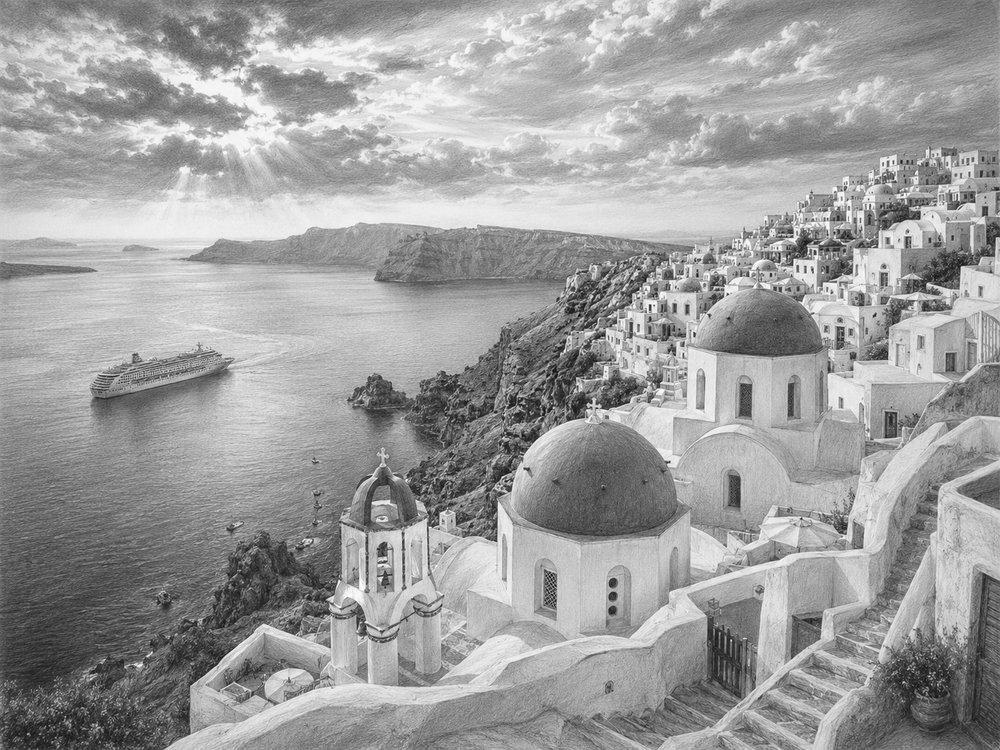
The cable car lands you in Fira, the island’s main town, a warren of white lanes, cliff-edge cafes, shops and viewpoints looking out over the caldera. Fira is worth an hour or two of wandering on its own. But the photograph everyone has in mind, the blue-domed churches with the sea behind them, is mostly in Oia, the smaller town at the northern tip of the island. To get from Fira to Oia you take the local bus from the Fira station or a taxi; the bus is cheap and frequent but fills up, and taxis are limited and in demand, so do not assume one will be waiting. Budget the transfer time in both directions when you plan.
Oia is compact and gets extremely crowded around its most famous viewpoints, especially the cluster of blue domes near the western end of the main walkway. Arrive earlier in the day and you will have room to move and better light. The town is also where the celebrated Santorini sunset happens, with people packing the castle ruins and the western terraces to watch the sun drop into the caldera. It is genuinely lovely, but on a cruise day you rarely get to see it: your ship almost always sails before sunset, and staying for it means risking the tender. Treat the sunset as a reason to come back on a land stay, not something to gamble your return on.
If you would rather not fight the town crowds, Santorini has other faces: a caldera boat trip out to the volcanic islets and hot springs, the inland wine country with tastings and a view, and the black and red volcanic-sand beaches at the flatter south end. Any of these makes a good day, but keep the tender timing in mind no matter what you choose.
Mykonos: the easy island
After Santorini, Mykonos feels relaxed. On some calls Sun Princess docks at the newer cruise port a short distance from town, and on others it is a tender call, so check your app for how you are getting ashore. Either way the distances are small and the pace is gentle. Mykonos is not about a single blockbuster monument; the island itself is the attraction, and the best thing to do is simply walk it.
The heart of it is Chóra, Mykonos Town, a maze of whitewashed lanes built to confuse pirates and now perfect for aimless wandering. You will find the row of old windmills on the hill above town, the postcard image of the island, and just below them the waterfront quarter known as Little Venice, where old houses sit at the water’s edge and the cafes look straight out to sea. Get lost on purpose in the back lanes, where the crowds thin and you find small churches, bougainvillea and quiet tavernas. The town is walkable end to end, and that is the whole appeal.
Mykonos is also a beach island. A local bus network and sea taxis connect Chóra to the famous southern beaches, and which one suits you depends on what you want: some are lively, music-driven beach-club scenes, others are calmer stretches of sand and clear water. If you want a swim and a lounger for the afternoon, decide in advance which beach fits your mood, check the bus times, and go. The island is small enough that a morning in town and an afternoon at a beach is a completely realistic cruise day.
The nightlife that made Mykonos famous mostly happens after dark, which usually means after your ship has sailed, so on a typical daytime call you get the island’s daytime self: sun, sea, whitewashed lanes and long lunches. If your itinerary includes a late stay, an evening drink in Little Venice as the light goes down is one of the region’s simple pleasures.
Athens and Piraeus: the city with the Acropolis
Athens is different in kind from the islands. Your ship docks at Piraeus, the large port that serves the city, and Piraeus is not Athens: the historic center with the Acropolis is a real transfer away, generally around half an hour to 45 minutes depending on traffic. On many Sun Princess itineraries Athens is a turnaround port where cruises begin or end, but it also appears as a day call, and either way the day is built around getting into the city, seeing the ancient sites, and getting back.
Your transfer options from Piraeus are the ship’s shuttle or tour, a taxi, or the metro. A taxi is quick and splits well between a few people. The metro runs directly from Piraeus into central Athens and is inexpensive, though it means a walk to the station and navigating with your group. Ship transfers cost more but remove all the guesswork and, critically, guarantee you are on a bus that the ship waits for. On a turnaround day with a flight to catch, the ship’s own transfer is usually worth it for the peace of mind.
The Acropolis, the Parthenon and timed entry
The Acropolis is the reason most people come, and the Parthenon crowning it is the single most important ancient monument in the city. Two things matter here: heat and crowds. The site is exposed rock with almost no shade, the climb up is steep and the marble underfoot is polished slick by millions of feet, so go early in the day before the sun and the tour groups are at full strength. Wear proper shoes, bring water and a hat, and pace yourself.
Just as important, entry to the Acropolis increasingly runs on timed tickets with a capped number of visitors per slot, and the popular early slots sell out. If you are going independently, this is the one thing you must sort in advance rather than at the gate. Book your timed entry before you sail, screenshot the confirmation, and know your slot. If you would rather not manage any of that, a Princess shore excursion bundles the entry and a guide, and a good guide brings the ruins to life in a way that walking around on your own does not. That is the honest trade-off in Athens: independent gives you flexibility and a lower cost if you plan the tickets, while the ship tour hands you the logistics and the interpretation.
Do not stop at the rock. The Acropolis Museum at the foot of the hill is superb and air-conditioned, welcome in the midday heat, and it puts the sculptures and the site in context. The Plaka, the old neighborhood beneath the Acropolis, is a warren of lanes, tavernas and shops made for a slow lunch after a hot morning on the hill. Between the Acropolis, its museum and the Plaka you have a full day without rushing across the city; if you have more time, the Ancient Agora and the National Archaeological Museum are the next steps.
Corfu and Kotor: the supporting cast
The Greek headliners get the attention, but two more ports frequently share the itinerary and both are worth your full attention.
Corfu, in the Ionian Sea, has a Venetian old town that is a genuine pleasure to walk, with arcaded streets, a grand esplanade and two old fortresses guarding the harbor. It is a docking port with an easy connection into town and an unhurried pace. You can spend a fine day wandering the lanes, climbing a fortress for the view and stopping for a coffee, or head out to the island’s beaches and green interior, softer and more wooded than the stark Cyclades. Corfu is the itinerary’s breather.
Kotor, in Montenegro, delivers one of the most dramatic sail-ins anywhere. The ship threads the long, fjord-like Bay of Kotor between steep mountains to reach the town at the far end, so be out on deck for the arrival; it is one of the best mornings of the whole cruise. The walled old town is small, medieval and made for wandering, and above it the ancient fortress walls climb the mountainside. Climbing to the fortress of San Giovanni is a stiff, exposed hike of well over a thousand steps rewarded by a spectacular view down onto the bay and your ship, and it is best done early before the heat. If the climb is not for you, the old town itself and a stroll along the bay are more than enough for a lovely day.
Tender ports, timed tickets and the heat
Three practical themes run through this whole region, and getting them right is what separates a smooth day from a stressful one.
Tenders. Santorini is the classic tender port, and Mykonos can be one too. Tendering adds time on both ends of the day and the return queue is where people get caught out. On tender days, get ashore early, watch the clock hard, and start back with a real buffer. If a port is a tender call and you want the earliest access ashore, a ship-organized tour is often the way to get off first, which is a legitimate reason to book Santorini through Princess specifically.
Timed tickets. The Acropolis is the big one, but timed and capacity-limited entry is spreading across popular European sites. If you are going independent, book the entries you need well before you sail and carry the confirmations. If you would rather not, the equivalent ship excursion includes the tickets and skips the planning. Either approach works; leaving it to chance at the gate does not.
Heat and crowds. A Mediterranean summer day is hot, dry and bright, and the ancient sites are open rock with no shade. The whole region rewards an early start: you beat the worst of the sun and reach the famous spots, from the Oia domes to the Parthenon, before the tour groups arrive. Pack light breathable clothing, real walking shoes for cobbles and marble, sun protection and water, and save the museums and long lunches for the hottest hours.
Independent days vs ship tours: how to choose
There is no single right answer, only a right answer per port. Ship excursions cost more but hand you the logistics, a guide and, crucially, the guarantee that the ship waits for you if the tour runs late. Independent days cost less and give you freedom, but you own the risk of getting back on time. A sensible mix for this region looks like this:
- Santorini: lean toward a ship tour, or at least ship-arranged tendering, for the earliest access ashore and one less thing to stress about on a tight tender day.
- Mykonos: easy to do independently. The town is walkable and the buses reach the beaches. Little planning needed.
- Athens: independent works well if you book your Acropolis timed entry in advance; otherwise the ship tour bundles the ticket, the transfer and a guide.
- Corfu: comfortably independent. Walk into the old town and set your own pace.
- Kotor: independent is fine for the old town and the bay; the fortress climb needs no tour, just an early start and stamina.
Whatever you choose, use the Princess app to check your exact port times, whether the call is a tender, and any excursion details, then build your day backward from all-aboard. And remember the Medallion runs the ship side of your day quietly: it speeds your return through security, handles onboard payments, and keeps your dining and plans in order through Dine My Way and JourneyView, so the only timing you really have to manage is on shore.
For the wider picture, our guide to the Sun Princess Mediterranean and Greek Isles season puts these ports in the context of the full itinerary, and if you are still deciding on the ship itself, the complete Sun Princess cruise guide and our overview of what to expect on Sun Princess cover the onboard experience. First-timers should also read up on making the most of MedallionClass before they sail.
Get the complete Sun Princess playbook
Want every port day, dining choice and Medallion trick mapped out in one place? “The Ultimate Guide to Sailing on Sun Princess” walks you through the whole voyage, port by port and deck by deck. It is part of the Ultimate Ship Guides series by Leo Sotropa, with clear action steps in every chapter.
Frequently asked questions
Is Santorini a tender port on Sun Princess?
Yes. Santorini has no pier large enough for a ship this size, so you come ashore by tender at the old port at the base of the cliff, then take the cable car or the stair path up to Fira. Plan for the tender and the climb up, get ashore early, and start heading back down well before all-aboard, because the cable-car queue in the final hours is the main way people cut it too close. Confirm the tender arrangements for your sailing in the Princess app.
How do I get from Fira to Oia to see the blue domes?
The cable car lands you in Fira; the famous blue domes are mostly in Oia, at the north end of the island. Get there by local bus from the Fira station or by taxi, both of which take time and can fill up, so build the transfer into your plan in both directions. Arrive in Oia earlier in the day for thinner crowds and better light around the domes.
Can I watch the Santorini sunset from the ship’s day in port?
Usually not. The ship almost always sails before sunset, and staying ashore late risks missing the last tender, which is a serious problem in Santorini. Treat the famous Oia sunset as a reason to come back for a land stay rather than something to gamble your return on. Always check your ship’s all-aboard time in the app.
How far is the Acropolis from the Piraeus cruise port?
Piraeus is the port; the Acropolis is in central Athens, generally around half an hour to 45 minutes away depending on traffic. You can reach the city by ship shuttle or tour, taxi, or the metro that runs directly from Piraeus. On a turnaround day with a flight to catch, the ship’s own transfer is usually worth the extra cost for the guarantee that the bus is one the ship waits for.
Do I need timed tickets for the Acropolis?
Increasingly yes. Entry runs on timed tickets with a cap per slot, and the popular early slots sell out. If you are going independently, book your timed entry before you sail and carry the confirmation. If you would rather not manage it, a Princess shore excursion bundles the entry and a guide, which is the simplest way to be sure you get in.
Should I book ship excursions or explore these ports independently?
It depends on the port. Lean toward a ship tour in Santorini for early tender access and less stress, and consider one in Athens if you do not want to manage timed Acropolis tickets. Mykonos, Corfu and Kotor are easy to do independently on foot and by local bus. Ship tours cost more but guarantee the ship waits for you; independent days cost less but put the timing on you. For more on planning your days, see our Sun Princess tips.
How do I avoid the worst crowds and heat in these Greek ports?
Start early everywhere. Getting to the Oia domes, the Parthenon and the Kotor fortress early beats both the midday sun and the tour groups. The ancient sites are exposed rock with no shade, so wear real walking shoes, bring a hat and water, and save museums and long lunches for the hottest hours. Pack light, breathable clothing and pace yourself in the heat.
Ready for the whole ship in one place? It is all in The Ultimate Guide to Sailing on Sun Princess.
Get the book →
Meet Leo: The Heartbeat Behind ‘A Country A Month’
Journeying through the pages of A Country A Month, you might often feel the rhythm of a storyteller’s heartbeat, pulsating through each line, each image, and each adventure shared. That heartbeat belongs to none other than our remarkable website editor, Leo.
With a lens in one hand and a pen in the other, Leo seamlessly marries his passions for photography and writing. His eye captures moments that words can barely describe, yet his eloquence brings those images to life, transcending borders and connecting us all through shared stories. An avid traveler, every country he’s visited has added another chapter to his expansive tale, and through our platform, he generously shares these chapters with us.