What is the single best way to experience the Panama Canal transit day aboard Norwegian Bliss? Be up and out on deck before the first locks, and know exactly where you want to stand before the crowds get there. Bliss was the first Norwegian ship designed with a two-deck, wraparound Observation Lounge, so she gives you a genuinely superb, weather-proof front-row seat for the crossing. But the transit is a long, slow, fascinating day, and the guests who enjoy it most are the ones who plan their timing, their viewing spots, and their sun and water strategy in advance. This guide walks through all of it.
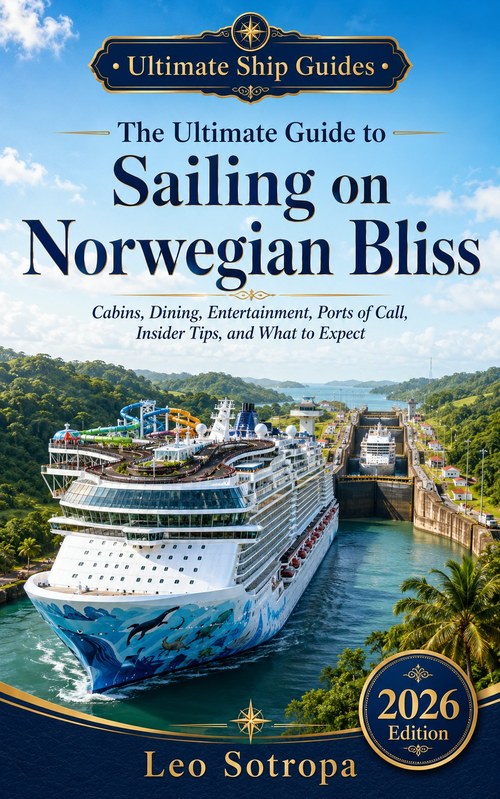
Everything in this article and far more, deck by deck, in The Ultimate Guide to Sailing on Norwegian Bliss.
Get the book →The Panama Canal transit is the centerpiece of Bliss’s longer, repositioning-style voyage between Los Angeles and Miami, a trip of roughly 15 to 19 nights that runs down the Mexican Pacific and Central America before crossing the isthmus that divides two oceans, then continuing to Colombia and the Caribbean. The canal day itself is the bucket-list moment, an engineering and scenic experience you plan the whole cruise around. Here are the practical Panama Canal transit cruise tips that make the difference between watching from a scrum of shoulders and enjoying the whole thing in comfort.
What actually happens on Panama Canal transit day
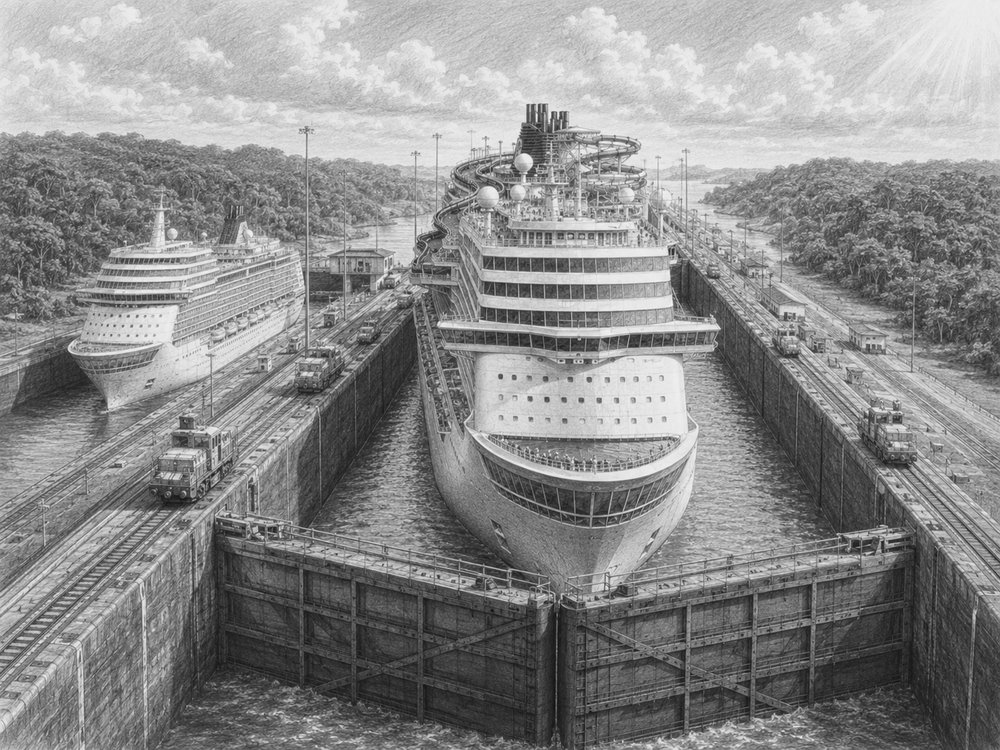
The transit is a full day. The ship spends hours moving through the canal’s locks and across the waterway that connects the Pacific and the Caribbean, and the pace is deliberately slow because the engineering demands it. The locks work as giant water elevators: the ship enters a chamber, the gates close, water floods in or drains out to raise or lower the vessel to the next level, and then the far gates open and she moves forward. Bliss is a large ship, so watching her fit into a chamber and rise or fall with the water is the part most people remember. The crossing lifts a ship up over the continental divide and then lowers her back toward the other ocean, and doing that by moving water alone is the reason the canal is considered one of the great feats of engineering.
Because the whole thing plays out over many hours, you do not have to camp in one place all day. The smart approach is to be present and well-positioned for the first set of locks, then move around the ship through the middle of the day, come back to the rail for the later locks, and use the gaps to eat, hydrate, and cool off. Treat it like a slow-unfolding event rather than a single photo you have to catch.
It helps to remember that the transit is the reason this itinerary exists. Everything else on the route, from the Mexican Pacific ports to Cartagena, is arranged around this one day of crossing the isthmus that divides two oceans. That is why it is worth planning for properly rather than treating it like any other sea day, and why Bliss, as the first Norwegian ship built with a two-deck Observation Lounge, is such a well-suited ship to experience it on. If you go in knowing the day will be long, hot, and slow by design, you will pace yourself and enjoy every stage of it.
The best viewing spots on Norwegian Bliss
Bliss gives you three fundamentally different ways to watch the transit, and the best plan uses all three across the day.
The two-deck Observation Lounge
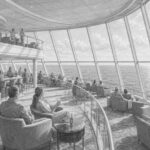
This is the reason Bliss is such a good canal ship. The Observation Lounge is a huge forward-facing space with floor-to-ceiling panoramic windows and leather chairs, and it was purpose-built for exactly this kind of scenic cruising. On transit day it gives you air conditioning, shade, a seat, and an enormous window looking straight ahead at the locks the ship is approaching. If the heat and glare wear you down out on the open decks, this is where you retreat without giving up the view. Because it is the single most comfortable vantage point on the ship, it also fills up early, which is the whole reason the next section matters so much.
The forward and open decks
Nothing beats being outside for the moment the ship slides into a lock chamber. On the open decks you get the full sensory version: the sounds, the heat, the sight of the gates closing behind you and the water level changing. The forward-facing rails and the higher open decks give you the best sightlines down onto the locks and across the surrounding landscape. This is where you want to be for the first locks and the most dramatic moments, and it is also where you will find the biggest crowds, so it pays to arrive early and pick your spot before everyone else has the same idea.
Your own balcony
On a scenery-rich, long voyage like this one, a balcony earns its keep in a way it never does on a short cruise, and transit day is the clearest example. A private balcony means shade you control, a chair, and a view with nobody’s elbows in it, and you can step inside to cool off and step back out in seconds. A midship balcony on the mid-decks gives you the steadiest ride and a clean side view of the lock chambers and the banks as you pass. Even if you spend most of the day on the public decks, having a balcony to duck back to is a real luxury on the hottest hours of the transit.
Timing your day around the locks
The best single piece of advice is simple: be up early. The first locks of the transit are the most exciting and the most photographed, and they often come early in the day, so set an alarm rather than trusting yourself to wake up in time. Getting out on deck before the first locks does two things at once. It puts you in position for the best moments, and it beats the crowd to the good spots.
Here is a workable rhythm for the day:
- Get up early and be on deck or in the Observation Lounge before the first locks, ideally with coffee and water already in hand.
- Stake out your first-locks spot at least a while before the ship enters the chamber, because that is when the deck fills.
- Once the ship is through the first set and settled into the long crossing, take turns with your group so someone holds the good spot while others eat, cool off, or use the balcony.
- Come back to the rail for the later locks, which close out the transit and are worth being present for.
- Use the middle stretch to move between the Observation Lounge, the open decks, and your cabin rather than baking in one place all day.
Exact timings shift with each sailing and with canal traffic, so confirm the day’s expected schedule in the NCL app and listen for onboard announcements the evening before and the morning of the transit.
Follow the onboard narration
On transit day the ship runs commentary explaining the engineering and the history as it happens. This narration is what turns a slow day of watching a big boat move through concrete chambers into something you understand and remember. It tells you what each lock is doing, why the water is rising or falling, and what you are looking at on the banks. Keep it audible wherever you are: the commentary usually carries across the open decks and the Observation Lounge, so you can follow it while you watch. If you step away to your cabin, you can often still catch it, but the public spaces are where the shared experience lives. Listening to the narration also helps you anticipate the next big moment, so you know when to have the camera ready rather than reacting late.
Sun, heat and water prep
The canal is hot and humid, and the day is long. This is the part people underestimate, and it is the difference between finishing the transit happy and finishing it wilted. The open decks offer little shade during the middle of the day, and the tropical sun is stronger than it feels with a breeze on you.
- Bring and reapply sun protection. A hat and sunglasses matter as much as sunscreen when you are on deck for hours.
- Carry water and keep drinking it. Humidity plus sun dehydrates you faster than you notice.
- Wear light, breathable clothing, and plan to rotate into shade or air conditioning through the hottest part of the day.
- Pack rain protection too. Tropical showers can pass through quickly, and a light layer is worth having for the ship’s strong air conditioning when you come inside.
The Observation Lounge and your balcony are your shade strategy. Use them deliberately rather than pushing through the heat until you have to stop.
Photography on transit day
The transit is one of the most photogenic days of the whole cruise, and a few habits make your pictures better. Get to your spot early enough to shoot the first locks without a wall of heads in the frame. The forward and higher open decks give you the cleanest wide angles down onto the chambers, while a balcony gives you an unobstructed side-on view. Bring binoculars as well as a camera, because there is wildlife and detail on the banks worth looking at closely, and the tropics along this route are rich with birds and other life. Protect your gear from spray, heat, and sudden showers, and keep a cloth handy for humidity fogging your lens. Charge everything overnight, because it is a long day of shooting.
Crowds and getting a good spot
Bliss carries roughly 4,004 guests at double occupancy and up to around 4,900 when full, and on transit day a large share of them want to be at the front of the ship at the same time. That is the single reason to arrive early and commit to a spot. Once the first locks begin, the prime forward rails and the best Observation Lounge seats are gone, and it is hard to improve your position without giving up the one you have.
Practical crowd tactics:
- Claim your first-locks position well before the ship enters the chamber, not as it happens.
- Travel in a group and trade the good spot in shifts so nobody has to hold it alone all day.
- Remember that a balcony sidesteps the crowd entirely, which is a strong argument for booking one on this itinerary.
- The Observation Lounge is comfortable but popular, so if you want a window seat there for the first locks, get in early.
Planning around the sea days and the rest of the voyage
This is a longer voyage with more sea days than a typical week-long cruise, and that structure suits Norwegian’s Freestyle Cruising well. Freestyle means no fixed dining times, no assigned tables, and no formal dress codes: you dine when, where, and with whom you like, across a large range of restaurants. Complimentary options include the main dining rooms and the Garden Café buffet, while many specialty restaurants carry an extra charge or run through a dining package, and reservations help at peak times. On transit day specifically, plan to eat around the locks rather than at a fixed hour, which is exactly what Freestyle is built for.
The sea days on either side of the canal give you time to enjoy the ship itself. Bliss has plenty to fill them: the Speedway, a two-level electric go-kart track that extends out over the side of the ship, the Aqua Park with freefall and tube waterslides, open-air laser tag on the top deck, and Broadway-caliber entertainment and live music, which you should confirm in the app. Book the things that need booking, like specialty dining and any extra-charge attractions, on the sea days rather than fighting for them on transit day when everyone’s attention is on the locks. If you want to learn more about how the ship works day to day, our guide on first-time Norwegian Bliss Freestyle tips is a good place to start, and our what to expect on Norwegian Bliss overview covers the rest of the onboard experience.
Because the transit is only one day of a two-week-plus itinerary, spread your energy across the whole trip. The route also visits Cabo San Lucas and Acapulco in Mexico, Puerto Quetzal in Guatemala, Puntarenas in Costa Rica for rainforest and wildlife, Cartagena in Colombia with its walled Old Town, and Great Stirrup Cay, Norwegian’s private island, near the finish. Tours in these ports sell out early, so plan and book ahead. For the bigger picture of the canal voyage, see our Norwegian Bliss Panama Canal guide, and for choosing the right room for a scenery-rich trip, our best cabins on Norwegian Bliss breakdown explains why a midship balcony pays off here.
General Panama Canal cruise tips
A Panama Canal cruise is not a simple closed-loop US itinerary. It visits multiple countries, so a few things need sorting before you sail.
Passport and documents
Because the voyage crosses several international borders, a passport is required. Some ports or nationalities may need additional documents, so check current entry rules well ahead of your sailing rather than assuming your usual cruise paperwork covers it.
Currencies along the route
US dollars are widely used across much of the route and are official in Panama. Mexico uses the peso, Guatemala the quetzal, Costa Rica the colón, Colombia the peso, and Jamaica the Jamaican dollar. Cards and US dollars are widely taken in tourist areas, but carry small local cash for markets and taxis. Onboard, everything runs on your Cruise Card, which is your cashless account, and Great Stirrup Cay runs on that key card too. Service charges and gratuities apply, and Wi-Fi is a paid plan.
Tropical packing
The whole route is warm and tropical, and it is hot and humid especially near the canal and through Central America and Cartagena. Pack light, breathable clothing, sun protection, and rain protection for tropical showers, plus a light layer for the ship’s air conditioning. Costa Rica and the tropics offer rainforest, monkeys, sloths, birds, and marine life, so bring binoculars and a camera. Fly into Los Angeles a day early if that is your embarkation city, because the traffic there is heavy and you do not want to cut it close.
Get the complete Norwegian Bliss playbook
Everything above is just the transit day. “The Ultimate Guide to Sailing on Norwegian Bliss” walks you through the whole voyage, part of the Ultimate Ship Guides series by Leo Sotropa, with clear action steps in every chapter so you know exactly what to do and when.
Frequently asked questions
Where is the best place to watch the Panama Canal transit on Norwegian Bliss?
Use all three of the ship’s best vantage points across the day. The two-deck Observation Lounge, with its floor-to-ceiling forward-facing windows, gives you a comfortable, air-conditioned, front-row seat toward the approaching locks. The forward and higher open decks give you the full outdoor experience and the best angles for the first locks. And your own balcony gives you shade and a clean, uncrowded side view whenever you want to escape the deck.
What time do the locks happen, and how early should I get up?
The first locks often come early in the day and are the most exciting part, so plan to be up and on deck before them. Exact timings vary by sailing and with canal traffic, so confirm the expected schedule in the NCL app and listen for onboard announcements the night before and the morning of the transit.
How do the canal locks actually work?
The locks are giant water elevators. The ship enters a chamber, the gates close, and water is added or drained to raise or lower the vessel to the next level before the far gates open and she moves on. Across the transit, the ship is lifted up over the divide between the two oceans and then lowered back down toward the other side, all by moving water, which is why the canal is considered a landmark of engineering.
Do I need a passport for a Panama Canal cruise?
Yes. This is not a simple closed-loop US itinerary; it visits multiple countries, so a passport is required. Some ports or nationalities may need additional documents, so check current entry rules well ahead of your sailing.
What should I pack for the transit day?
Pack for heat and humidity: light, breathable clothing, a hat and sunglasses, plenty of sunscreen, and a refillable water bottle. Add rain protection for tropical showers and a light layer for the ship’s air conditioning. Bring binoculars and a camera for the locks, the banks, and the wildlife along the wider route.
How do I avoid the crowds on transit day?
Claim your spot well before the first locks begin, since Bliss carries several thousand guests and many of them want the front of the ship at once. Travel in a group and trade the good spot in shifts, use the Observation Lounge early if you want a window seat, and remember that a private balcony sidesteps the crowd entirely, which is a strong reason to book one on this itinerary.
What currency should I bring for the ports?
US dollars are widely used across much of the route and are official in Panama. Each country has its own currency as well, from the Mexican peso to the Costa Rican colón and the Colombian peso, but cards and US dollars are widely accepted in tourist areas. Carry small local cash for markets and taxis, and remember that onboard and on Great Stirrup Cay everything runs on your Cruise Card.
Ready for the whole ship in one place? It is all in The Ultimate Guide to Sailing on Norwegian Bliss.
Get the book →
Meet Leo: The Heartbeat Behind ‘A Country A Month’
Journeying through the pages of A Country A Month, you might often feel the rhythm of a storyteller’s heartbeat, pulsating through each line, each image, and each adventure shared. That heartbeat belongs to none other than our remarkable website editor, Leo.
With a lens in one hand and a pen in the other, Leo seamlessly marries his passions for photography and writing. His eye captures moments that words can barely describe, yet his eloquence brings those images to life, transcending borders and connecting us all through shared stories. An avid traveler, every country he’s visited has added another chapter to his expansive tale, and through our platform, he generously shares these chapters with us.