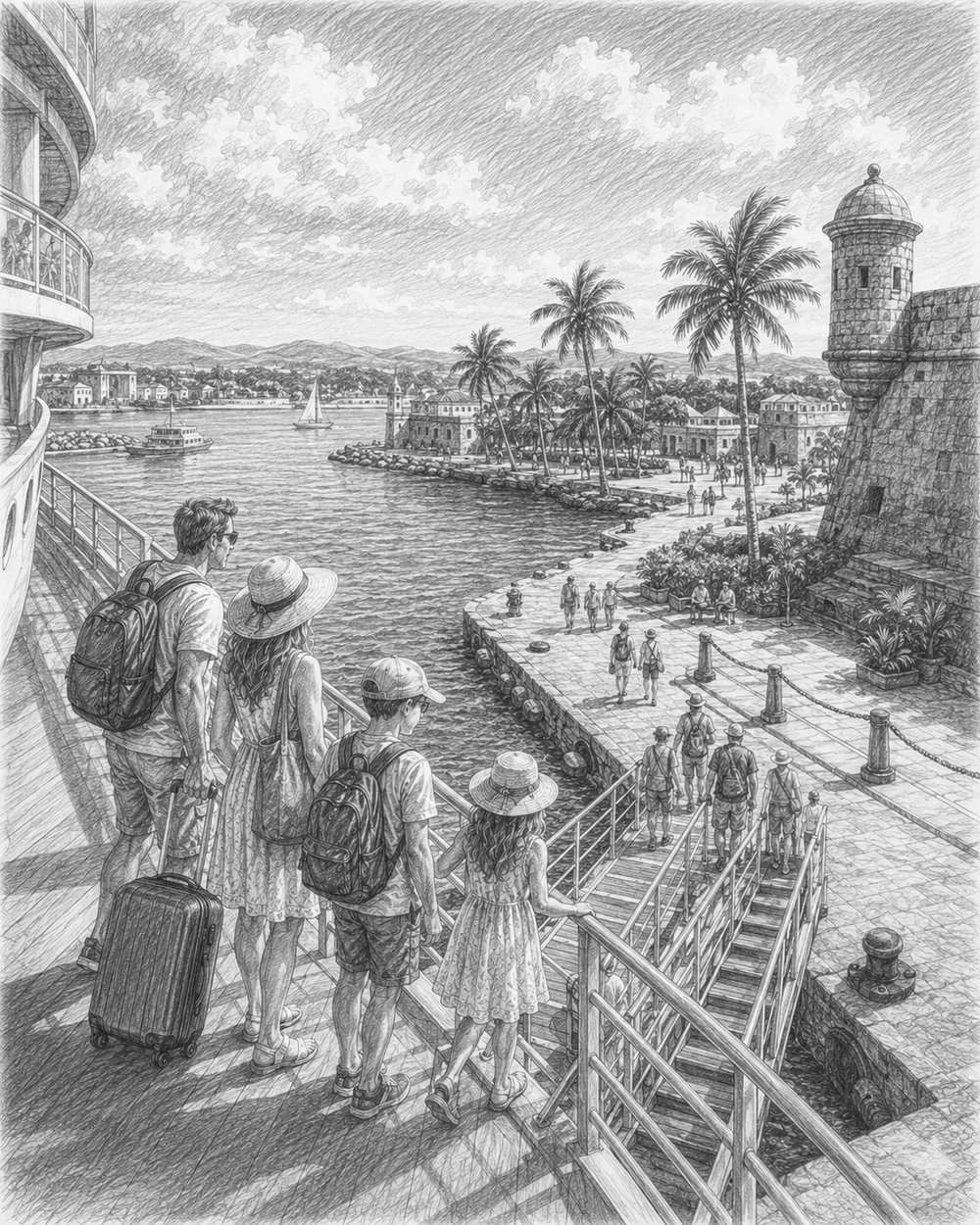
Which ports will Allure of the Seas actually visit, and how should you spend a day in each? On her round-trip sailings from Fort Lauderdale, she runs six- and eight-night Eastern and Western Caribbean itineraries, so the port list depends entirely on which voyage you book. Western routes lean toward Perfect Day at CocoCay, Cozumel, Costa Maya, and Roatan; Eastern routes lean toward Perfect Day at CocoCay, San Juan, St. Thomas, and St. Maarten. The exact stops and their order change from sailing to sailing, so the first move is always to open the Royal Caribbean app and confirm your own itinerary before you plan a single excursion. This guide walks through each port she typically calls at, what each one is known for, a couple of worthwhile things to do, and the honest ship-versus-independent call so you can arrive with a plan instead of scrambling on the gangway.
Everything in this article and far more, deck by deck, in The Ultimate Guide to Sailing on Allure of the Seas.
Get the book →How Allure of the Seas’ itineraries are built
Allure of the Seas is an Oasis-class megaship that recently went through one of the biggest refits in the fleet, a full Royal Amplification. She now carries more than 5,400 guests, and closer to 6,800 when every berth is full, which matters at the ports because you are moving with a large crowd. Her home port is Fort Lauderdale, at Port Everglades, an easy and modern base to fly into and sail from.
The six-night sailings tend to pack in fewer ports with a sea day or two woven between them, while the eight-night sailings give you more stops and more time to breathe. On a Western Caribbean run you might see CocoCay early, then a mix of Cozumel, Costa Maya, and Roatan. On an Eastern Caribbean run you might get CocoCay followed by San Juan, St. Thomas, and St. Maarten. Because the pattern is not fixed, treat the sections below as a menu: read the ones your sailing includes and skim the rest for context. If you want the bigger picture of how a week aboard actually flows, the Allure of the Seas cruise guide lays out the full rhythm of ship days and port days together.
Perfect Day at CocoCay: included versus paid
CocoCay is Royal Caribbean’s private island in the Bahamas, and it appears on both Eastern and Western itineraries. It is the one stop where you do not need an independent operator at all, because the whole island is run by the cruise line. The trick to CocoCay is understanding what your fare already covers versus what costs extra, because it is easy to spend a lot here without meaning to.
Included with your cruise: the island beaches, the enormous Oasis Lagoon freshwater pool, the freshwater play areas, and the tram that shuttles you around. You can have a completely full, relaxing day using only these and never open your wallet. The paid add-ons are where the island makes its money: the Thrill Waterpark with its tall slides, the zip line, the Coco Beach Club with its overwater cabanas and dedicated pool, and the adults-only Hideaway Beach. None of these are necessary for a great day, but the Thrill Waterpark is the standout upgrade if you are traveling with kids or thrill-seekers.
- Free and easy: grab a beach spot early, float in Oasis Lagoon, ride the tram, use the included dining.
- Worth paying for: the Thrill Waterpark if your group loves slides, or Hideaway Beach if you want a calmer adults-only scene.
- The call: everything here is a “ship” experience by definition, so book the paid extras in the app in advance because the best cabanas and the waterpark sell out.
Cozumel, Mexico
Cozumel is a Western Caribbean staple, and it is known above all for its reef. The waters off the island are part of a famous reef system, which makes snorkeling and diving the headline activities. Beyond the water, the island has laid-back beach clubs and the San Gervasio Mayan site inland, a quieter archaeological stop than the mainland ruins.
Two things worth doing: take a reef snorkeling trip, which is genuinely world-class here, or settle in at a beach club for a slower day of swimming, food, and a drink in hand. If you have a curious streak, San Gervasio pairs a short history walk with the chance to see local wildlife.
The ship-versus-independent call in Cozumel leans independent for confident travelers. The island is tourist-friendly, the port area is well organized, and reputable local snorkel and beach operators are easy to arrange, often at a lower price than the ship’s version. That said, if this is your first cruise or you are nervous about timing, a ship-sponsored excursion guarantees the ship will wait for you if the tour runs late, and that peace of mind is worth something.
Costa Maya, Mexico
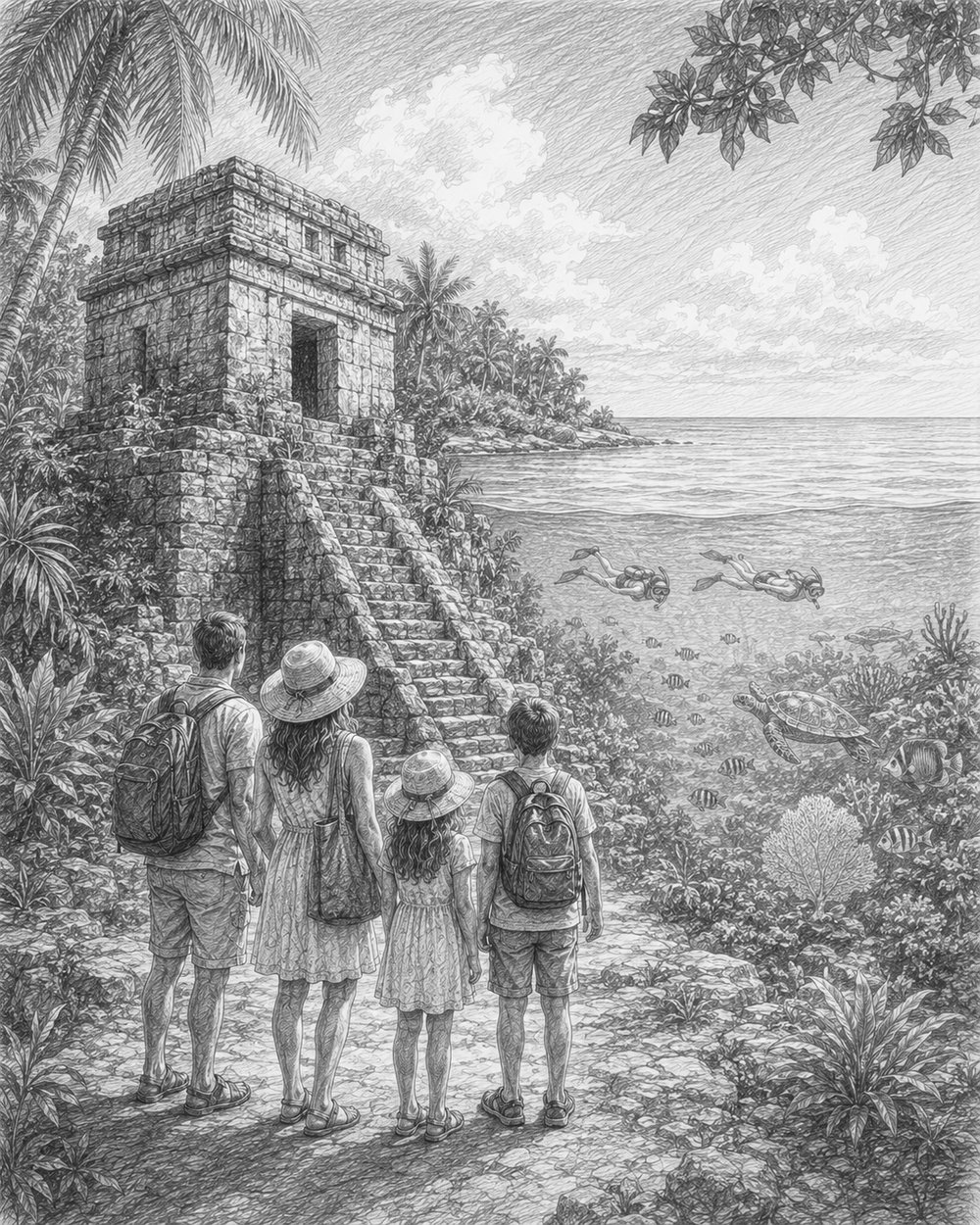
Costa Maya is the other Mexican stop you may see on a Western sailing, and it has a different feel than Cozumel. It is more of a purpose-built port gateway, and its big draw is access to impressive Mayan ruins inland, especially Chacchoben and Kohunlich. Closer to the pier, the village of Mahahual offers a relaxed beach strip and good snorkeling.
Two solid ways to spend the day: book a guided tour to Chacchoben or Kohunlich for a real archaeological experience, or keep it simple with a beach and snorkeling day at Mahahual. The ruins are a longer round trip, so they eat most of your day, while Mahahual is close enough for a flexible, low-commitment visit.
Here the ship-sponsored excursion often makes the most sense, particularly for the ruins. The drive inland is long, the sites are remote, and if traffic or a flat tire delays a private guide, missing all-aboard is a real risk. When the destination is far from the pier, the guaranteed-return safety net of a ship tour usually outweighs the savings of going independent.
Roatan, Honduras
Roatan rounds out the Western Caribbean trio, and it is a favorite for two reasons: West Bay Beach, one of the prettiest stretches of sand in the region, and world-class reef snorkeling right off the shore. The island also has nature and animal parks where you can get close to local wildlife.
Two things to do: spend the day at West Bay Beach, where you can swim, snorkel, and relax without much effort, or visit one of the nature parks for a hands-on encounter with the island’s wildlife. Snorkelers should not skip the reef here, because it is close enough to shore that you do not need a boat to reach good coral.
The independent option is popular in Roatan and the beaches are reachable by short taxi, but the roads and vendors can feel more chaotic than in Mexico, so know exactly where you are going and agree on a price before you get in a cab. If you would rather not manage the logistics, a ship excursion to West Bay or a nature park removes the guesswork and, again, guarantees your return to the ship.
San Juan, Puerto Rico
Now the Eastern Caribbean ports. San Juan is a highlight for anyone who likes history and walkable cities, because the ship docks right at Old San Juan. The old town is known for its colorful colonial streets and, above all, its two great forts: El Morro and Castillo San Cristóbal, both easy to explore on foot.
Two things worth doing: walk Old San Juan and tour El Morro, whose dramatic seaside setting is one of the best photo spots of any Caribbean port, or wander the side streets for local food and shops at your own pace. Because the forts sit within walking distance of the pier, San Juan rewards independent exploring more than almost any other stop.
This is the port where I most strongly lean independent. You can step off the ship and be at the forts in a short walk, no tour required, and the city is safe and easy to navigate. Save the ship excursions here for something specific you want a guide for, and otherwise just explore on your own two feet.
St. Thomas, U.S. Virgin Islands
St. Thomas, with its harbor town of Charlotte Amalie, is known for two things: Magens Bay, a beautiful sheltered beach, and duty-free shopping in town. The island’s hilltop viewpoints also deliver some of the most photographed panoramas in the Caribbean.
Two ways to spend the day: head to Magens Bay for calm, swimmable water and an easy beach day, or combine a scenic viewpoint stop with shopping in Charlotte Amalie. Because St. Thomas is a U.S. territory, everything feels familiar and simple, from the currency to the language.
The call here is a toss-up. Magens Bay is easy to reach by taxi independently, and the flat taxi fares are well established, so a beach day does not need a ship tour. But if you want to combine a viewpoint, a beach, and shopping into one smooth loop, a ship-sponsored island tour ties it together efficiently and, as always, guarantees you make it back before all-aboard.
St. Maarten
St. Maarten, docking at Philipsburg on the Dutch side, is the most versatile Eastern port. It is known for Maho Beach, where planes land dramatically low overhead, the shop-lined Front Street in Philipsburg, and the French side at Marigot with its distinctly European atmosphere.
Two things worth doing: watch the low-flying planes at Maho Beach, a genuinely unusual spectacle, or take a trip across to the French side and stroll Marigot for a completely different vibe and better food. Front Street in Philipsburg is right by the pier if you would rather stay close and shop or grab a beach chair.
St. Maarten is very independent-friendly. Taxis and water taxis are easy, the island is compact, and crossing between the Dutch and French sides is straightforward. A confident traveler can build a great DIY day here. If you want the whole island in one go without navigating yourself, an island tour covers Maho, Marigot, and the scenic overlooks in a single trip.
An excursion booking strategy that actually works
The single biggest mistake people make is treating every port the same way. They are not the same. The smart approach is to match the excursion type to the port’s distance and complexity, and to book the things that sell out well before you sail.
- Book early through the app for anything popular or limited: CocoCay cabanas and the Thrill Waterpark, and any small-group tour. These fill up before sailing.
- Go with the ship when the destination is far from the pier or timing is tight, such as the inland ruins from Costa Maya, because the ship waits for its own excursions.
- Go independent when the port is walkable or a short taxi away and well organized, such as Old San Juan or a beach day in St. Maarten, to save money and gain flexibility.
- Match the day to the ship’s schedule: on a short six-night sailing your port hours may be tighter, so do not over-plan.
One more principle: do not book an excursion in every single port. Pick one or two ports for a real adventure and leave at least one as a simple beach or wander day. A week of back-to-back full-day tours is exhausting, and Allure herself is a destination worth staying aboard for on the lightest port. For a broader set of practical habits that make the whole week smoother, the Royal Caribbean Allure of the Seas tips collection is worth a read before you pack.
Docking versus tendering, and all-aboard timing
Most of Allure’s Caribbean ports are docked ports, meaning the ship ties up alongside a pier and you simply walk off down the gangway whenever you are ready. CocoCay, Cozumel, Costa Maya, Roatan, San Juan, St. Thomas, and St. Maarten are all designed to receive large ships at a pier. That is a big convenience compared with tender ports, where the ship anchors offshore and small boats ferry guests in, which adds waiting time and can be canceled in rough seas.
The number that governs your whole day is the all-aboard time. This is always earlier than the ship’s departure time, usually by about half an hour, and it is printed in the daily schedule in the app and on the paper planner. Miss it and the ship can leave without you, and it will not wait for independent travelers. Set an alarm on your phone for the all-aboard time, not the departure time, and build a buffer into any independent plan so a slow taxi or a long lunch does not turn into a very expensive mistake.
Also keep in mind that many ports observe a different local time than the ship. Allure typically stays on its own onboard time regardless of the local clock, so always confirm which time the all-aboard refers to. When in doubt, ask at the gangway on your way out, and be back early rather than testing the margin.
Money and tipping ashore
Onboard, your SeaPass card runs everything cashlessly and daily gratuities are added automatically to your account. Ashore, it is a different world, and a little cash goes a long way. U.S. dollars are widely accepted across these Caribbean ports, and in the U.S. Virgin Islands like St. Thomas the dollar is simply the currency. Carry small bills for taxis, beach chairs, drinks, and tips, because vendors and drivers often cannot break large notes.
On tipping ashore: it is customary to tip local guides, drivers, and beach servers who take good care of you, roughly in line with what you would tip at home for similar service. This is separate from your onboard gratuities, which only cover the ship’s crew. Budget a modest amount of cash per port for these small tips and you will keep everything friendly and smooth.
- Bring small-denomination U.S. dollars for every port, split into a day bag rather than all in one place.
- Agree on taxi fares before you get in, especially in Roatan; many islands post flat rates.
- Keep your SeaPass card and a photo ID on you, and know your all-aboard time cold.
- Prices ashore vary widely, so treat vendor quotes as a starting point and confirm current rates locally.
Making the most of sea days
Between ports, Allure of the Seas gives you sea days, and on this ship they are anything but downtime. After her amplification she gained a brand-new resort-style top pool deck with more loungers, the Perfect Storm trio of waterslides including the SuperCell champagne-bowl slide, and an expanded adults-only Solarium. Add the two FlowRider surf simulators, the zip line over the Boardwalk, the rock-climbing walls, and the open-air AquaTheater, and a sea day can be as active as any port.
Sea days are also the best time to try the specialty dining you skipped, such as the new Samba Grill Brazilian churrascaria, or to catch the Broadway-style theater show and the ice-skating show without competing with a port-day rush. A good pattern is to go hard in one or two ports, then treat a sea day as a slower reset by the pool or in Central Park, the open-air garden with thousands of live plants. If you want a fuller picture of everything waiting aboard, what to expect on Allure of the Seas covers the neighborhoods and venues in depth, and the amplified upgrades guide explains exactly what the refit changed.
Get the complete Allure of the Seas playbook
If you want every port, excursion, and sea day mapped out in one place, “The Ultimate Guide to Sailing on Allure of the Seas” walks you through it step by step. It is part of the Ultimate Ship Guides series by Leo Sotropa, with clear action steps in every chapter so you board knowing exactly what to do.
Frequently asked questions
Which ports does Allure of the Seas visit?
She sails round-trip from Fort Lauderdale on six- and eight-night Eastern and Western Caribbean voyages. Western itineraries feature ports such as Perfect Day at CocoCay, Cozumel, Costa Maya, and Roatan, while Eastern itineraries feature CocoCay, San Juan, St. Thomas, and St. Maarten. The exact stops vary by sailing, so confirm yours in the Royal Caribbean app.
Should I book excursions with the ship or independently?
It depends on the port. Book with the ship when the destination is far from the pier or timing is tight, such as inland ruins from Costa Maya, because the ship waits for its own excursions. Go independent when the port is walkable or a short taxi ride away and well organized, such as Old San Juan or a beach day in St. Maarten, to save money and gain flexibility.
What is included at Perfect Day at CocoCay?
Your fare includes the island beaches, the Oasis Lagoon pool, the freshwater areas, and the tram. Paid add-ons include the Thrill Waterpark, the zip line, the Coco Beach Club, and the adults-only Hideaway Beach. You can have a full, relaxing day using only the included amenities, but book the paid extras in advance because they sell out.
Do the ports use docks or tenders?
Allure’s main Caribbean ports are docked, meaning she ties up at a pier and you walk off down the gangway. CocoCay, Cozumel, Costa Maya, Roatan, San Juan, St. Thomas, and St. Maarten all receive large ships at a pier, so you avoid the waiting and weather risk that come with tender ports where the ship anchors offshore.
What does all-aboard time mean and why does it matter?
All-aboard is the time you must be back on the ship, and it is earlier than the departure time, usually by about half an hour. The ship will not wait for independent travelers who miss it. Check the all-aboard time in the app’s daily schedule, set a phone alarm for it, and build in a buffer for slow taxis or long lunches.
How much cash should I bring ashore?
Bring small-denomination U.S. dollars, which are widely accepted across these ports and are the currency in the U.S. Virgin Islands. You will want cash for taxis, beach chairs, drinks, and tips for guides and drivers, since vendors often cannot break large bills. Your onboard SeaPass covers only the ship, so plan a modest cash budget per port.
Are the sea days worth staying aboard for?
Very much so. After her Royal Amplification, Allure has a new resort-style pool deck, the Perfect Storm waterslides including the SuperCell, an expanded Solarium, two FlowRiders, a zip line, and the AquaTheater. Sea days are also the best time for specialty dining like Samba Grill and for the theater and ice shows, so consider leaving one lighter port as a ship day.
Ready for the whole ship in one place? It is all in The Ultimate Guide to Sailing on Allure of the Seas.
Get the book →
Meet Leo: The Heartbeat Behind ‘A Country A Month’
Journeying through the pages of A Country A Month, you might often feel the rhythm of a storyteller’s heartbeat, pulsating through each line, each image, and each adventure shared. That heartbeat belongs to none other than our remarkable website editor, Leo.
With a lens in one hand and a pen in the other, Leo seamlessly marries his passions for photography and writing. His eye captures moments that words can barely describe, yet his eloquence brings those images to life, transcending borders and connecting us all through shared stories. An avid traveler, every country he’s visited has added another chapter to his expansive tale, and through our platform, he generously shares these chapters with us.