What does a Mediterranean cruise on Sun Princess actually look like day to day? You sail a loop of seven to fourteen nights out of Rome, Athens or Barcelona, waking in a new port most mornings: the ruins of Rome and Pompeii, the Sicilian drama of Taormina and Mount Etna, the fjord-like Bay of Kotor, the Venetian old town of Corfu, the Acropolis at Athens, and the two Greek islands everyone comes for, Mykonos and Santorini. This Mediterranean cruise guide to the Greek Isles walks the whole itinerary in order, flags which sights are a long transfer inland, which ports need a tender, where timed tickets sell out, and how to pace a hot, port-heavy week without burning out. Exact ports vary by sailing, so confirm your voyage and the latest schedule in the Princess app.
Everything in this article and far more, deck by deck, in The Ultimate Guide to Sailing on Sun Princess.
Get the book →The shape of a Sun Princess Mediterranean itinerary
Sun Princess is Princess Cruises’ newest flagship and the first of the all-new Sphere Class, a clean-sheet design of around 177,000 gross tons across 21 decks, carrying roughly 4,300 guests. Her marquee season in this guide is the Mediterranean and Greek Isles, based at Rome (Civitavecchia), Athens (Piraeus) and Barcelona. Because she is the freshest, most advanced ship in the fleet, a Mediterranean sailing pairs the region’s ancient treasures with the very latest onboard design and the effortless Medallion experience.
Most sailings fall into three broad shapes. A seven-night run tends to concentrate on either the western Mediterranean (Rome, Naples, Sicily and Spain) or the Greek Isles and Adriatic (Athens, Mykonos, Santorini, Kotor, Corfu). A longer ten- to fourteen-night voyage stitches both halves together, sometimes adding Chania on Crete, Kuşadası in Turkey, or a Barcelona turnaround. The port list across these itineraries typically includes Rome, Naples/Capri, Messina, Kotor, Corfu, Athens, Mykonos and Santorini. Which ports you get, and in which order, depends on your specific sailing, so treat the walk-through below as the menu rather than a fixed sequence.
One structural thing to understand up front: two of the biggest-name ports, Rome and Athens, are not walk-off cities. The ship docks at a working port some distance from the sights, so those days are built around a transfer. A couple of the Greek islands, meanwhile, are tender ports, where the ship anchors offshore and ferries you in by small boat. Knowing which is which shapes how you plan each morning.
Rome (Civitavecchia): a transfer port, plan it hard
Rome is the classic example of a port that isn’t the city. Sun Princess docks at Civitavecchia, and the historic center, the Colosseum, the Vatican, the Roman Forum, the fountains and piazzas, is a train or transfer ride away. That reality is the single most important thing to plan around on a Rome day. You are choosing between a ship excursion that handles all the logistics, a private car and guide, or a do-it-yourself train into the city. Whichever you pick, decide before you sail, because the good options fill.
The Colosseum and the Vatican Museums both run on timed-entry tickets that regularly sell out well in advance, so this is not a day to improvise. If seeing them matters to you, book the timed slots or a tour that includes skip-the-line entry ahead of time, and build your transfer around those windows. Trying to buy Colosseum or Vatican tickets on the morning of your call is how people end up staring at a queue instead of the ceiling of the Sistine Chapel. Rome rewards a plan and punishes a wing-it approach.
Naples and Capri: pick one big thing
Naples is one of the most generous ports on the itinerary because the choices are all strong and all in different directions. Within reach you have Pompeii, the frozen Roman city under Vesuvius; the Amalfi Coast, with its cliff-hugging drive to Positano and Ravello; the isle of Capri and its Blue Grotto; and, of course, pizza in the city where it was invented. The trap is trying to do two of those in one day. They pull opposite ways, and the coastal roads are slow.
The honest move is to pick one anchor and commit. Pompeii is the most reliable and the closest, and it pairs naturally with a short stop in Naples itself. The Amalfi Coast is the scenic showstopper but a long day of winding roads. Capri is a boat transfer on top of everything else and best treated as its own full-day plan. Ancient sites and cobbled towns mean a lot of walking on uneven ground, so comfortable shoes matter more here than almost anywhere.
Messina, Sicily: Taormina and Mount Etna
Messina is your gateway to two very different Sicilian icons, and again the day splits by choice. Taormina is a hilltop town with a spectacularly sited ancient Greek theater looking out over the sea toward Etna, plus a walkable center of shops, gardens and terraces. Mount Etna, Europe’s most active volcano, is the other draw: tour options range from a drive up to the lower craters and lava fields to combinations that pair a taste of Etna with a stop in Taormina.
If you only do one, Taormina is the easier, more relaxed day and delivers the postcard view without a big elevation change. Etna is the bucket-list choice for anyone who wants to stand on a volcano, but it involves altitude, changeable mountain weather and more time in transit. Whatever the forecast at sea level, bring a layer for Etna; the summit zone is markedly cooler and windier than the port.
Kotor, Montenegro: the scenic sail-in
Kotor is the port people don’t expect to love and then do. The approach through the Bay of Kotor is one of the most beautiful sail-ins in the Mediterranean, a long, narrow inlet ringed by steep mountains that reads more like a Norwegian fjord than a Balkan coast. If your call includes a daytime arrival, get up on deck for it; this is a morning to have coffee outside and watch rather than sleep in.
Ashore, the walled old town is compact and easy to explore on foot, a maze of stone lanes, small squares and churches. The ambitious add-on is the climb up the fortifications to the mountain fortress above town for a view straight down onto the ship and the bay. It is a genuine workout on uneven steps, best done early before the midday heat, with water and sun protection. Montenegro uses the euro, so no currency change is needed here even though it isn’t in the EU.
Corfu: the gentle Greek day
Corfu is the change of pace the itinerary needs. After the ruins and the volcanoes, this is a softer, greener island with a Venetian old town, a pair of fortresses and a string of beaches. The old town is walkable straight off a tour or transfer, with arcaded streets, a grand esplanade and easygoing cafes; the fortresses give you the history and the views without a punishing hike.
This is a good port to treat lightly on purpose. If your week is stacked with marquee ancient sites, use Corfu as a beach-and-old-town day rather than another full-throttle excursion. It sits well as a breather between the intensity of the Italian and Athenian sights and the whitewashed drama of Mykonos and Santorini still to come. Pacing the week, not just the day, is what keeps a port-intensive cruise enjoyable.
Athens (Piraeus): the second transfer port
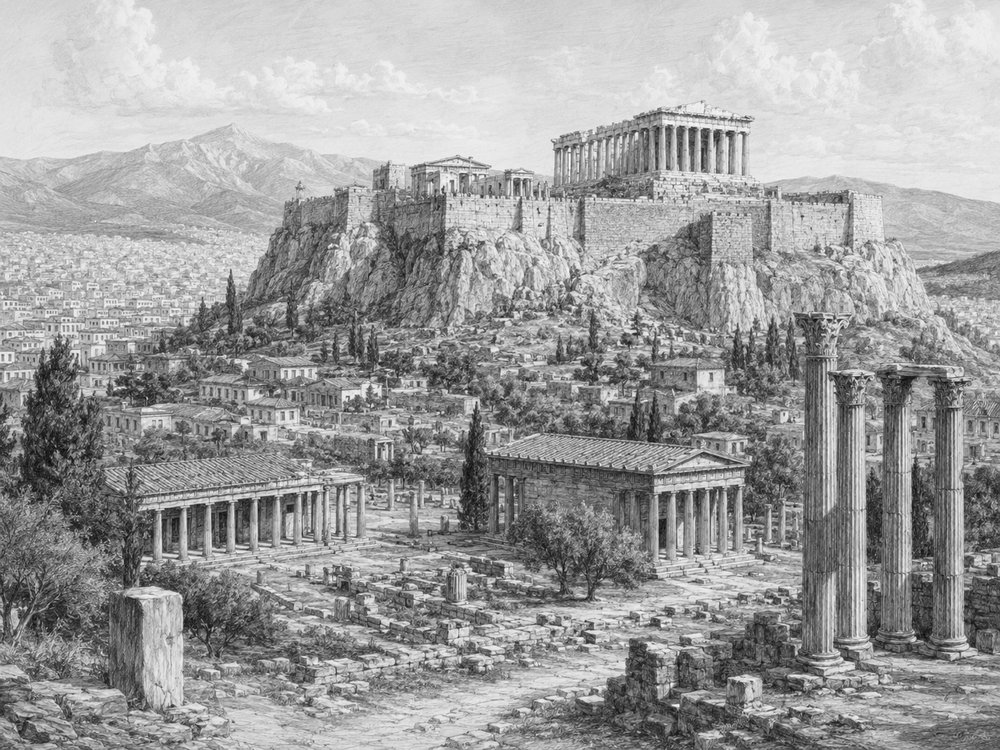
Like Rome, Athens is a transfer port. The ship docks at Piraeus, and the Acropolis, the Parthenon, the Plaka district and the great museums are a drive from the pier. Plan the day around getting into the city efficiently, whether by ship tour, private guide or taxi, and treat the Acropolis as the fixed point everything else orbits.
The Acropolis is exposed, steep in places and brutally hot at midday in high summer, with very little shade on the rock. The practical answer is to go early. A morning visit means cooler air, softer light and thinner crowds; by early afternoon the site is baking and busy. Wear proper shoes for the polished, slippery marble, carry water, and consider pre-booking timed entry, which helps at the busiest times. We keep Athens, Mykonos and Santorini lighter here on purpose, because a companion ports article goes deeper on those three; this guide’s job is the overall itinerary shape.
Mykonos: a tender port with a party reputation
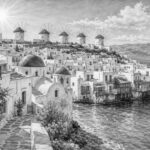
Mykonos is the itinerary’s style icon: the row of windmills, the whitewashed lanes of Chóra, the beaches and the famous nightlife. It is also, on some calls, a tender port, meaning the ship anchors and small boats ferry you ashore rather than tying up at a pier. That changes the rhythm of the day. Tenders take time on both ends, guests on organized tours often get priority, and the last tender back is a hard deadline you do not want to miss.
Practically, that means going ashore with a plan and a comfortable buffer before all-aboard rather than dawdling on the beach until the last minute. Chóra is made for wandering and deliberately maze-like, which is charming until you’re trying to find the tender pier in a hurry. Check whether your specific call is alongside or at anchor in the Princess app, since it varies, and factor the tender time into your schedule.
Santorini: the tender port that needs the most planning
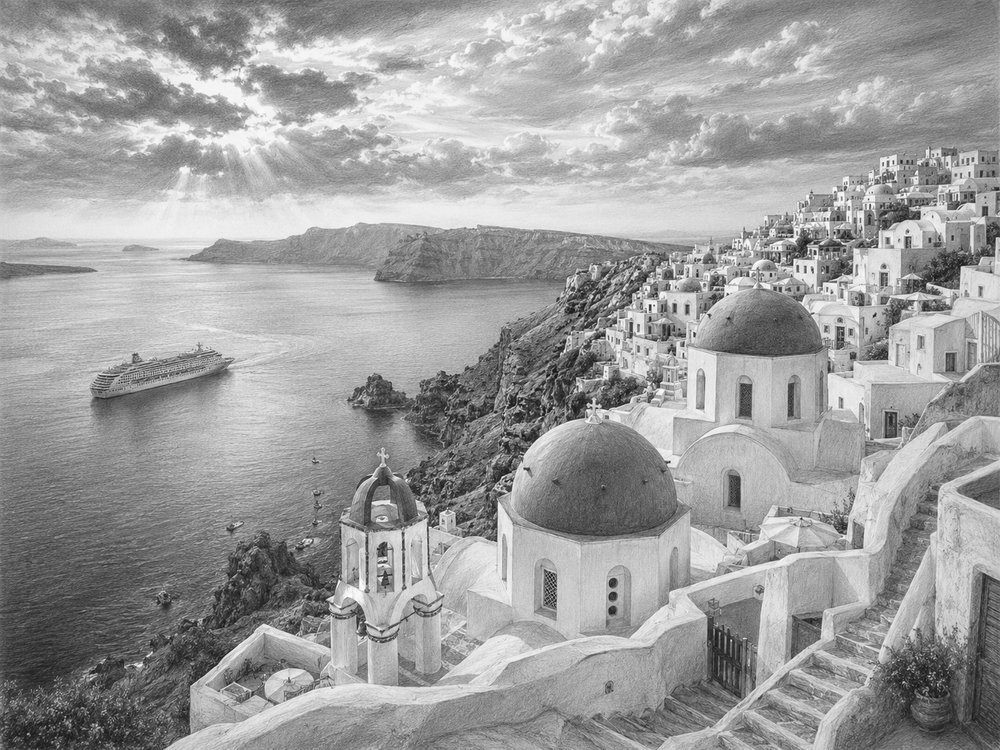
Santorini is the emotional peak of a Greek Isles cruise and the port that demands the most logistical care. The ship anchors in the flooded caldera below the cliff-top towns of Fira and Oia, so this is a tender port, and getting from the water up to the towns is its own small adventure. From the old port you have three ways up: the cable car, which is quick but builds long lines at peak times; the switchback path on foot; or the same path by donkey. Whichever you choose, allow real time for it in both directions.
Up top, Fira and Oia deliver the blue domes, the caldera views and the sunset the island is famous for. The catch is that the same tender-and-cable-car bottleneck that slows you getting up also slows everyone getting down, and there is a firm last tender back to the ship. Build the day backward from that deadline, leave the cliff earlier than feels necessary, and don’t gamble the last tender on the cable car queue. A ship excursion takes the return logistics off your plate, which is worth a lot in a port this constrained.
Transfers, tenders and timed tickets at a glance
| Port | Getting ashore | Plan-ahead note |
|---|---|---|
| Rome (Civitavecchia) | Dock + transfer/train to city | Timed tickets for Colosseum & Vatican |
| Naples | Alongside; sights spread out | Pick one: Pompeii, Amalfi or Capri |
| Messina | Alongside; Taormina/Etna inland | Layer for Etna’s altitude |
| Kotor | Alongside; scenic bay sail-in | Old town on foot; fortress climb early |
| Corfu | Alongside; old town nearby | Good as a lighter beach day |
| Athens (Piraeus) | Dock + transfer to city | Acropolis early; consider timed entry |
| Mykonos | Tender on some calls | Watch the last tender time |
| Santorini | Tender + cable car/climb | Build the day around the last tender |
Money, passports and the Schengen note
Currency is simple: the euro covers essentially every port on these itineraries, Italy, Greece, Montenegro and Spain all use it, so you don’t juggle currencies between stops. Onboard, you never handle cash anyway; payments run on your Ocean Medallion against a US dollar account, and OceanNow lets you order and pay from wherever you are on the ship. Carry a modest amount of euros ashore for small vendors, taxis, tender-town cafes and tips.
A passport is required for these international sailings, and most of these ports sit within Europe’s Schengen area, so keep your passport valid well beyond your travel dates and follow the crew’s instructions on where it is held during the cruise. If your itinerary includes Kuşadası in Turkey, check whether you need a visa, since Turkey is outside Schengen and has its own entry rules. Non-US citizens should verify their own document and visa requirements before booking. As always, confirm the current details for your exact voyage in the Princess app.
Heat, pacing and what to pack
The Mediterranean season here is warm, sunny summer and shoulder weather: hot, dry days and pleasant evenings. The heat is the thing most people underestimate, especially at exposed ancient sites like the Acropolis, Pompeii and the Kotor fortress, where shade is scarce and the midday sun is strong. The fix is rhythm: do the big, exposed, uphill sights early, retreat to shade, water or the ship in the worst of the afternoon, and save flat, breezy or beachy activities for later.
- Light, breathable clothing and a hat for long, sunny days ashore.
- Serious sun protection, reapplied; the reflected glare off water and marble is intense.
- Comfortable, broken-in walking shoes for cobbles, ruins and steep steps.
- Modest cover for shoulders and knees to enter churches and monasteries.
- A light layer for Etna’s altitude and cool sea-breeze evenings on deck.
- A refillable water bottle and a small amount of euros for ashore.
Pace the week, not just each day. This is a port-intensive, culture-rich itinerary, so alternate the marquee tours, Rome, Pompeii, the Acropolis, with the relaxed island and beach days on Mykonos, Santorini and Corfu. Stacking heavy touring days back to back is the fastest way to arrive at Santorini too tired to enjoy it. If you want the deeper strategy on managing energy and getting the most from each call, our Sun Princess tips guide goes further.
Using MedallionClass to make port days smoother
The Medallion isn’t just a party trick; on a port-heavy Mediterranean cruise it quietly removes friction. Every guest wears an Ocean Medallion, a quarter-sized wearable that unlocks your stateroom hands-free, speeds boarding and re-boarding at each port, lets you locate your travel companions across the ship, and handles touchless payments. On a morning when you’re rushing to make a tour or a tender, not fumbling for a card or key genuinely helps.
Set it up before you sail so it works from minute one: download the Princess app, complete the OceanReady check-in, add a payment method, and order your Medallion to arrive before the cruise. Onboard, Dine My Way lets you reserve flexible dining times or keep a traditional set seating, which matters when port days end late and everyone gets back hungry at once; JourneyView helps you plan each day around your call. For a fuller walk-through of the system, see our MedallionClass first-timer guide, and for the ship itself, the what to expect on Sun Princess overview.
Choosing a cabin for a Mediterranean sailing
On a scenic voyage you’d argue hard for a balcony, and it is genuinely lovely here for the Kotor sail-in and warm evenings at sea. But be honest about how this itinerary works: port-heavy days mean you spend far less time in the cabin than on a leisurely cruise, so an Interior or a sheltered Balcony is strong value, while a midship Balcony on the mid-decks gives the best all-round mix of light, space and the steadiest ride. The top of the range is a Sanctuary Collection suite with private retreat access.
Check the deck plan before you commit and avoid a few known trade-offs: cabins directly under the pool deck, the buffet or the Dome can be noisy, rooms near nightlife venues run late, forward high-deck cabins move most in any swell, and some lower-deck balconies have obstructed or lifeboat-blocked views. Our fuller Sun Princess cruise guide and the Sphere Class ship guide break down the cabin categories and the ship’s signature spaces in more detail.
Get the complete Sun Princess playbook
Want every port, every venue and every Medallion trick in one place? “The Ultimate Guide to Sailing on Sun Princess,” part of the Ultimate Ship Guides series by Leo Sotropa, turns the whole Mediterranean and Greek Isles itinerary into clear action steps in every chapter, so you board knowing exactly what to do each day.
Frequently asked questions
How long are Sun Princess Mediterranean and Greek Isles cruises?
They run from seven to fourteen nights, sailing out of Rome (Civitavecchia), Athens (Piraeus) or Barcelona. Shorter voyages tend to focus on either the western Mediterranean or the Greek Isles and Adriatic, while longer ones combine both. Exact ports and lengths vary by sailing, so confirm your specific itinerary in the Princess app.
Which ports are tender ports?
Santorini is a tender port, where the ship anchors in the caldera and you take a small boat ashore before the cable car or climb up the cliff. Mykonos is a tender port on some calls and alongside on others. Because it varies, check whether your specific call is at anchor in the Princess app and build in extra time.
Are Rome and Athens walkable from the ship?
No. Both are transfer ports. Rome’s sights are a train or transfer ride from Civitavecchia, and Athens is a drive from the port at Piraeus. Plan those days around getting into the city, whether by ship excursion, private guide or public transport, and book any timed-entry tickets in advance.
Do I need timed tickets for the big sights?
For the Colosseum and the Vatican Museums in Rome, yes; they use timed entry that sells out ahead of time. The Acropolis in Athens also benefits from pre-booked timed entry at busy periods. Booking a ship tour or a guide that includes entry is the simplest way to avoid the queues on a short port day.
What currency do I need in the ports?
The euro covers every main port on these itineraries, including Italy, Greece, Montenegro and Spain. Onboard you pay with your Ocean Medallion, so you only need a modest amount of euros ashore for small vendors, taxis and tips. If Turkey is on your itinerary, its rules differ, so check ahead.
Do I need a passport, and what about Schengen?
Yes, a passport is required for these international sailings, and most ports fall within Europe’s Schengen area. Keep your passport valid well beyond your travel dates. If your voyage includes Kuşadası in Turkey, which is outside Schengen, check whether you need a visa, and non-US citizens should verify their own entry requirements.
How should I handle the Mediterranean heat?
Do the exposed, uphill sights like the Acropolis, Pompeii and the Kotor fortress early in the morning, then retreat to shade or the ship in the hottest part of the afternoon. Pack light breathable clothing, strong sun protection, a hat and plenty of water, and alternate heavy touring days with relaxed island and beach days so you don’t burn out.
Ready for the whole ship in one place? It is all in The Ultimate Guide to Sailing on Sun Princess.
Get the book →
Meet Leo: The Heartbeat Behind ‘A Country A Month’
Journeying through the pages of A Country A Month, you might often feel the rhythm of a storyteller’s heartbeat, pulsating through each line, each image, and each adventure shared. That heartbeat belongs to none other than our remarkable website editor, Leo.
With a lens in one hand and a pen in the other, Leo seamlessly marries his passions for photography and writing. His eye captures moments that words can barely describe, yet his eloquence brings those images to life, transcending borders and connecting us all through shared stories. An avid traveler, every country he’s visited has added another chapter to his expansive tale, and through our platform, he generously shares these chapters with us.