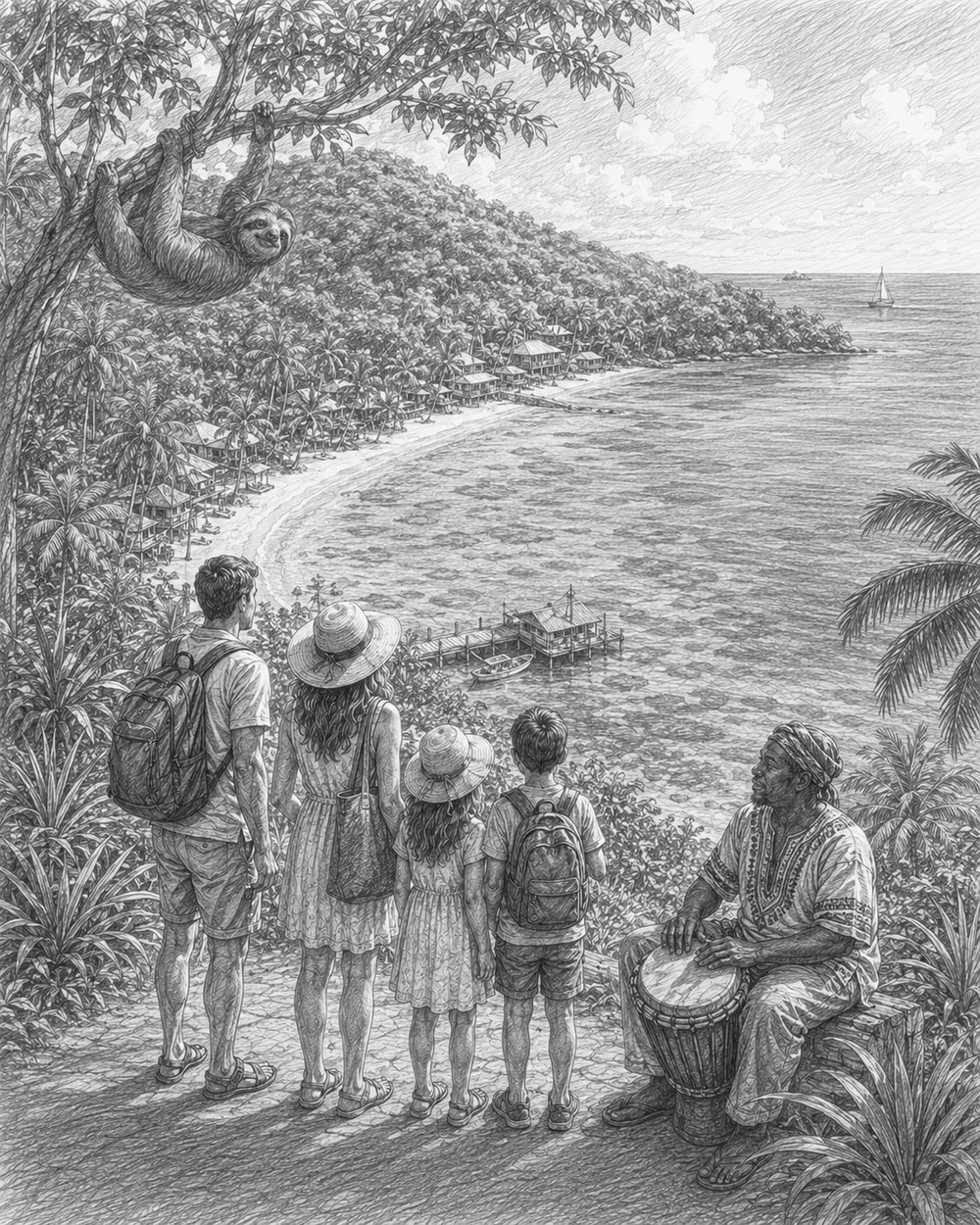
Want the short version of a Western Caribbean cruise from Miami on Norwegian Luna? You sail seven nights round-trip from Miami and call at four warm-water ports — Roatán in Honduras, Harvest Caye (Norwegian Cruise Line’s resort-style island in Belize), Costa Maya in Mexico, and Cozumel — with the rest of the week at sea aboard the newest ship in the fleet. It is a reef-and-ruins itinerary: snorkeling, beach clubs, and Maya archaeology by day, then the Aqua Slidecoaster, Ocean Boulevard, and Freestyle dining back on board. This guide covers what to do at each port, how excursions work, how to pace the sea days, what tropical weather means for your plans, and the passport rules for a closed-loop cruise.
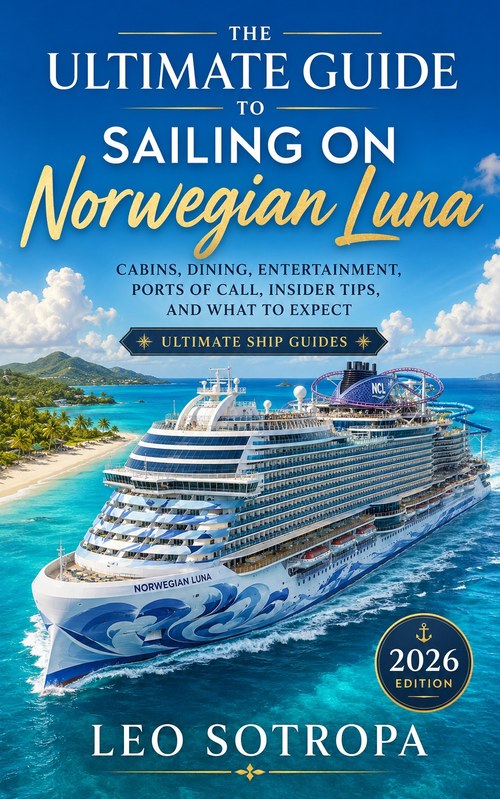
Everything in this article and far more, deck by deck, in The Ultimate Guide to Sailing on Norwegian Luna.
Get the book →The seven-night Western Caribbean route at a glance
Norwegian Luna is NCL’s newest ship and the second of the Prima Plus Class, a larger, refined evolution of the Prima design built around space, light, and the outdoors. Her marquee season in this guide is the Caribbean from Miami, alternating Western and Eastern itineraries. On the Western week the ship threads the far side of the sea — Honduras, Belize, and Mexico’s Caribbean coast — which is why the days tilt toward coral reefs and rainforest rather than the Bahamas beaches of the Eastern route.
A typical Western rhythm gives you an embarkation afternoon in Miami, a full sea day to settle in, then the four ports spread across the middle of the week, with another sea day or two before you return to Miami on the final morning. The exact order and timing shift by sailing, so treat any day-by-day plan as a sketch and confirm the latest schedule and arrival times in the NCL app once your voyage is loaded. The app runs your day on board — deck plans, dining reservations, showtimes, and all-aboard times all live there.
| Port | Country | Known for | Getting ashore |
|---|---|---|---|
| Roatán | Honduras | Mesoamerican reef, beaches, Bay Island hills | Dock, walk off |
| Harvest Caye | Belize | NCL’s private island — beach, pool, lagoon | Dock, walk off |
| Costa Maya | Mexico | Chacchobén ruins, beaches, port village | Dock, walk off |
| Cozumel | Mexico | Snorkeling and diving, Maya ruins, beach clubs | Dock, walk off |
One thing worth flagging early: on this Western routing the ports are generally dock-and-walk-off rather than tender. You step off onto a pier instead of waiting for a small boat to shuttle you ashore, which speeds up your morning and makes it easier to split a day between a booked excursion and time back on the ship. Always confirm the arrangement for your specific call, though, because berthing can change.
Miami embarkation, briefly
Your cruise begins at PortMiami, one of the busiest cruise ports in the world and an easy one to reach — Miami International Airport sits a short drive away, and taxis, rideshares, and pre-booked transfers all serve the terminals. The single best piece of advice for any cruise is to fly in the day before rather than the morning of departure. A day-early arrival takes the stress out of flight delays and lets you enjoy the city — South Beach and the Art Deco district, Little Havana, and a good Cuban meal before you board.
On embarkation day, check-in runs by assigned arrival window, so book your slot in the NCL app and arrive close to it rather than lining up hours early. Have your boarding pass, passport or accepted documents, and a payment card ready. Once aboard, your key card — the Cruise Card — becomes your room key, your ID at the gangway, and your cashless account for everything on the ship. Grab lunch at the Surfside Café or the Indulge Food Hall and start learning the layout while the ship is still calm.
If this is your first NCL sailing, it is worth reading up on how the line’s Freestyle Cruising works before you go; our first-timer’s guide to Freestyle on Norwegian Luna covers the dining and dress-code differences in detail.
Roatán, Honduras: reef and beaches
Roatán is the largest of Honduras’s Bay Islands and one of the best snorkeling and diving stops on the itinerary. The island sits along the Mesoamerican Barrier Reef, the second-largest reef system on the planet, and the water clarity is excellent. If you only do one thing in Roatán, make it something on or in the water — a guided snorkel over the reef wall, a shallow-reef swim suited to beginners, or a discovery scuba session if you have never dived.
Beyond the reef, the island rewards a slower pace. The lush Bay Island hills give you canopy zip-lines and viewpoints, and the beaches on the west end are the postcard kind — soft sand, calm shallows, and beach bars a short walk from the water. Families often gravitate to a beach-club day with easy snorkeling straight off the sand, while more active travelers pair a morning reef trip with an afternoon ashore.
Roatán is a docking port, so you walk off directly. The terminal has shops, but the best beaches and reefs are a taxi or tour transfer away, which is the main reason to have a plan before you step off. For a deeper look at the two headline snorkeling ports on this route, our guide to Roatán and Cozumel breaks down the best reef sites and how to reach them.
Harvest Caye, Belize: NCL’s island day
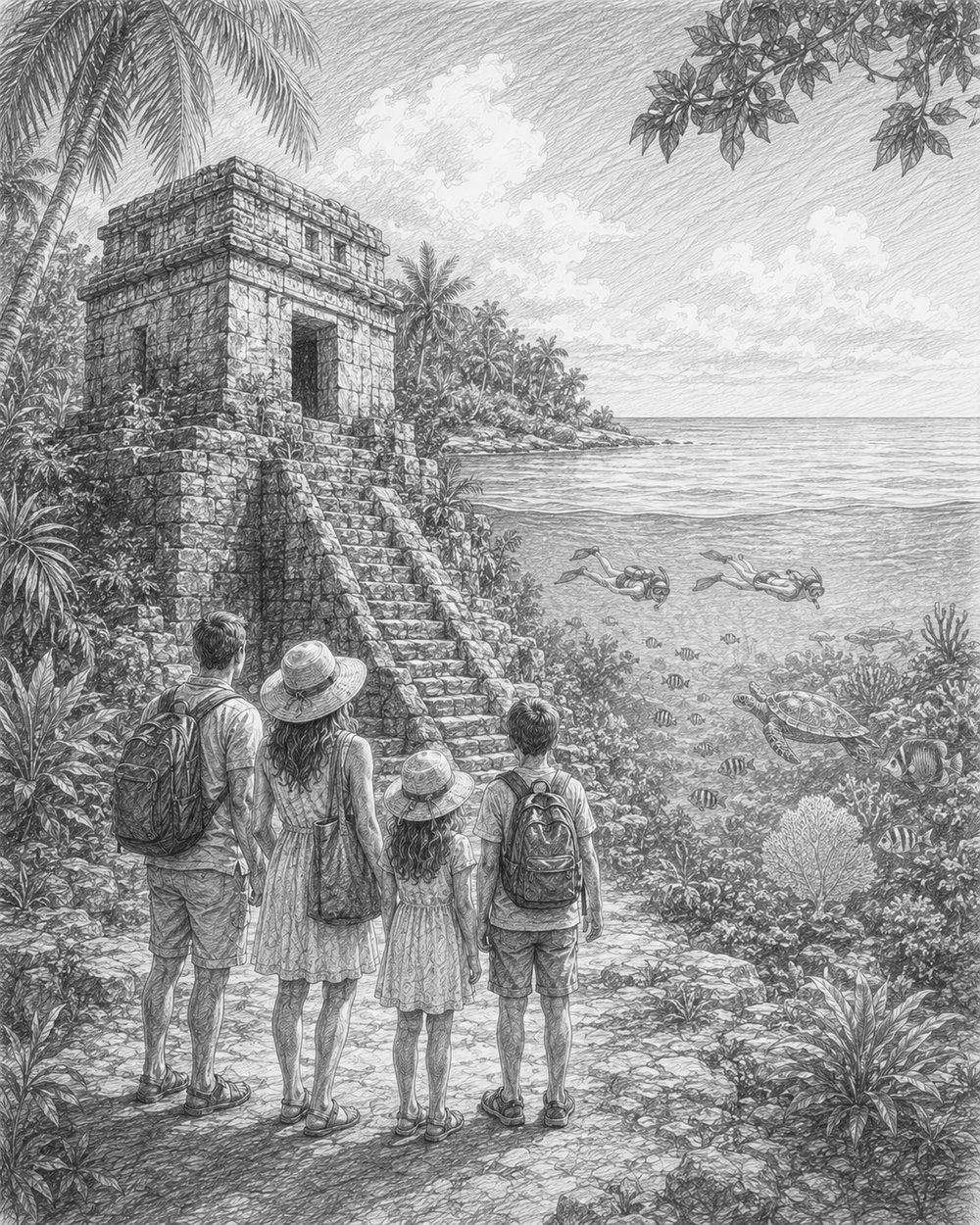
Harvest Caye is Norwegian Cruise Line’s resort-style island port off the coast of Belize, and it is one of the most relaxed days of the week. This is a purpose-built beach day: a broad sweep of sand, a large pool, a lagoon for calm-water paddling, and a controlled, easy-to-navigate island where the ship docks and you simply walk ashore. If your idea of a good port day is a lounger, a swim, and a drink from the beach bar with nothing to organize, Harvest Caye delivers it without any of the logistics of a mainland call.
The island also works as a gateway to Belize proper. From here you can book excursions to the country’s famous reef for snorkeling, or head inland toward rainforest, wildlife, and Maya ruins — the more ambitious tours involve a longer transfer, so weigh travel time against lounging. Everything on the island runs on your key card, so there is no need to carry cash.
Because it is an NCL destination, Harvest Caye is a low-friction day for families and first-timers. Clean facilities, shade, and food are all close at hand, and you can wander back to the ship whenever you like — this is the port to take at an easy pace.
Costa Maya, Mexico: Chacchobén and the port village
Costa Maya is a purpose-built cruise port on Mexico’s Caribbean coast, and the headline excursion is the Maya ruins of Chacchobén. The site is set in jungle a bit inland, with temple platforms and pyramids you can walk among, and a good guide brings the history of the region to life. It is one of the more atmospheric ruins on the itinerary precisely because it is quieter and greener than the big-name sites, and the tour typically runs a comfortable half-day, leaving time to enjoy the port afterward.
The port village itself is a compact, walkable zone of pools, shops, restaurants, and a small beach area right by the pier — a pleasant place to spend a few hours even if you skip the ruins. Many people pair the two: a morning at Chacchobén, then an afternoon by the port pool or at a nearby beach club. Costa Maya is a docking port, so you walk off straight into the village. Mexico uses the peso, but US dollars and cards are widely accepted here; book beach clubs and the ruins tour in advance rather than arranging them on the fly, especially when several ships are in.
Cozumel, Mexico: reefs, ruins, and beach clubs
Cozumel is the most versatile port of the four, and for many travelers it is the highlight. The island’s reefs are world-class — one of the premier snorkeling and diving destinations in the Caribbean, with dramatic drop-offs and abundant marine life just offshore. Snorkel trips run from calm, shallow reefs perfect for beginners to boat excursions over the deeper walls, and the dive operators are well established if you are certified or want a first dive.
Cozumel is not only about the water. The island has its own Maya ruins, and a ferry connects to the mainland if you want the larger sites near Playa del Carmen and Tulum, though that is a long day. Closer to the port, beach clubs line the coast with pools, loungers, snorkeling gear, and food for an easy day when you just want sand and sea, and the town of San Miguel has shopping and taco stands within easy reach of the piers.
Cozumel docks are walk-off, and the sheer number of options means it pays to decide in advance what kind of day you want — reef, ruins, or beach club. If snorkeling is your priority for the whole cruise, this is the port to focus it.
Booking excursions through NCL vs going independent
Every port here supports both approaches, and the right one depends on your appetite for risk and savings.
Booking through the ship
NCL’s own shore excursions cost a bit more than the equivalent independent tour, but they buy you a real guarantee: if the tour runs late, the ship waits for you, because you are traveling on its operator. That peace of mind matters most on tours with a longer transfer or a hard schedule — the Chacchobén ruins, a mainland trip from Cozumel, or an inland Belize excursion from Harvest Caye. Ship tours also handle the logistics end to end, which is worth a lot if you are new to cruising or traveling with kids. Book these in the NCL app before you sail, because the best trips sell out early.
Going independent
Since all four ports are walk-off, independent tours are very doable and usually cheaper. A reputable local snorkel operator in Cozumel or Roatán, or a beach-club day arranged directly, can cost noticeably less and often runs in smaller groups. The trade-off is that you are responsible for getting back before all-aboard — the ship will not wait for an independent tour. To manage that, choose morning tours over afternoon ones, build in a generous buffer, and stay close to the port. For a beach or reef day near the pier, independent is often the better value; for anything far inland with a tight timeline, the ship’s guarantee earns its premium.
Sea days: pacing the ship
The Western Caribbean week is a relaxed, beach-cruise itinerary, which means the sea days are where Luna’s newness really shines. Start with the free stuff up top: the Aqua Slidecoaster is the world’s first hybrid rollercoaster-and-waterslide at sea, using magnetic launch technology to push riders uphill through drops and twists across three decks, and it is complimentary. If you want the full story on how it works and when to ride it, our Aqua Slidecoaster guide covers the details.
Around it, Ocean Boulevard wraps the ship in an outdoor promenade — the most open-air space of any NCL vessel — with the Infinity Beach pools, the glass-floored Oceanwalk bridges, and sweeping sea views. The Luna Midway brings a carnival-inspired zone of games, the Moon Climber adds a multi-level ropes and obstacle course, and the Glow Court flips between an interactive LED sports court by day and a lit-up game space at night. Add the Galaxy Pavilion VR arcade and headline shows at the Prima Theater, and a sea day fills itself.
The smart move is to space it out: do the thrill rides and pools in the morning when lines are shortest, then slow down in the afternoon with a lounger on Ocean Boulevard or a show in the evening. Because this is a warm-weather week, sunscreen and a plan for shade matter; the top decks get hot. For a full room-by-room tour, see our guide to what to expect on Norwegian Luna.
Freestyle dining on a port-heavy week
Freestyle Cruising means no fixed dining times, no assigned tables, and no formal dress codes — you eat when, where, and with whom you like. On a port day that flexibility is a real advantage: come back starving at an odd hour and the Surfside Café buffet, the Indulge Food Hall, or a main dining room like Hudson’s or the Commodore Room will feed you without a reservation. Save the specialty restaurants — Cagney’s Steakhouse, Le Bistro, Los Lobos, Onda by Scarpetta, and the newer Sukhothai and Planterie — for sea-day evenings, and book those in the app early because peak slots go fast.
Tropical weather and hurricane season
The Western Caribbean is warm and sunny year-round, with high humidity and a good chance of a brief tropical shower on any given afternoon. Those showers usually pass quickly, so pack light, breathable clothing, real sun protection, and swimwear, and do not let a passing cloud change your plans. The heat is the constant to respect more than the rain: hydrate, seek shade in the middle of the day, and reapply sunscreen at the beach.
The Atlantic hurricane season runs roughly June through November, and it does occasionally affect Caribbean itineraries. NCL adjusts routes as needed — swapping a port, reordering days, or steering around a system — with your safety as the priority. Storms rarely ruin a whole cruise, but they can change which ports you see, so travel with flexibility and consider travel insurance if you sail during those months. If a change happens, watch the NCL app and the daily program for the updated plan.
Passports and closed-loop cruising
This is a closed-loop cruise — it begins and ends at the same US port, Miami. Under closed-loop rules, US citizens can often sail with a passport or, in many cases, a birth certificate plus a government-issued photo ID. That said, a passport is strongly recommended and is required for some travelers, and it is the smoother option: if you ever have to fly home from a foreign port after a missed ship or an emergency, you will need one. Check the current CBP requirements before you book, and if you do not have a passport, budget time to get one.
Non-US citizens should verify their own document and visa requirements. On money, US dollars work widely — the Belize dollar is pegged to the US dollar, Mexico uses the peso (though dollars and cards are broadly accepted in the ports), and Honduras uses the lempira. On the island and on board, everything runs on your key card, so you rarely need cash; a modest amount of small US bills is handy for tips and market stalls ashore.
Choosing a cabin for a Caribbean week
On a warm-weather week where you are off the ship at ports and up on the open decks on sea days, you do not need to overspend on a cabin. The best value is an Inside or a solo Studio, and many first-timers are perfectly happy in one; Studios come with keycard access to a private Studio Lounge and are built for people traveling alone, which our solo Studio cabins guide covers in full. The best all-round choice is a midship Balcony on the mid-decks for light, space, and the steadiest ride — worth it for morning coffee as you pull into Roatán. At the top of the range, The Haven is a keycard-only suite complex with its own courtyard, pool, restaurant, and butler service.
Whatever you choose, check the deck plan and avoid cabins directly under the pool deck, the Surfside Café, or the Aqua Slidecoaster and Ocean Boulevard action, where noise carries. Skip rooms near nightlife venues if you are a light sleeper, and lower-deck balconies with obstructed views.
Get the complete Norwegian Luna playbook
If you want every port, cabin, restaurant, and sea-day decision worked out before you sail, “The Ultimate Guide to Sailing on Norwegian Luna” walks you through it step by step. It is part of the Ultimate Ship Guides series by Leo Sotropa, with clear action steps in every chapter.
Frequently asked questions
How long is the Western Caribbean cruise from Miami on Norwegian Luna?
It is a seven-night round-trip voyage from Miami, calling at Roatán, Harvest Caye, Costa Maya, and Cozumel, with the remaining days spent at sea. NCL alternates Western and Eastern Caribbean itineraries from Miami, so confirm which route your specific sailing follows in the NCL app.
Do I need a passport for this cruise?
Because it is a closed-loop cruise starting and ending in Miami, US citizens can often sail with a passport or, in many cases, a birth certificate plus a government photo ID. A passport is strongly recommended and required for some travelers, and it is essential if you ever need to fly home from a foreign port. Check current CBP rules and confirm before you book; non-US citizens should verify their own requirements.
Which ports are best for snorkeling?
Cozumel and Roatán are the standouts. Both sit on the Mesoamerican reef system with world-class clarity and marine life, and both offer trips ranging from calm beginner reefs to deeper boat dives. If snorkeling is your priority, plan to do it at one or both of these ports.
Do the ports use tenders or can I walk off?
On this Western routing the ports are generally docking calls, so you walk off directly onto a pier rather than waiting for a tender boat. That makes it easy to come and go and to split a day between an excursion and time back on the ship. Berthing can change, though, so confirm the arrangement for your sailing.
Should I book excursions through NCL or independently?
Book through the ship for anything with a long transfer or tight timeline — the Chacchobén ruins, mainland trips, or inland Belize tours — because the ship waits for its own operators if a tour runs late. Independent tours are usually cheaper and very doable at these walk-off ports for beach and reef days, but you are responsible for returning before all-aboard, so choose morning tours and build in a buffer.
When is hurricane season, and will it affect my cruise?
The Atlantic hurricane season runs roughly June through November. Storms rarely ruin a cruise, but they can cause NCL to swap a port, reorder days, or route around weather for your safety. If you sail during those months, travel with flexibility, consider travel insurance, and watch the NCL app for any updates.
What is there to do on the sea days?
Plenty, because Luna is the newest ship in the fleet. The complimentary Aqua Slidecoaster, the Infinity Beach pools and Oceanwalk bridges along Ocean Boulevard, the Luna Midway games zone, the Moon Climber ropes course, the Glow Court, the Galaxy Pavilion VR arcade, and headline shows at the Prima Theater all fill a day at sea. Pair that with Freestyle dining across the ship’s many restaurants and you rarely run out of things to do.
Ready for the whole ship in one place? It is all in The Ultimate Guide to Sailing on Norwegian Luna.
Get the book →
Meet Leo: The Heartbeat Behind ‘A Country A Month’
Journeying through the pages of A Country A Month, you might often feel the rhythm of a storyteller’s heartbeat, pulsating through each line, each image, and each adventure shared. That heartbeat belongs to none other than our remarkable website editor, Leo.
With a lens in one hand and a pen in the other, Leo seamlessly marries his passions for photography and writing. His eye captures moments that words can barely describe, yet his eloquence brings those images to life, transcending borders and connecting us all through shared stories. An avid traveler, every country he’s visited has added another chapter to his expansive tale, and through our platform, he generously shares these chapters with us.