What exactly is Norwegian Bliss, and is she the right ship for your next cruise? In short: she is one of Norwegian Cruise Line’s Breakaway Plus-Class megaships, a near-twin sister of Norwegian Encore, built around NCL’s signature Freestyle Cruising and headlined by a two-deck wraparound Observation Lounge that makes her one of the best ships afloat for scenic sailing. She carries roughly 4,004 guests at double occupancy, packs in a go-kart Speedway, an Aqua Park, an exclusive suite complex called The Haven, and a Freestyle range of restaurants that lets you eat when and where you like. This guide walks you through what she is, what stands out, how the dining and cabins work, who she suits, and the bucket-list voyage that anchors this whole guide: her Panama Canal transit.
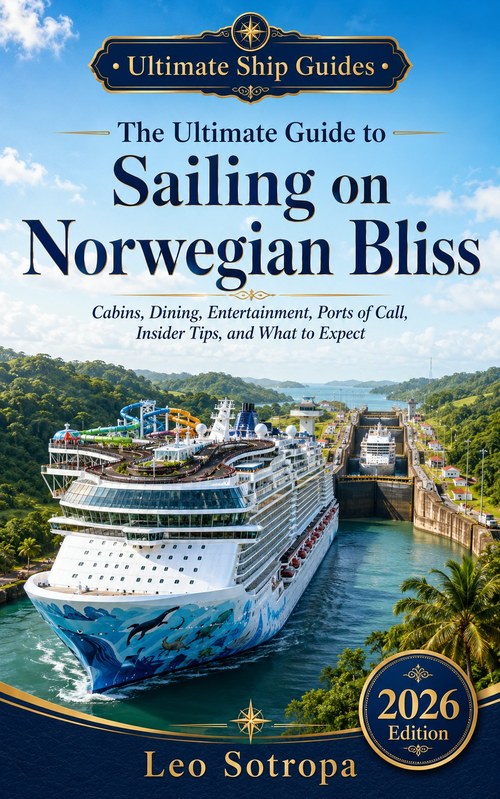
Everything in this article and far more, deck by deck, in The Ultimate Guide to Sailing on Norwegian Bliss.
Get the book →What Norwegian Bliss actually is
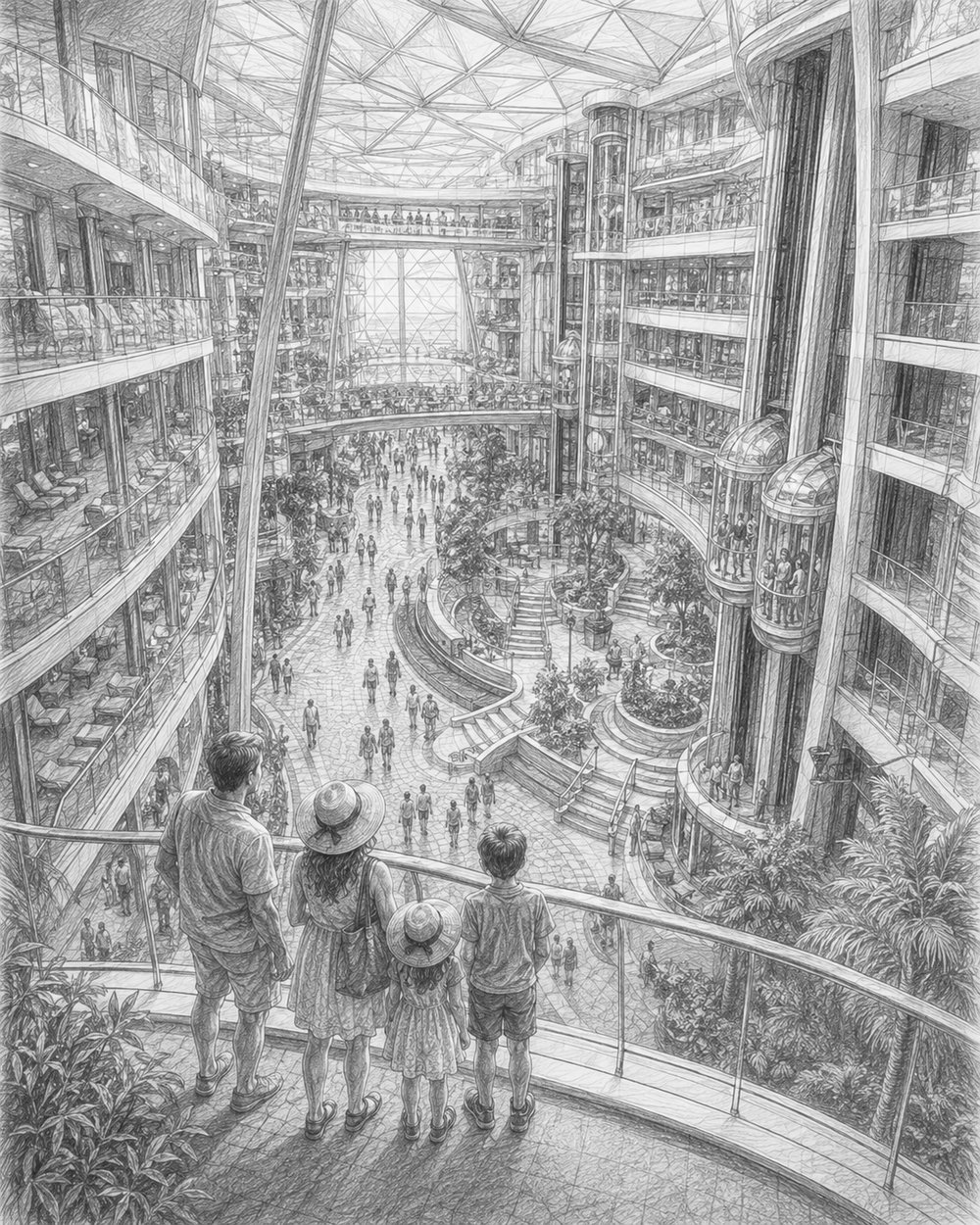
Norwegian Bliss is a Breakaway Plus-Class ship, which is NCL’s stretched, more feature-heavy evolution of the earlier Breakaway design. That puts her in the same family as Norwegian Encore, her near-twin, and if you have sailed one you will recognise the layout of the other almost immediately. She measures around 168,000 gross tons and rises about 20 decks, which gives you a sense of the scale: this is a genuine floating resort, not a small ship you learn in an afternoon.
The passenger numbers matter for how the ship feels. At double occupancy she carries roughly 4,004 guests, and when every berth is filled she can reach around 4,900. In practice that means the ship is busiest on holiday and school-break sailings, and calmer on longer, sea-day-heavy voyages like the Panama Canal run. The design leans into that flexibility, and the single feature that sets Bliss apart from most of the fleet is the one she was built around first.
The two-deck Observation Lounge
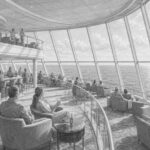
Bliss was the first Norwegian ship designed with a two-deck, wraparound Observation Lounge, and it is the reason a lot of experienced cruisers pick her for scenery-rich itineraries. It sits forward and high, with floor-to-ceiling panoramic windows and rows of leather chairs angled toward the view. On a normal sea day it is a quiet spot for a coffee and a book. On a scenic day it becomes the best seat on the ship.
This is exactly why the lounge features so heavily when people talk about her Panama Canal voyage. When the ship is easing into the first set of locks, or gliding past the coastline of Central America, you can watch the whole thing from a climate-controlled room with an unobstructed forward view rather than jockeying for rail space in the heat. It is a purpose-built advantage, and it is genuinely rare across the wider cruise world. If you want a fuller sense of daily life aboard, our companion piece on what to expect on Norwegian Bliss goes deeper into how the public spaces flow.
Freestyle Cruising, explained
If you have only cruised lines with fixed dining, Freestyle Cruising is the single biggest thing to understand about sailing NCL. There are no fixed dining times, no assigned tables, and no formal dress codes. You dine when you want, where you want, and with whom you want, across a large range of restaurants. Think of it as the resort model rather than the ocean-liner model: your evening is yours to shape.
In practice, that flexibility comes with two things worth planning around. First, the complimentary options — the main dining rooms and the Garden Café buffet — are included in your fare, while many specialty restaurants carry an extra charge or run through a dining package. Second, because there are no assigned seatings, popular restaurants fill up at peak times, so reservations help, especially on busy evenings. The upside is that a family, a couple and a group of friends can all eat on their own schedule and still meet up for a show. First-time NCL cruisers will find a full walkthrough in our guide to getting the most from Freestyle on Norwegian Bliss.
One practical note that trips up newcomers: your key card, sometimes called the Cruise Card, is your cashless account for everything on board — drinks, specialty dining, shops and the Speedway. Service charges and gratuities apply, Wi-Fi is a paid plan, and the NCL app runs your day, from menus and reservations to the current show schedule.
The Speedway, the Aqua Park and top-deck fun
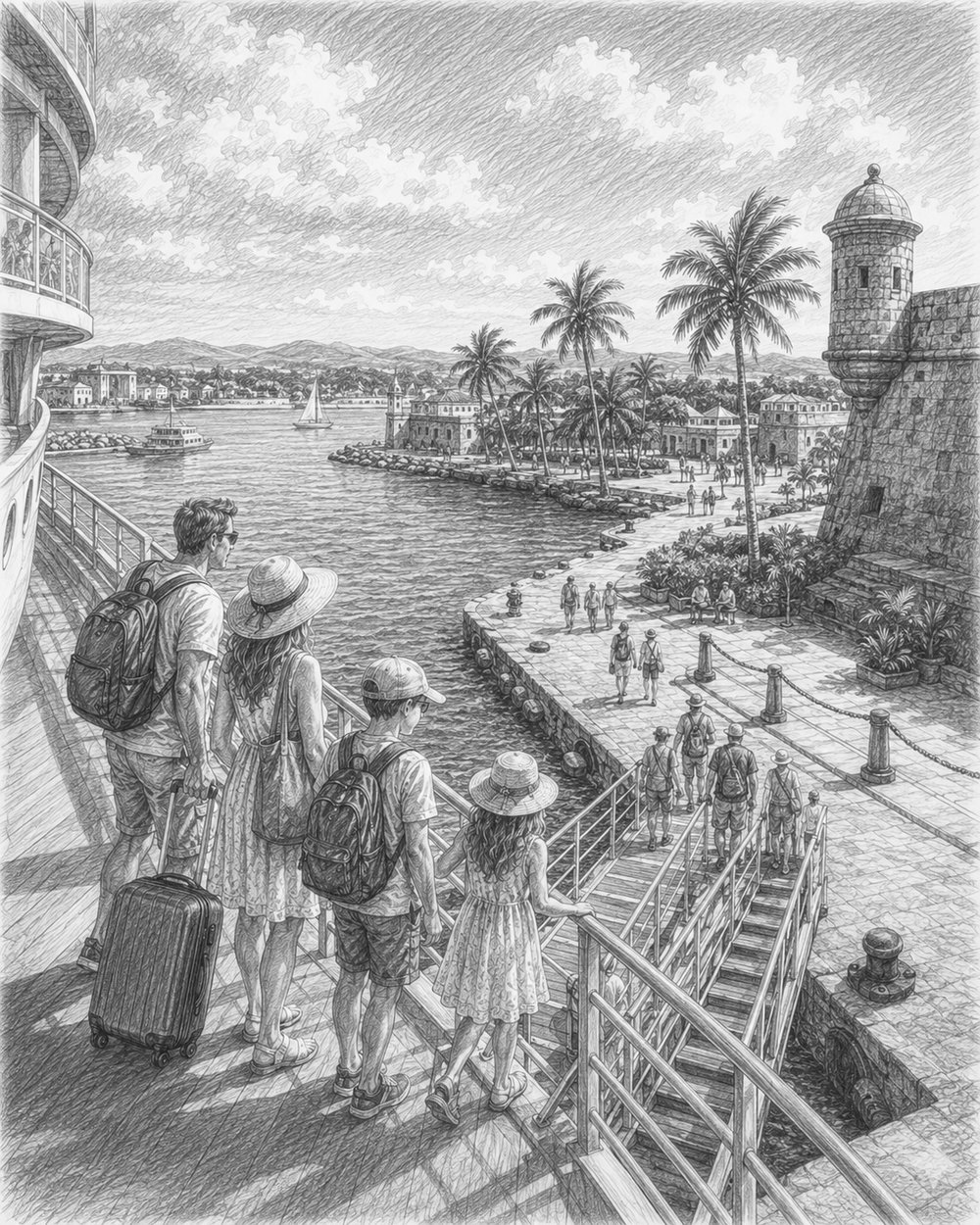
The headline attraction on the top decks is the Speedway, a two-level electric go-kart racetrack running around 1,000 feet and extending out over the side of the ship. It carries an extra charge, and it books up, so if racing is a priority for anyone in your group, reserve early through the app rather than hoping for a walk-up slot. It is a genuine draw for teens and adults alike, and few ships at sea offer anything like it.
Alongside the Speedway, the Aqua Park delivers the water fun: freefall and tube waterslides plus a dedicated kids’ area, so families with a range of ages are well served. There is also open-air laser tag on the top deck for something different after dark. Between the racetrack, the slides and the laser tag, the upper decks give Bliss a real sense of energy that suits families and active travellers. For a closer look at the racetrack and the ship’s most exclusive spaces, see our detailed piece on The Haven and the Speedway on Norwegian Bliss.
The Haven: a ship within a ship
At the other end of the experience is The Haven by Norwegian, an exclusive, keycard-only suite complex that functions as a ship within a ship. Guests staying in The Haven get a private pool, a private restaurant, a private lounge and a private sun deck, along with concierge and butler service. It is NCL’s most premium way to sail, and on a long voyage the difference in space and calm is noticeable.
Whether The Haven is worth it depends on how you travel. On a short cruise where you are ashore most days and out at the shows most nights, the premium can be hard to justify. On a longer, sea-day-heavy itinerary like the Panama Canal, where the ship itself is the destination for days at a time, the private pool and quiet restaurant earn their keep in a way they simply cannot on a quick getaway. It is the top of the cabin range, and it changes the tone of the whole trip.
Dining and bars across the Freestyle range
The dining lineup is where Freestyle really shows its range. Your complimentary options are the main dining rooms and the Garden Café buffet, and both are perfectly good for the bulk of your meals. Beyond that sits a set of specialty restaurants that carry an extra charge or run through a dining package, and they cover a lot of ground.
- Cagney’s Steakhouse for steaks and classic American fare
- Le Bistro for French cooking
- Ocean Blue for seafood
- Onda by Scarpetta for Italian
- Teppanyaki for Japanese hibachi cooked at your table
- Food Republic for a mix of Asian and international small plates
- The Q Texas Smokehouse for barbecue and live music
The bar scene is just as varied. The Sugarcane Mojito Bar leans Cuban and rum-forward, the District Brew House is the spot for beer, the Cavern Club channels a live-music vibe, and the A-List Bar is a smarter cocktail lounge. Because there are no fixed dining times to build your evening around, a lot of guests end up grazing across several of these venues over the course of a night, which is exactly the point of Freestyle.
On the entertainment side, Bliss carries Broadway-scale productions — she has featured the Tony-winning “Jersey Boys,” among others — plus comedy, live music and a rotating slate of shows. Line-ups change, so check the current schedule in the NCL app once you are aboard and book the headline shows early.
Cabins at a glance
Bliss offers the full spread of cabin categories, so there is a room for most budgets and travel styles. From the entry level up, you have Inside cabins, Oceanview, Balcony, Club Balcony Suites, Mini-Suites, Spa cabins, solo Studios with their own dedicated Studio Lounge, and The Haven suites at the top.
| Category | Best for |
|---|---|
| Inside | Best value; you are barely in the room on a busy itinerary |
| Solo Studio | Solo travellers; own Studio Lounge, no single supplement penalty |
| Midship Balcony | Best all-round; scenery and the steadiest ride |
| The Haven | Top of the range; space, service and views |
A quick rule of thumb: on a long, scenery-rich voyage a Balcony earns its keep far more than it does on a short cruise, because you will spend real time on it watching coastline and canal go by. For value, an Inside or a solo Studio is hard to beat. For the best all-round experience, a midship Balcony on the mid-decks gives you both the view and the steadiest motion. And for the top of the range, The Haven delivers space, service and the best views on the ship.
A few rooms are worth avoiding, and you should confirm the specifics on the deck plan before you book: cabins directly under the pool deck, the Garden Café or the Speedway can be noisy; rooms near nightlife venues get late-night sound; forward high-deck rooms feel motion more; and some lower-deck balconies have obstructed views. Our full breakdown of the best cabins on Norwegian Bliss maps out the sweet spots deck by deck.
Who Norwegian Bliss suits
Bliss is a strong fit for families, thanks to the Aqua Park, the Speedway, laser tag and the sheer variety of dining that keeps picky eaters and adventurous ones equally happy. She suits couples and groups of friends too, because Freestyle Cruising lets everyone run their own schedule and still reconvene for dinner or a show. Solo travellers are unusually well catered for by NCL standards, with dedicated Studio cabins and a Studio Lounge to socialise in.
She is also a standout choice for scenic cruising specifically. The two-deck Observation Lounge and the generous open decks make her one of the better big ships for watching the world go by, which is why she shines on itineraries with dramatic coastline and, above all, on the Panama Canal. If your ideal cruise is equal parts resort and viewing platform, Bliss delivers on both.
The bucket-list voyage: the Panama Canal
The marquee voyage in this guide is the Panama Canal. It is a longer, repositioning-style itinerary, typically running between Los Angeles and Miami in either direction over roughly 15 to 19 nights. The route heads down the Mexican Pacific and along Central America, transits the Panama Canal, and then continues on to Colombia and the Caribbean before finishing. (Bliss also sails the Mexican Riviera from Los Angeles and Alaska from Seattle in other seasons, so always confirm which voyage you are booking.)
The ports are a big part of the appeal. Depending on direction and sailing, the itinerary can include Cabo San Lucas and Acapulco in Mexico; Puerto Quetzal in Guatemala, the gateway to colonial Antigua and coffee country; Puntarenas in Costa Rica, for rainforest national parks and wildlife; the canal transit itself, with Panama City nearby; Cartagena in Colombia, with its walled Old Town; Falmouth in Jamaica on some sailings; and Great Stirrup Cay, NCL’s private Bahamas island, as a relaxed finale before Miami. Exact ports vary, so confirm your itinerary in the app.
The centerpiece is a full day transiting the locks and crossing the isthmus that divides two oceans — a bucket-list engineering and scenic experience, and the reason many people book this cruise in the first place. Bliss’s two-deck Observation Lounge and open decks make her a superb ship to watch it from. Be up early for the first set of locks, use the Observation Lounge and open decks through the day, bring sun protection and water, and follow the onboard narration that explains the engineering and history. It is a long, fascinating day. Our dedicated guide to the Norwegian Bliss Panama Canal voyage covers the whole route in detail.
The ports worth planning for
Each stop on the route has a clear headline, and the best excursions sell out early, so it pays to plan. If Los Angeles is your embarkation or finale, build in time for Hollywood, the beaches and Southern California — and fly in a day early, because LA traffic is heavy and you do not want to gamble a cruise on it. Cabo San Lucas is all about El Arco at Land’s End, the marina and the beaches, with whale-watching in season and sportfishing on offer; note it can be a tender port on some calls. Acapulco brings the sweep of its bay, the famous La Quebrada cliff divers and plenty of history.
Further along, Puerto Quetzal is your gateway to colonial Antigua, the volcanoes, the Maya markets and coffee country, while Puntarenas opens up Costa Rica’s rainforest national parks, its wildlife and its eco-adventures — this is the stop where binoculars really pay off. After the canal, Cartagena delivers a walled Old Town, historic forts and Caribbean colour, and Great Stirrup Cay closes things out with beaches, water sports and a relaxed lagoon before you dock in Miami. Because the ship visits so many different countries in one trip, it rewards a little advance research on each port before you sail.
Practical notes for the canal route
A Panama Canal cruise crosses multiple countries and is not a simple closed-loop US itinerary, so a passport is required. Some ports or nationalities may need additional documents, so check current entry rules well ahead of your sailing. The weather is warm and tropical throughout, and it turns hot and humid near the canal and across Central America and Cartagena, so pack light, breathable clothing, sun protection and rain protection for tropical showers, plus a light layer for the ship’s air conditioning. Costa Rica and the tropics reward binoculars and a camera, with monkeys, sloths, birds and marine life on offer.
On money: US dollars are widely used across much of the route and are official in Panama, but Mexico uses the peso, Guatemala the quetzal, Costa Rica the colón, Colombia the peso and Jamaica the Jamaican dollar. Cards and US dollars are widely accepted in tourist areas, but carry small local cash for markets and taxis. Great Stirrup Cay runs on your key card. Because this is a longer voyage with more sea days than a typical week, it plays perfectly to Freestyle’s flexibility and to the ship’s many attractions. Those extra sea days are exactly when the Observation Lounge, the Speedway, the Aqua Park and the wider dining range come into their own, so a ship this well equipped is a real asset on a slower itinerary rather than a quick week away. It is the combination of a genuine viewing platform and a full resort that makes Bliss such a natural fit for the canal.
Plan your ports of call
Make the most of every day ashore with our in-depth port guides for the stops on this ship’s itineraries:
Get the complete Norwegian Bliss playbook
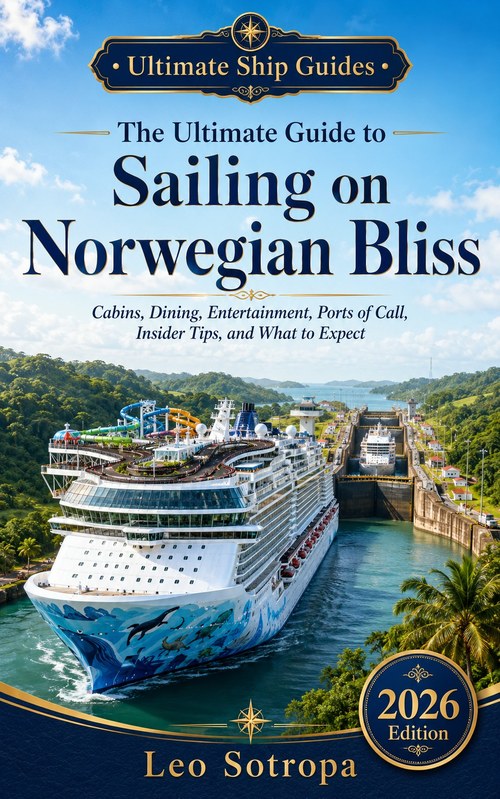
For the deck-by-deck detail, the dining strategy and the day-by-day plan for the canal, “The Ultimate Guide to Sailing on Norwegian Bliss” gives you everything in one place. It is part of the Ultimate Ship Guides series by Leo Sotropa, with clear action steps in every chapter.
Frequently asked questions
What class of ship is Norwegian Bliss?
Norwegian Bliss is a Breakaway Plus-Class megaship and a near-twin sister of Norwegian Encore. She measures around 168,000 gross tons across roughly 20 decks and carries about 4,004 guests at double occupancy, up to around 4,900 when completely full.
What is Freestyle Cruising?
Freestyle Cruising is NCL’s core approach: no fixed dining times, no assigned tables and no formal dress codes. You dine when, where and with whom you like across a large range of restaurants. The main dining rooms and the Garden Café buffet are complimentary, while many specialty restaurants carry an extra charge or run through a dining package, and reservations help at peak times.
What makes the Observation Lounge special?
Bliss was the first Norwegian ship designed with a two-deck, wraparound Observation Lounge. It is a huge forward-facing space with floor-to-ceiling panoramic windows and leather chairs, purpose-built for scenic cruising. It is superb for watching the Panama Canal transit and coastal scenery in comfort.
What is the Speedway on Norwegian Bliss?
The Speedway is a two-level electric go-kart racetrack that runs around 1,000 feet and extends out over the side of the ship. It carries an extra charge and books up quickly, so reserve early through the NCL app if racing matters to your group.
What is The Haven?
The Haven by Norwegian is an exclusive, keycard-only suite complex that works as a ship within a ship. It has a private pool, restaurant, lounge and sun deck, plus concierge and butler service. It is NCL’s most premium way to sail and makes the most sense on longer, sea-day-heavy voyages like the Panama Canal.
Do I need a passport for the Panama Canal cruise?
Yes. A Panama Canal cruise visits multiple countries and is not a simple closed-loop US itinerary, so a passport is required. Some ports or nationalities may need additional documents, so check current entry rules well ahead of your sailing.
Who does Norwegian Bliss suit best?
She suits families, couples, groups of friends and solo travellers alike, thanks to the Aqua Park, the Speedway, the wide dining range and dedicated solo Studios with their own lounge. She is also an excellent choice for scenic cruising, which is why she shines on the Panama Canal voyage.
Ready for the whole ship in one place? It is all in The Ultimate Guide to Sailing on Norwegian Bliss.
Get the book →
Meet Leo: The Heartbeat Behind ‘A Country A Month’
Journeying through the pages of A Country A Month, you might often feel the rhythm of a storyteller’s heartbeat, pulsating through each line, each image, and each adventure shared. That heartbeat belongs to none other than our remarkable website editor, Leo.
With a lens in one hand and a pen in the other, Leo seamlessly marries his passions for photography and writing. His eye captures moments that words can barely describe, yet his eloquence brings those images to life, transcending borders and connecting us all through shared stories. An avid traveler, every country he’s visited has added another chapter to his expansive tale, and through our platform, he generously shares these chapters with us.